 Subscribe to Airspeed through iTunes or your favorite other podcatcher. It's all free!
These are the show notes to an audio episode. You can listen online right here by clicking: http://traffic.libsyn.com/airspeed/AirspeedSometimesAlternatesFly.mp3.
Get your copy of Thunderbird Groove by right-clicking and downloading http://traffic.libsyn.com/airspeed/ThunderbirdGroove2008-10-24.mp3.
Find out about careers in the United States Air Force at www.airforce.com.
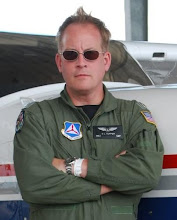
Find out about the US Civil Air Patrol (the civilian auxiliary of the USAF) at www.cap.gov. I’m a member and you should be, too![Audio: Doc – Remember]
[Audio: Cole – Alternate 1]
Some of my favorite stories are about people who get unexpected opportunities and do their best to rise to the occasion when presented with what must have seemed like unattainable circumstances just ten minutes before they came to be.
Scot Halpin was 19 when he moved from Iowa to San Francisco. He was a musician and artist who ultimately went on to earn an MA in Interdisciplinary Arts from San Francisco State University. But before that, he went to a concert and became immortal in some small way. It was 1973 and The Who were in town on a tour in support of the then newly-released Quadrophenia album. Halpin and his friend bought tickets to the show from a scalper and arrived 13 hours early to get a good spot near the stage.
A dozen songs in, Keith Moon, The Who’s drummer, keeled over and was unable to complete the show. Pete Townsend stepped to the mic and asked if there was a drummer in the audience. Tom’s friend caught Bill Graham’s attention from stage left and, after a brief discussion, Scot was sitting behind the drum kit. He grabbed a pair of sticks, kicked the band over, and finished the show.
Alberto Cupido is an operatic tenor. One night in the year 2000, he took a night off to go see someone else sing for a change. He was attending a performance of Verdi’s Aida in Parma at which tenor Gegam Grigorian sang the lead tenor part. Aida has a notoriously difficult but beautiful tenor part, which should have made for a great show. But Grigorian lost his voice during the first act. The call went out to the audience. “Is there a tenor in the house?” Dressed in street clothes and holding a copy of the score, Cupido walked onto the stage and completed the performance.
These examples happen to capture my imagination more than others because they’re musical and they ignite one of my more intense passions. But you can find examples in almost every other field worth pursuing. Third-string quarterback Tobin Rote took over for Bobby Lane in the last two games of the Lions’ 1957 NFL Championship run. Jack Swigert ascended from the backup crew of Apollo 13 when Ken Mattingly was exposed to the measles.
But they capture my imagination for another reason as well. Nobody really expected Scot Halpin to get up and play. Alberto Cupido could have just given his voice a rest and stayed in the audience. Nobody really expected to see Tobin Rote play or Jack Swigert fly. But each was prepared. Against long odds that it would be necessary or that the opportunity would arise, they each carried with them the preparation and willingness needed to meet circumstance. To play, to sing, to fly. To be a part of – and to tell – a story.
Some stories are greater or lesser, depending on your viewpoint. And that’s okay. This one, for what it’s worth, is mine.
______________________
Ever since I started Airspeed, I’ve been going to the Battle Creek Field of Flight Air Show and Balloon Festival. I grew up in Battle Creek in the late 1960s and most of the 1970s before moving upstate after fourth grade. My uncle flew corporate aircraft for Kellogg’s that whole time and it was at Battle Creek that I first saw the US Air Force Air Demonstration Squadron – The Thunderbirds – for the first time. They were flying McDonnell F-4E Phantom IIs or Northrop T-38 Talons then and they made the best noise of anything at the air show.
I don’t know what actually planted the seed of flight that later caused me to become a pilot and pursue advanced ratings. The time I spent in Battle Creek was as bad in American History as any my generation has seen, what with Viet Nam, Watergate, the killing of Martin Luther King and Bobby Kennedy, long lines at the gas pump . . . You get the idea. But credit my parents. What I remember is Apollo missions going up what seemed every few months and hearing the sky come unzipped every summer as jets crisscrossed the southwest part of town.

My cousin, Tim Reed, said that if you touched the fuselage of a Thunderbird F-4E Phantom or T-38 Talon right after it landed, you’d burn your finger off. I think I believed him at the time, but, even so, that would have been just a Styrofoam packing peanut on top of the pile of mystique and wonder that I had already built up in my mind about the Thunderbirds. They were steely-eyed men in fitted flight suits whose eyes were permanently focused on the horizon and who could split the heavens and call down fire from the skies with a wave of a hand.
When we went to the playground, we’d get on the swings and swing hard, pretending to be fighter pilots. Feet blocking the sun for a moment at the top of each arc. It created a momentary eclipse. We thought of it as muzzle flash.
What filled the well of desire from which I drew to do my first solo? To continue shooting approaches when every gauge on the panel seemed cursed? To go from single-engine private pilot schmuck to typed in the DC-3 in the space of 40 days? (Though still a schmuck?) It could have been any number of things, but the Thunderbirds would be a really good guess.
Flight is demanding, expensive, and sometimes dangerous. It seems impossible during some lessons and on some paydays. It requires a spectacular and abiding reason to start flying and stay flying. Like the noise that fighter jets make.
Since then, that enchantment with fighter jets has stayed with me. I have always loved seeing a fighter jet hurl down the runway just off the pavement, building speed to an impossible rate and then pulling straight up at the departure end, climbing vertically into the sun. And when the humidity is right, those condensation clouds that form over the wings at high angles of attack? When the very atmosphere can’t get out of the way fast enough and surrenders up in ragged streaming clouds over the trailing edges of the wings? If that doesn’t get you worked up, we just can’t be friends. No hard feelings, but you go stand over there and me and mine will just stand here at the fence by the taxiway misty-eyed, shouting, and pumping our fists in the air.
Man, if I could do that just once. That big pull. Accelerate down the runway and then show the apparent wind the bottom of my airplane and just watch the vapor roll violently over the tops of the wings. That’d be a thing, man. That’d be a thing.
[Audio: F-16 summary]
A few years ago, I gave that thing some serious thought. There are something like three ways to get into an F-16. One involves getting shot at and has a very low probability of success. One involves a commission as an officer in the Air Force and better eyesight than I had at the time at which it would have mattered. And one involves being part of the media.
In late 2005, podcasting and other Internet media seemed to be taking hold and was beginning to challenge traditional channels in some quarters. I wondered if a podcast would ever grow to the point where it would present a sufficient audience to warrant a media flight with the Thunderbirds. There was one way to find out. So, in early 2006, I released the first episode of Airspeed and began cranking out an episode every two weeks or so.
I also began making the two-hour drive over to Battle Creek each summer to cover the air show. It was only a two-hour drive and I could stay with Tim, who still lives near town and is an excellent photographer to boot.
The Battle Creek airshow is a natural wonder of the State of Michigan. With the demise of the Muskegon airshow two years ago, it is now the only major airshow between Chicago and Detroit. Every single year, the show brings jet teams and a wide array of other performers. I got a balloon ride with Dave Emmert my first year at the show and got up with Mike Mancuso in his Extra 300L my second year. And I gave the broadest coverage I could in return, including having my buddy Jim Angus chase people to the show with his blowtorch radio station about an hour north of town.
I called the show two months ahead of time to ask about consideration for a media ride with the Thunderbirds. Show organizers recommend members of the media to the jet teams and the jet teams decide who they’ll fly. When I got ahold of the committee member, she indicated that they’d already submitted the recommendation for that year’s show. Bummer, but no big deal. It’s not like I was going to miss the show just because I’d missed the selection for the Thunderbirds flight. There’s next year and the year after that. After all, I looked at this Thunderbirds ride project as a 10-year thing.
As usual, I called Suze, the show’s media director, a couple of weeks prior to the show to remind her that I’d be there again and that I was up for whatever media flights might be available. Not to pester her, mind you. She’s as fair and hardworking a media director as ever I’ve met and I don’t want to be that guy who shows up and wants all of the best opportunities. I know that the media crew at Battle Creek bends over backwards to get everyone the best exposure it can and I’m happy with that.
We chatted for a few minutes and then hung up and my thoughts returned to the life as usual. Until two days later when the phone rang.
It was Suze. She said that the organizers had neglected to nominate an alternate media flyer. I had apparently come to mind because someone from the F-104 Starfighters team had heard my annual interview with executive director Barb Haluszka and mentioned it to her the week before. Anyway, Suze said, might I be interested in being the alternate?
I quickly went through the rhetorical question about how all that bear poop got into the woods. She forwarded the e-mail from the Thunderbirds’ media chief that contained the release and another form and the directions for submitting a one-page proposal that the Thunderbirds would review in determining my eligibility.
I didn’t get much work done that afternoon or get much sleep that night and, by the next day, all of my stuff was dangling out of a fax machine at Nellis AFB. In addition to the podcast, I had lined up seven radio signals from around the state – Four AM and three FM. The idea was to hit stations where I knew people and that were more than a half hour drive but less than a two-hour drive from the show site. Getting a ride like this involves showing that you can offer an audience in two ways. The military jet teams want generalized publicity that supports their public relations and recruiting missions. And the airshow organizers want you to chase people to the airshow. I called in a lot of favors and tried to come up with a proposal that served both interests as best I could without over-promising.
The week before the show, I received an e-mail from SSgt Russ Martin. It went over how to prepare for the ride.
[Audio: Martin Audio]
Okay, this was actually beginning to seem real. An e-mail from the Thunderbirds’ media chief. Just chatty enough to get the point across in an accessible way but definitely covering some serious subject matter.
Wednesday, July 2 rolled around. I finished up as much work as I could, packed my gear, and headed for Tim’s place in Athens, Michigan, about two hours away. I cranked up Liquid Tension Experiment 2, my trusty drive-to-airshow music, and set out toward the setting sun for Battle Creek.
[Audio: Battle Creek summary]
Tim and I headed to the field early on Thursday morning. The balloon festival was already underway with launches scheduled for morning and evening, but today was arrival day for most of the airplane-related performers.

Tim and I walked around the grounds to kill time. A pretty big thunderstorm had come though the area the night before and the high winds had relocated a couple of the vendor tents on the show site and had knocked out power and caused damage in some of the communities to the west.
We connected with Tim Eernisse, Deb Kirk, and the rest of the crew from WGVU, with whom we had become friendly over the prior two years. Tim Eernisse had helped get Tim Reed and me onto the ramp the year before to get the John Mohr and Mike Goulian interviews. And that got Tim Reed up close and personal with an F4U Corsair, which was enough to make Tim Eernisse a part of Tim Reed’s free-beverages-for-life club were the two to find themselves at the same establishment.
I heard that the primary flyer was to be Jeff McAtee, the afternoon news anchor at WWMT-TV in Kalamazoo. Jeff had been named a media rider with the Blue Angels the year before, but logistical problems had kept him from flying. Jeff was a commander in the US Navy Reserve and was just about at the maximum age for a flight, which must have made last year particularly disappointing for him. So it was no surprise to see Jeff as the primary flyer this year. But no one had seen Jeff yet. I will confess to visualizing Jeff in a ditch somewhere with a dead cell phone battery, but actually wished no ill on him. I drank a lot of water and kept an eye out for any van that looked like it might be from a TV station.
We all waited for the low ceiling to lift, blow over, or both. We had heard that it was going to be a beautiful afternoon. We all walked around the taxiway and speculated about when the F-15 or the other performers might show up. All the while, though, I was looking across the field to the Western Michigan University College of Aviation. That’s where the Thunderbirds would be basing their operations. Tim and I were supposed to be at the gate at 2:30. At around 1:45, we headed for the car, drove around the east side of the airport, and arrived at the assigned gate.
Suze met us and we stepped just inside and watched the Thunderbirds’ C-17 arrive and begin unloading. No sign of a TV van yet. Interesting.
We stood next to a woman and her daughter. Neither had the look of media or flight operations personnel, so we made small talk. She introduced herself. I don’t remember her first name, but my heart sank when she said that her last name was McAtee. “Yeah, Jeff’s in there getting suited up. He’s so excited!”
How nice for Jeff. Rats! No ditch, no dead cell phone battery, no nothing. He’s in there and he’s going to fly.
I sent out a couple of disappointed posts on Twitter, but couldn’t bring myself to work up a froth over it. Jeff was a good choice as primary flyer. And besides, I was the alternate. This is as far as alternates get. Inside the gate, but not inside the building. But still closer than most media. Or fighter jet fanboys.
I figured that they’d keep us around for a few more minutes until Jeff got through the exam by the doc and then shunt us over to the viewing area with the rest of the media. I consoled myself by taking advantage of the location to shoot some good pictures of the C-17.
Then Suze rounded the corner of the building with a tall staff sergeant. They made a beeline for Tim and me. Suze jockeyed us over away from the McAtees and then said quietly, “Steve, I think you’re going to get your media flight.”
[Audio: Music transition.]
[Audio: Cole – Alternates 2]
I rock back on my heels a little. Okay, this is good. I think. I meet Tim’s eyes and he hoists his camera bag and follows Suze, the sergeant, and me.
We walk through the gate and into the building and turn the corner into the school’s large conference room. Blue-uniformed sergeants move rapidly around stacks of equipment and a couple of piles of flight gear. The sergeant turns out to be SSgt Martin, the guy who had written me the e-mail.
“Here’s the deal. All media need to have a camera crew here to cover the suit-up and preparation. You’ve got your camera guy here. Jeff says that his camera crew is out covering the storm damage from last night. We’re going to have you suit up and, if his camera crew doesn’t get here, you fly.”
Okay. Still an alternate, but about to get fitted for a gee suit, helmet, and mask and be ready to fly. I sneak a phone call to Rod Rakic, who happens to be at the Apple Store in Chicago and close to a computer connected to the net. I give him my Twitter password and ask him to quietly kill those disappointed tweets.
Jeff had a flight suit on and is getting fitted for his gee suit. SSgt Martin leads me over to Maj Charla Morgan Quayle, Thunderbird 9, or “Doc,” as she prefers to be called, the Thunderbirds’ flight surgeon. Doc takes my blood pressure, listens to my heart and lungs, and asks me a lot of questions. I had given basic medical information on the initial paperwork that I sent to Nellis and she covered all of that and more.
She speaks in hushed tones to maintain the confidentiality of my health information, but the room is also noisy and not much of the audio turned out to be usable. But she says some of the coolest stuff of anyone that day. That’s her at the beginning of the episode telling me to get it all down so I can remember it. The show notes of what I’m speaking now go more than 20 pages, so I hope I’ve met the good doctor’s recommendation.
Then we talk about the Anti-G Straining Maneuver or “AGSM.” The human heart can keep blood in the brain at accelerations of up to about four gees. Beyond that, the blood drains out of the brain and heads to the blood-bearing muscles of the body, usually in the legs, the gleuts, and in the midriff. The AGSM involves tightening these muscles to keep the blood in the upper body (and, particularly in your noggin). To keep pressure on your diaphragm, you also breathe in three-second bursts. After you take in each breath, you lock it down by saying the word “hook.” That the hard “K” at the end of “hook” helps you to hold that breath when it’s all you can do to raise your chest enough to make room for it. Because of that vocalization, most people call it “hooking.”
Doc has me practice it a few times and gave me some pointers.
You also wear a gee suit. A gee suit is like a cross between pair of high-waisted pants and a blood pressure cuff. When you pull gees, the aircraft senses it and pumps air into bladders that constrict around your calves, thighs, and midriff. This helps you to strain and keep that blood where you need it.
The signature maneuver of the Thunderbirds media ride is the nine-gee pull. You build up airspeed, light the afterburner, go knife-edge, and pull. Pull hard. You pull until you hit nine gees and then you hold it for a few seconds. At that gee load, it’s not uncommon to have your vision narrow and become gray and colorless (called “graying out”), and you can even lose consciousness if you fail to strain properly or if you carry the gee load for too long.
I weigh about 200 pounds dripping wet. A “gee” is an expression of acceleration equal to the acceleration of gravity. That’s about 32 feet per second per second or 9.8 meters per second per second. At nine gees, I’ll be experiencing about nine times that. A weight equivalent of 1,800 pounds. I effectively weigh more than a fully-loaded Cessna 152. Fuel, pilot, passenger, charts, coffee, and all.
But pulling nine gees is all in a day’s work for an Air Force fighter pilot. It’s necessary in order to maneuver effectively for many operations. Ask any opposing pilot how tough it is to out-turn an F-16. He or she will likely not answer because he or she’s busy with the F-16 that was ahead of him or her a moment ago and is now on his or her six.

And, speaking of gee suits, that’s the next stop. Having passed scrutiny by Doc, they give me a flight suit and a pair of boots to put on. I head for the men’s room. The conversation with Doc was one thing, but not the adrenaline is pumping. I shed my usual airshow attire. The cargo shorts and golf shirt that are my usual uniform for flying give way to the sage green of an Air Force flight suit and a pair of shiny black boots. The change in the mirror really brings it home for me. There’s was a decent chance that the alternate is going to fly.
Back in the conference room, SSgt Robin Bailon from Kaneohe, Hawaii, who handles aircrew life support, patched me up. The empty Velcro on the breast and shoulders is covered with a command patch, an American flag, a “Thunderbirds Media” patch, and, coolest of all, a big Thunderbirds squadron patch on the shoulder.
SSgt Bailon helps me into the gee suit and then she and SSgt Kristi Machado, the team’s aerial photographer, who comes from Deltona, Florida, help to lace me up. The gee suit has to be pretty tight or the airplane won’t be able to give you that consciousness-maintaining hug at high gee loads.
Then comes the harness. Here’s audio.
[Audio: TB Suit-up 01]
After that, they fit me for the helmet and face mask. The helmet part is pretty easy. I think that SSgt Bailon is pretty good at estimating the size of a person’s noggin because the one she hands to me is a perfect fit the first time. It’s just a matter of adjusting the chin strap.

Then it’s the face mask. The face mask seals over your face from under your chin, up around the sides of your face, and up over the bride of your nose so that the visor sits on top of it when you bring down the visor. It clips to either side of your helmet with bayonet clips.
This is the first of two sobering moments in the experience. You hear two clicks on each side of the helmet as your face as the mask fastens on. You realize that the mask is fitted with a valve that forces you to pull in each breach and then push it out. Just as you’re getting used to that idea, SSgt Bailon covers the end of the hose and asks you to blow out to see if any air escapes around the edges of the mask.
Once she’s satisfied, it becomes a point in the process where there’s a photo op. You raise the visor and your photo or video person gets a shot of you thumps-upping. It’s a very cool shot and I see why they do it. But, as they set up for that, you’re left standing there for a little while with the helmet and mask on and the visor down. Alone for a moment in a busy room. It’s really the first time since you were putting on the flight suit that you’ve had a moment to think.
There you are. Your face is completely enclosed. You have a moment to get very acquainted with your own head because you’re in very close quarters with it. You have to consciously demand and expel every breath. You can hear your breathing and it sounds hollow and somehow stern. Standing there, you suddenly realize that this isn’t all jet noise and fun. This is the tip of the spear, ladies and gentlemen. This is how men and women dress to do into harm’s way. And the aircraft that I’m suiting up to fly is designed to deal death and destruction if necessary and called for by the country’s leaders. I look around the room at everyone moving around here and there. For all of the flash and precision that everyone is going to show an airshow crowd on Independence Day, all of these people are first and foremost military personnel and all that that entails.
This is solemn and important stuff. I’m getting a glimpse into a different world. And I need to treat this opportunity with respect that it’s due.
I’ve caught up to Jeff now. We’re gong through the remainder of the preflight prep together. If he’s bothered by my catching up, he doesn’t show it. Tim’s being an extraordinary guy through all of this. He’s taking stills of Jeff as well as of me to preserve as much of the experience for Jeff as he can. Really nice gesture by Tim.
Jeff rotates over to sit down with the demo pilot, LtCol Rob Skelton, Thunderbird 7, who is the squadron’s operations officer. SSgt Martin takes me aside and tells me that, if Jeff’s camera crew doesn’t arrive within ten minutes, they’re going to fly me. Not that I wish ill on Jeff, but my excitement is now almost uncontainable.
I sit down and we get about 20 minutes into the preflight brief. If you’re interested, check out the Airspeed episode from August 16, 2008, which contains the full briefing with LtCol Skelton. (http://airspeedonline.blogspot.com/2008/08/preflight-briefing-with-thunderbird-7.html)
I stay focused on the briefing. But have you ever noticed that you can hear a change in the room acoustics or some other subtle change in the ambient noise when a group of people enters a room? People carrying video camera equipment? Like a TV camera crew might carry? I heard that. Good for Jeff, but my heart sank. Crap!
I join Jeff over by a laptop computer with a PowerPoint presentation illustrating bailout and related procedures. The camera crew gathers around and the sergeant says that they normally don’t film this part. I happen to have the MP3 player in my hands and it’s recording. I don’t shut it off immediately, but rather leave it on to capture the first bit of the presentation. There’s really nothing in this that isn’t in the pilot briefing itself, so I don’t feel like I’m betraying any confidences in airing it.
[Audio: TB Audio - Ejection Training]
We’ve finished the training by this point and Jeff and 7 get ready to head out to the aircraft. I had just begun to wonder who was going to want the flight suit back when SSgt Martin called me over. Capt Elizabeth Kreft, Thunderbird 12 and the squadron’s public affairs officer, was with him. They explain that they’re sorry that I’d gotten so close and then not gotten to fly. I actually have no problem with that in the grand scheme of things. I had gotten darned close. And how many other people at the show had gotten to hang out in the thunderbirds’ nerve center and been fitted for a gee suit?
But things are in the works. Capt Kreft say that they were talking to Maj Tony Mulhare, Thunderbird 8, about flying me tomorrow. No guarantees, mind you. Weather, equipment, the needs of the show – they’re all factors. But they’re trying. I was really taken aback. That’s amazingly cool of them. I yammer such thanks as I can get out and then trot off to change out of the flight suit.
When I get back, SSgt Martin was waiting. “Okay, be here tomorrow at 1:30. Robin will make sure that your life support equipment is good to go and we’re going to try to fly you around 3:00.”
Too cool. And we’ll be taking off in front of the crowd during the show! Better than a flight today!
I wander out into the parking lot and around the side of the building where I can see jet No. 7 powering up and I wait until it shoots skyward off the end of Runway 5. That’s going to be me. I’m on the schedule. I’m up for a flight.
________
The next morning, Tim and I leave his house around 9:00 and caravan to the airport. The plan is that, if one of the vehicles conks out, we’re going to push it into a ditch and keep going with the other vehicle. And if that one dies, we’ll take another from an unsuspecting passerby by force. Or walk to the airport. It’s a lot like the way that I imagine someone holding a winning lotto ticket drives to the state capital on Monday morning. With Liquid Tension Experiment 2 blaring.
Well before the appointed time, we flag a golf cart and head over to the flight school. I meet Robin and she gives me back the flight suit – still with the patches on it from yesterday – and the boots. I suit up, eat a few pretzels, and keep hydrated while we’re waiting.

At about 2:30, I meet Maj Tony Mulhare, Thunderbird 8, who is the advance pilot and narrator. I’ve read his bio (and his shoulders) and greet him as “Major Mulhare,” but he asks that I call him Tony. I’ve been a captain in the Civil Air Patrol for just long enough to make calling him anything other than “major” or “sir” a little uncomfortable, but that passes quickly.
He’s 34 and hails from Williamsburg, Virginia. He’s in his first season with the Thunderbirds. He flies to each air demonstration site in advance and ensures that all arrangements for the performance are complete and then narrates demonstrations. He, of course, also flies media and orientation flights in the F-16D.
He entered the Air Force in 1995 from the U.S. Air Force Academy. Before his assignment to the team, he served as an assistant director of operations and F-16 instructor pilot in the 308th Fighter Squadron at Luke AFB, in Arizona. The instructor part becomes important a little later.
He has logged more than 1,600 hours in trainer and fighter aircraft and more than 1,400 hours in the F-16C/D, including 75 combat hours during Operation Iraqi Freedom.
We sit down and Tony does a briefing much like the one I had heard the day before with LtCol Skelton. But it was more immediate. Things were more vivid. Because the weather was great. The aircraft was fueled and ready. And this was my ride. Primary flyer. No alternate this time.
[Audio: Briefing]
We go over emergency procedures and talk about where we’ll be flying, and I get to ask questions. It takes about a half hour. It’s remarkably similar to the briefing that I received the day before from LtCol Skelton and that speaks to the standardization of procedures in the squadron.
Then it’s time to walk out to the airplane. You have to remember. It’s Independence Day. A full crowd of tens of thousands of people is across the airport ready to see the demo and a few hundred are here at the flight school’s fence to see the startup and taxi-out. It’s positively electric out there. And I’m going to walk out onto the ramp and get into one of those jets.
We pause at the door, then push it open and walk out. The rest of the team gives us a little ribbing and I talk with SSgt Machado on the way across the ramp.
[Audio: Walk to the aircraft]

They take a few pictures at the aircraft, including the Hero Shot. You stand at the top of the ladder next to the canopy in your flight suit and you smile for the camera.
And did I mention that they’ve stenciled my air name on the canopy? “Stephen Force.” Right there. It has to be my favorite picture of all time.
Then you put on the gee suit and get into the aircraft. It really is true what they say. You don’t get into the aircraft. You strap it on. You sit with an avionics stack between your legs. The stick is on your right and the throttle is on your left. The communications panel is down and to your left and the life support is behind you and to the right. The ejection seat arming lever is by your left knee and the handles for the ejection seat are between your legs.

The helmet and face mask appear and I put them on. You wear earplugs inside the helmet, which must mean that it’s pretty noisy during the startup and other operations. I can hear the intercom fine even with the earplugs in. They hook the gee suit into the aircraft and plug in my life support and the microphone and electronics.
There’s a bullet camera pointing at me from my right that will record video of the flight. The video is available on the Airspeed website and YouTube, by the way.

They put a pair of Nomex gloves on the top of the avionics stack and then Tony climbs up. He verifies that you can get the mask off if you need to. Then he says that the team is going to do its preflight routine. The precise and highly-choreographed routine that begins each demonstration flight. We’re lined up with jets 1 through 6 directly to my right. Tony is going to do the routine along with the rest of the team and then we’re going to taxi out. He tells me to relax for a few minutes but, when he starts walking toward the aircraft, I’m supposed to put my visor down, put on the gloves, hold perfectly still, and look like a part of the aircraft.
The preflight routine happens exactly as advertised. I’ve seen it dozens of times from the ramp, but it’s a sight to behold from the back seat. And I know that people probably wonder whether anyone with a number higher than six can do that routine. Let me tell you, Maj Tony Mulhare is indistinguishable from the other team members. The Thunderbirds are on the ramp and it’s all snap, synchronization, and cool fluidity. It’s every bit as cool from the back seat as it is from the ramp.
We start up and then begin to taxi. We turn left and 1 through 6 turn right, the better to give us an opportunity to get to the hold-short line first so we can take off and go do the media flight while the rest of the team does the demo. I can’t help it as we turn parallel to the fence. I snap off my best seated salute. I hope someone has a picture of that somewhere.
The team waits for the jet truck routine out on the runway to finish so we can have the airspace. I listen to the radio chatter on the discreet frequency and it’s clear that the Thunderbirds are ready to fly.
Tony tells me to arm the ejection seat.
[Audio: Cockpit 01]
And then you’re in position. Time stops. The other end of the runway is almost two miles away. On the numbers at the other end is a stack of air 9,000 feet tall that’s reserved for you. And you’re going to flash right up through the middle of it into the burning blue. Thousands turn to the runway to watch.
The two miles away becomes twenty-four seconds. You feel the roll begin and then the afterburner lights up. The gear comes up and you accelerate even harder. Faster than you’ve ever flown before. And yet you accelerate more.
There’s a swing set in a playground nearby where, an eternity ago, you watched the silhouette of your feet against the sky, wondering what it’d be like to do this very thing. And the air of that very playground is about to be shattered because the big dream is about to happen. Clouds on the wings. Clouds on the wings. It’s here.
[Audio: Cockpit 02]

On the pull, I barely get my head back against the headrest in time. The seats in the F-16 recline 30 degrees but, like in your car, you really don’t put your head back on the headrest much when rolling around on the ground. I found the headrest just as we pulled and was a little cockeyed when the gee load hit. It could have been the gees or it could have been the sun above and behind us, but I couldn’t see out of my left eye during the pull. Yeah, baby!
We climb vertically for something like 5,000 feet and then roll 180 degrees for the rest of the climb before recovering and leveling out at 10,000 feet. As we turn north, I can see the rest of the team take off and hear the radio calls on their discreet frequency.
[Audio: Cockpit 03]
There are three things going on in the audio loop in the cockpit. First is the intercom and that handles the communications between Maj Mulhare and me. The second is the com radio that handles air traffic control. The third is the com radio that handles the discreet frequency that Thunderbirds 1 through 6 are using to coordinate the demonstration. You can hear that one when we’re close to Battle Creek after departure and again when we arrive back.
The ATC radio is the loudest in the mix that the unit in the aircraft recorded. I’ve quieted it down in this presentation. It makes some of the intercom communications unintelligible, so what you’re hearing in the airborne audio isn’t exactly what transpired. I’ve cut the ATC audio in a couple of places and stitched the intercom audio back together. But nothing of the intensity or authenticity of the airborne audio is lost. You can be sure of that.
And I’ve made sure to include the team’s audio whenever it’s present in the intercom chatter that I want to use. It sounds like – and is – singing. It’s a constant reminder that, although you’re in a single ship, you’re experiencing a thing that is one of the most closely-coordinated team endeavors on – or off – the planet.
You’ll probably hear a couple of points where I’m making conversation while Tony is talking to ATC. It’s largely because I can’t hear ATC very well. Not complaining, mind you. I just wanted to explain why it sound in a couple of places like I don’t know what’s going on. Like in this example.
[Audio: Cockpit 13]
Anyway, we check in with Kalamazoo departure. It’s a nearly useless thing because, at our speed, we have something like a few minutes before leaving that airspace, but Kalamazoo immediately hands us off to Chicago Center, where we request our clearance and let them know that we intend to burn up the skies in the Hersey MOA near Mt. Pleasant, Michigan.
“MOA” is an acronym for “Military Operations Area.” A MOA is a chunk of airspace in which military aircraft conduct operations. Frequent maneuvering in three dimensions uses a lot of airspace. I’m always aware of that when I’m flying aerobatics between Pontiac and Flint. It’s hard enough to separate aircraft that are flying in a relatively straight line at predictable altitudes. When you change direction and altitude a lot, your footprint becomes exponentially larger.
Most MOAs don’t fully close to non-military traffic. General aviation aircraft are usually free to fly right through, although they should check with the controlling agency to determine what kinds of activities are occurring and plan their flights accordingly. This is less important in the Hersey MOA in mid-Michigan than it is for some of the heavily-used training MOAS out west, but it’s still important.
We contact Chicago Center and let them know that we’re headed for Hersey.
[Audio: Cockpit 04]
We cruise the rest of the way to Hersey at 15,000 feet. The MOA is about 80 miles away, but it’s going to take us only about 12 minutes to get there. Tony takes the opportunity to explain close air support and other F-16 operations.
The demo is in full swing behind us and you can hear the team’s calls in the background.
[Audio: Cockpit 05]
One of my major bugaboos is situational awareness. I probably lean way too hard on GPS to figure out where I am and where I’m going. I’ve never been very good at pilotage. Close air support seems to be a very situational-awareness-intensive endeavor, so I ask Tony about it.
[Audio: Cockpit 06]
A lot of things had to align just so in order for me to get this flight. Only when I listened back to the cockpit audio did I hear this exchange. It turns out that getting the MOA required a little negotiation with ATC.
[Audio: Cockpit 07]
Tony calls my attention to the fact that the aircraft is so stable that it seems like the world around is moving and not the aircraft. It’s true. You get the sense that the controls operate the world, not the airplane.
[Audio: Cockpit 08]
We talk a little about how Tony feels about his job.
[Audio: Cockpit 09]
[Audio: Cockpit 10]
We do some more negotiations about the Hersey MOA. It becomes apparent that the Thunderbirds and/or the Air Force have an operating rule that demos like this have to be flown inside a MOA. The MOA doesn’t have to be active or NOTAMed, he just has to be inside the MOA when he maneuvers. That appears to be the crux of the biscuit with ATC.
[Audio: Cockpit 11]
Finally, we get the clearance to do what we want inside the Hersey MOA.
Tony asks for up to 17,900 feet. 18,000 feet marks the start of Class A airspace, which requires an IFR clearance. Center only gives us up to 17,500. Not a big deal. I think that center has confused the highest VFR cruising altitude with the top of the Hersey airspace. We’re decidedly not cruising. But it’s no big deal. We can get plenty done without that extra 500 feet.
[Audio: Cockpit 12]
I like that Chicago Center tells us that it’ll give us updates on VFR traffic. We’re in an aircraft with active radar and we can see the traffic long before Center calls it. And, with a slightly different configuration that can be accomplished on each and every Thunderbird F-16 within 72 hours . . . we could take the traffic out! Think of it as active TCAS! I’m not beating up Chicago Center. I just think it’s cool to have all of this capability right here in the airplane.
We reach the Hersey MOA and begin the demo in earnest. It begins with a barrel roll. It’s a roll with pull all the way around so that you’re always under positive gee. Then we go immediately into the loop, which is self-explanatory.
Throughout the ride, I wasn’t sure when to hook or otherwise strain against the gees. The most I’ve pulled before is three or four gees in the Citabria or with Brett Hunter or Michael Mancuso. So every time the gee suit started giving me a hug, I strained and either hooked or prepared to hook. It turns out that I really only needed to do it in earnest on the nine-gee pull. So some of my comments sound like I was under more load than I was. I’m not saying that I didn’t get a full acceleration workout or that the difference between Tony’s voice and mine isn’t because he can pull a lot more gees than I can. I’m just saying that I sounded like I was working a lot harder than I actually was.
This is also that sequence where I managed to do a lot of talking over ATC.
[Audio: Cockpit 14]
We do the eight-point roll and then go immediately into four rolls. The audio gets a little spotty in places, but you get the general idea. Horizon changing angles or rotating at a rapid rate and a whack of the helmet against the left side of the cockpit at each stop. Yeah!
[Audio: Cockpit 15]
Then we roll knife-edge and come out of that into the slow roll. The people down on the lake are getting a real show. We have smoke on and we’re really tearing up the sky.
[Audio: Cockpit 16]
My stomach begins to protest in earnest. I’ve been doing aerobatics in the Citabria for awhile now, and I’m up to about 20 minutes of maneuvering before becoming motion sick. It turns out that it’s about the same in the F-16. So Tony changes the routine a little and we take a break to do a demonstration of close air support.
Tony explains a situation where there’s an army unit on the ground in some woods. He uses roads and other landmarks to walk my eyes to the spot just like the unit on the ground might. He then explains where the enemy forces are. He then describes the surrounding area, identifying civilian homes and other areas where noncombatants might be. He explains that these folks don’t have a dog in this fight and that his first priority is to avoid hurting anyone not in the enemy force. He then goes through his options for weapons. Deciding that this is pretty tight quarters, but that he’s not going to let the enemy’s decision to hide out near civilians affect his ability to accomplish the support mission for the ground troops, he opts for guns.
The F-16’s 20mm cannon fires precise bursts of bullets that only fragment out to about a two-or three-foot radius, making it a highly accurate and precise tool. We go 28 degrees nose-down, simulate the strike, and then pull up and roll to about 60 degrees of bank to look down and evaluate the strike.
[Audio: Cockpit 17]
My stomach has had a little bit of chance to calm down. Not as much as it might have with a few minutes of straight and level flight, but it’s a little better. Tony asks if I’m ready to do some vertical rolls. And suggests that I’d love to do some. He’s right, after all. So we dive to 1,000 feet and get 500 knots, then pull straight up. Once we’re vertical, we roll rapidly until the airspeed comes down to 250, and then we recover. I look over my left shoulder and I can see our smoke from the maneuver – a corkscrew that’s at least 10,000 feet tall over Isabella county. Gorgeous.
[Audio: Cockpit 18]
Then it’s time for the nine-gee pull. We’re going to roll knife-edge to the left and do a big pull. I get all situated with my head back on the headrest. I start with my toes and tighten everything between there and my midriff in sequence. Tony lights the afterburner and fuel begins dumping into the jet pipe downstream from the turbine. We get a kick in the pants as the aircraft accelerates. I tell Tony that I’m ready and we do the pull.
Almost immediately, my vision narrows. It’s like black curtains coming in from the sides. They come in rapidly, but slow down and hold when I have about 20 degrees of my field of vision left. I can see colors, mostly because I’m looking up through the forward part of the canopy and looking through that much canopy makes the light separate kind of like with the rainbows that you see in oil on water in a parking lot.
I was pretty sure at the time that I had retained consciousness throughout, although I was pretty useless otherwise. I reviewed the video afterward and was pleased to see my chest rising and falling about every three seconds, which is usually consistent with consciousness.
Tony rolls out and asks how I was doing. I regret not having come up with a smartass remark in advance, if only to demonstrate my consciousness. All I manage at first was a grunt, but I’m actually feeling pretty good. I maintained that 20-degree field of vision throughout, after all. I simply elect not to tell Tony about the unicorns and leprechauns that were dancing around in that remaining 20 degrees.
Tony does a victory roll and gives voice to what I’m feeling. Pure elation. Despite having more than 1,400 hours in F-16s, Tony really seems to be able to empathize with his media riders and isn’t afraid to show it.
The audio here is a little garbled. I think the audio cables were hooking as hard as I was and having about a similar level of success. Not complaining, mind you. There’s no way I’d do this episode without including the nine-gee pull. Just wanted to let you know that it’s a little garbled.
[Audio: Cockpit 19]
And, with that, we’ve completed the core maneuvers of the media flight! Now we’re in an F-16 in a MOA on a beautiful day with that rarest of things. Spare time. The demo is still going on in Battle Creek and we have some time to kill before we can return to that airspace. Tony suggests going inverted over the golf course.
A positively spectacular idea? Absolutely! But my stomach has about had it. I have no problem using one or both of the airsick bags that the team provided for its stated purpose. I don’t know what the actual percentage is of media riders who don’t hurl, but I understand that non-hurlers are in the minority. Pride is not the driver here.
I just didn’t want to hurl while inverted. Part of that was out of respect for Tony and for SSgt Nick Billow, the aircraft’s crew chief, but most of it had to do with not wanting to hurl while inverted. Not that I have a lot of experience with it, but I can’t help but think that there’d be an aspiration risk. I just knew that I didn’t want to find out. Sustained inversion is the thing that gets me. I can do all kinds of other aerobatics for awhile , but I don’t have any real resistance yet to sustained inversion. Probably because the Citabria doesn’t have an inverted fuel and oil system. But I was pretty sure that the next time we went inverted would push me over the edge.
So I suggest that we not do the inversion. True to his word, Tony immediately agreed and we kept it straight and level and headed for home.
Here’s where I talk about my only real regret of the flight. When the ride became a possibility, I considered whether to ask for stick time. I gave it a fair amount of thought, but came down on the side of not asking. It was mostly because I wanted to be a good guest there in the back. I didn’t know whether the Thunderbirds’ operational rules permitted the demo pilots to let the rider have stick time and I didn’t want to put Tony in the position of having to say “no.”
I’ve since checked out other media riders’ video on the Internet and have seen a couple ask for, and get, stick time. So I guess I should have asked. I’m not kicking myself too hard. It was a good enough decision knowing what I knew at the time, but an F-16 in a wide-open MOA on a beautiful Independence Day with time to kill . . .
I wish I’d asked for stick time. I should have asked for stick time. I’d so love to do a roll or maybe even a loop in an F-16.
We point the jet back toward Battle Creek. We talk a little bit, especially about the nine-gee pull, and then I drop my mask for a little bit and just relax.
[Audio: Cockpit 21]
Tony diplomatically points out stuff on the horizon for me and I just take it easy. It really is a gorgeous day. A few scattered clouds down below us. The aircraft rock-solid and the sun splashing in my lap. You can actually see most of the way across the state to the left and Lake Michigan stretching away to the right. After only a couple of minutes of that, I feel fine and lock the mask back on.
[Audio: Cockpit 22]
Chicago Center clears us back to Battle Creek and we get an altitude that will let us just cruise over the airspace and watch the end of the demo down below. It’s really one of the best seats in the house. A couple of miles up, watching the formation and the solos trading the airspace below. And I had the discreet frequency for the team on COM 2 and could listen to the sing-song of Boss maneuvering four of the ships across the field and then handing it over to Maj Samantha Weeks, No. 5, the lead solo, for an opposing pass before handing the airspace back to boss.
Where the show down below is bluster and sky-splitting noise and excitement, the experience from above is almost serene. The white spearheads below wheel back and forth in slow motion while the radio traffic tells the inside story of the teamwork and precision that is going on below us. Unless you count the Thunderbirds themselves, I am, without a doubt, the luckiest human being any where near the field.
Too soon, Tony and Boss coordinate our return to the field. 5 and 6 are going to land first, with us in trail. Then 1-4 will land behind us. The way I see it, Thunderbirds landed before our aircraft and after our aircraft. In some small way, I was a part of a Thunderbird airshow demonstration. Anyway, that’s the way I like to think about it and I’m sticking to it.
Final is very different from my 400-odd landings in GA aircraft. I usually fly slow aircraft with a lot of wing for the loading. The F-16 is a lawn dart designed for besting Mach 2. Excess wing means unnecessary drag and General Dynamics gave it only as much wing as was absolutely mission-necessary when it designed the Viper in the early 1970s. So you ride the fighter in on or near the back side of the power curve with a fair amount of thrust. I noticed that each change in power was kind of a kick in the pants and the aircraft delivered it quickly and decisively when Tony commanded it.
We land and taxi to the end of the runway and turned off for the ramp back at Western’s flight school.

Here’s the other sobering moment. They tell you in advance that it’s going to happen, but nothing really prepares you.
You unstrap and climb down. With help, by the way. You’re a little rag-dolled out. Then every enlisted person on the ramp other than those who were retrieving 5 and 6 assembles by the side of the aircraft to listen.
Remember, you’ve just had an experience that only maybe 80 civilians receive from any team over a given season. Just 25 minutes ago, you weighed as much as yourself and eight more of you put together for a few seconds.
Tony gives a quick speech and accurately remembers and points out the things that he’s learned about me in our conversation. He presents a framed and signed lithograph of the team flying over the Statue of Liberty. He puts a nine-gee pin on my collar, the small but significant token possessed by only a very few movie stars, race car drivers, TV anchors, celebrities, and one very moved podcaster and radio guy.
Then, suddenly, the ramp is yours. Maybe 15 Air Force NCOs stand facing you, ready to hear your impressions of the flight. I’ve never flown an approach into Oshkosh during AirVenture, but people say that, when you roll out on final and see the show grounds and the thousands of airplanes and all those eyes on you, every pilot bone in your body says “go around!” If that’s true, then facing nearly the entire enlisted complement of the United States Air Force Air Demonstration Squadron is a lot like that.
They are by turns the best of the best at what they do and yet indicative of what happens ordinarily, quietly, and competently in the operations of the United States Air Force every day all over the world. What do you say? What can you say? I’ll tell you that you want to spill out hours of thoughts and emotions and stomp your feet and shout and even cry, all at the same time, but that you’re possessed of a sense that none of it will be adequate.
I don’t know if it was actually quiet or not. It sure seemed like it to me. I started with something about how the Thunderbirds were the first military demonstration team to stream a performance over the Internet and that it was now very likely the first to fly a representative of the next step in new media. I think I might have gone on to say something about Tim and swing sets and Cessna 152s and growing up near that spot.
I might have said a lot of things. I don’t remember.
What I meant was “thank you.” For the ride. For serving the country. For being stewards of this wonderful bird and others like it from the Republic F-84G Thunderjet to now. Thank you.
SSgt Machado walks me back to the conference room. I head for the men’s room and trade the flight suit and boots for the cargo shorts, golf shirt, and athletic shoes. A process that drops off as much adrenaline as putting the flight suit on builds.
There remains only one thing to do. I knew that I was going to be pretty scatterbrained from information overload after the flight, so I asked Tim to hold my logbook for me. SSgt Machado has it and my camera bag with the audio equipment and a few Airspeed golf shirts and ball caps.

I head down the hall and find Tony in the conference room. I give him an Airspeed golf shirt and ball cap and then present my logbook. Remember when I said that his being an instructor played into this story? Tony takes it from me, opens it to the current page, and makes the following entry.
7/4 – F-16D – BTL to BTL – Aerobatic Demonstration – 1 takeoff – 1 landing – 1.0 hours airplane single engine land . . .
And 1.0 hours dual received.
I don’t know how may civilian logbooks there are out there that have an entry like that. I believe in the line that someone in the film One Six Right said that he’d written in the front of his logbook. “This is a love story.” It is.
I wouldn’t trade my first solo for this new entry. Or the DC-3 time. Or the first time I did a loop myself. But that’s not the point. They’re all different parts of the same story. Integral and continuous. And, in a way, part of a story that started in the very first logbook and that will carry through other logbooks long after mine is closed.
I hoist my bags and head out the door. I hitch a ride back to the show line and then wander the grounds for awhile before heading out to see Tim’s family for a bonfire at the lake.
_____________________
The next day, I went to the show again. I know the personnel at the fence pretty well and talked my way past the fence and the taxiway and out onto the grass between taxiway and the air boss’s trailer in the middle of the field.
I set the levels on the MP3 recorder, oriented the stereo mic parallel with the show line, settled it into the grass, and then walked away from it so that it could capture that day’s Thunderbird demo. Standing there in the grass in the middle of the field under a painfully blue sky, I watched the demo alone, away from everyone else. I tried to somehow reconcile the experience of the flight with the experience there on the ground. After awhile, I just stopped thinking so hard and let the sound of the big Pratt & Whitneys wash over me.
It was amazing in many ways that I got that ride. A call from an F-104 driver, the storm, Jeff’s camera crew, getting the MOA airspace. I went from an alternate to getting the ride of my life.
But what’s an alternate, anyway? We’re all alternates at something all the time or we’re not growing. An alternate is, at the very least, inside the fence, at the event, up close, and in line.
But, most of all, an alternate is ready. Willing to show up even when it’s unlikely that he’ll get the chance to play a part. You make of yourself the best alternate you can be and then you place yourself where circumstance can find you. It happened to Scot Halpin. It happened to Alberto Cupido. It happened to me.
Get sharp and stay sharp. Be always ready to do what you dream. To swim away from shore without saving enough to swim back. To force everything you have into the dream and keep it packed in there against all odds. No matter how remote the chances appear at the time.
To play. To sing. To tell a story.
Because sometimes alternates fly.
[Audio: Cole – Sometimes alternates fly]
Sometimes alternates fly.
[Audio: Whisper]
Sometimes alternates fly.
[Audio: Shout]
______________________
The Music
Thunderbird Groove
Written by Steve Tupper and Scott Cannizzaro
(c) 2008 Steve Tupper and Scott Cannizzaro
Performed by 7600
Acoustic and electric guitars, drums, and bass – Steve Tupper
Guitars, keyboards, and additional audio – Scott Cannizzaro
F-16 – The USAF Thunderbirds
Principal recording at The Soundscape Studio – Royal Oak, Michigan
Mixing and post-production by Scott Cannizzaro – http://www.nycmixer.com/
7600 is the name I’ve given a loosely-affiliated group of aviator musicians from around the country (and possibly the world) that I hope will collaborate going forward. This is the first piece to come out of the kind of collaboration I have in mind. I recorded all of the basic tracks in southeast Michigan and Scott worked his magic in New York City, trading tracks back and forth over the Internet and by overnight courier. Interested in joining in? Join the Aviation Musicians group at http://www.mytransponder.com/.
Download a 128 Mbps mix of Thunderbird Groove at http://media.libsyn.com/media/airspeed/ThunderbirdGroove2008-10-24.mp3.
Mentioned in the episode, but not featured, is Liquid Tension Experiment 2. http://www.google.com/search?sourceid=navclient&ie=UTF-8&rls=WZPA,WZPA:2006-44,WZPA:en&q=amazon+liquid+tension+experiment+2
The Voices
Jim (“Jim Carlyle”) Angus – Descriptive readings
Mary Buday – Voice of Suze
Jim (“Jim Aaron”) Chesley – Voice of SSgt Martin
Cole Tupper – Child voice
The Thunderbirds
LtCol Rob Skelton – Thunderbird 7
Maj Tony Mulhare –Thunderbird 8
Maj Charla Morgan Quayle – Thunderbird 9 (“Doc”)
Capt Elizabeth Kreft – Thunderbird 12
SSgt Robin Bailon
SSgt Kristi Machado
SSgt Russell Martin
http://thunderbirds.airforce.com/home.html
Find an Air Force recruiter: http://www.airforce.com/.
The Airshow
Battle Creek Field of Flight Airshow and Balloon Festival
Barb Haluszka, Executive Director
Suze Nano-Gusching, Media Chief
http://www.bcballoons.com/
269-962-0592




 Posts
Posts


