Showing posts with label Rod Rakic. Show all posts

Wednesday, October 19, 2011

Touching the True Source: CAP NESA MAS 2010 - The Combined Audio Episode with Print Version


Here it is! The full version of my experiences at Civil Air Patrol’s National Emergency Services Academy Mission Aircrew School in June of 2010. All of the audio and all 30,000 words, among with images!

As you know, Airspeed is primarily intended to be consumed (and is overwhelmingly consumed) through thousands of handheld audio and video devices all over the world. But this is a pretty epic presentation (nearly two hours) and some of the more ambitious of you are going to want a linkable place at which to access the whole thing by means of the web. So here you go!

An MP3 file containing the entire 1:49:19 (100MB) essay is available at http://traffic.libsyn.com/airspeed/AirspeedNESAEssayFull.mp3.

The PDF document with the whole essay and images from the school and the events leading up to it lives at http://traffic.libsyn.com/airspeed/Airspeed_-_Touching_the_True_Source_-_CAP_NESA_MAS_2010_-_v2011-10-10.pdf.

More information about Civil Air Patrol is available at www.gocivilairpatrol.com. More information about NESA is available at www.nesa.cap.gov.


Sunday, September 18, 2011

CAP NESA MAS 2010 - Part 1


These are the show notes to an audio episode. You can listen to the show audio by clicking here: http://traffic.libsyn.com/airspeed/AirspeedNESAEssay01.mp3. Better yet, subscribe to Airspeed through iTunes or your other favorite podcatcher. It’s all free!

This is the first of a three-episode series covering my experience at Civil Air Patrol’s National Emergency Services Academy Mission Aircrew School (NESA-MAS) in Indiana in the summer of 2010.

I intend to make available the entire 30,000-word piece in a single file and PDF document with photos at about the time at which I release the third episode. I might also put the long-form file into the podcast feed on its own.

In the meantime, enjoy this in-depth look at the nation’s premier civilian fixed-wing search-and-rescue flight training school from the perspective of a zero-to-hero CAP Mission Pilot candidate.


Sunday, April 24, 2011

Duckin' Fark


This is a regular blog post. Looking for show notes or links to show audio or video? They're all here. Keep on scrolling.

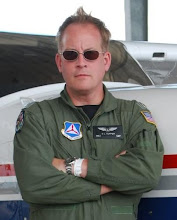
CAP captain, myTransponder co-founder, and friend Rod Rakic happened to be in town this weekend and we made it a point to try to get up in a CAP aircraft for some proficiency work and aircrew activities.

I've flown in the same aircraft with Rod on several occasions. The first was the Cessna Citation Mustang flight during AirVenture Oshkosh 2009 with me in the left seat and Rod in the back. Then Rod flew me in a C-182T Nav III to Marshall, Missouri and back to get some B-2A weapons system trainer time in our logbooks.

But I had not yet flown Rod under circumstances under which I was in the left seat and was in the right seat. Where he could reach the flight controls and make it a fair fight.

Saturday afternoon, the wind howled like hell. I'm talking 18 knots with gusts over 30. Even with the wind coming pretty close to right down the pipe, that's a log of gust factor, especially considering that I hadn't flown the C-182 since last October or so. And I'm a pretty typical non-primarily-182 driver inasmuch as it's a very nose-heavy airplane that likes to sink quickly and I live in fear of whacking the nosewheel.

I have no problem with the G1000. I just don't like seeing the nosewheel strut come through it.

I arrived early and preflighted the airplane like I was buying it. The wind howled around the hangar. Badly enough that I feared opening the hangar door and badly enough that I had a hard time being understood on the phone by my flight release officer because of the noise of all that sheet metal that wanted to depart the tee hangar.

But around 6:30, it magically calmed down to a steady 18 knots right down the runway. Rod arrived, I got my flight release, we stomped the ramp (a very abbreviated ritual along the lines of the Haka - you had to be there) and we launched about an hour before sunset.

We flew up to Yale, Michigan located my high school buddy's place, descended to about 1,600 MSL, and did a mock photo mission over it. Flying at 90 KIAS in a 45-degree bank that low would have bothered me a lot just a year ago. But, after NESA MAS and flying as much tailwheel and acro as I have, it seemed really natural. And the C-182 is a really stable platform for those kinds of maneuvers. You can almost roll in and fly the maneuver on trim alone.

Takeoffs, as they say, are optional. Landings, as they also say, are mandatory. Aviation, unlike maritime pursuits, has a perfect safety record. We've never left one up there.

We went to St. Clair County Airport (KPHN), whose Runway 28 was within 20 degrees of a 15-knot steady wind. Rod had spent a lot of time there in his youth as a line guy and student pilot, so it was a bit of a trip down memory lane for him. I was reluctant to face my C-182 demons more than 40 nm from the airplane's home base in case I yard-saled it across the TDZ. And I began by mistaking Runway 22 for Runway 28.

But I got her headed in the right direction (without entering Canadian airspace in the process) and turned a very nonstandard entry into a very stabilized approach. 70 over the numbers, then kissed it down. I taxied back and got another trip around the patch, this time getting it a little flat, but serviceable and most of the parts stayed in formation with the rest of the airframe.

Rod is getting ready to become a CFI. And the CFI manner is beginning to creep into his right-seat personality. I pointed out a couple of the things that he said or did and made that comment. He was a little taken aback, but admitted it. I assured him that there were no violations of Wheaton's Law involved. In fact, it's very cool to see one's friends constantly evolving and challenging themselves.

Additionally, Rod is going to be a great instructor. He's already a very precise and disciplined pilot. But he also has an excellent way of inspiring confidence and channeling knowledge without being imperious about it. As someone who has watched new student pilot starts fall off and student pilot completions plummet, it would be important to me that Rod become a CFi regardless of whether he was one of my bros. But having him as one of my bros as well? Bonus!

To be sure, Rod gave no "instruction" per se in the aircraft. He's not a CFI. And, even if he were, he's not authorized by CAP to give instruction in CAP birds. (Yet.) We even briefed our roles standing at the nose of the aircraft before leaving. As PIC, I told him that input was welcome. And expected. But I was PIC and any yard sale that I laid out on a runway was mine and mine alone. A good way to brief almost any flight, in fact.

We departed St. Clair and pointed the airplane at Ray Community Airport (57D). I have some plans for things this summer at Ray and I wanted to show the airport to Rod. Ray is the prettiest airport to which I have ever personally been. And Runway at Ray 9/27 is just under 2,500 feet, which I had just proved was a distance within which I could get a C-182T down and stopped. But it was a little dark to actually see anything there and I was reluctant to put my C-182 skills to the test on a shorter runway in the dark.

So back to Pontiac. We got the straight-in approach to Runway 27R. No excuses. I had the airspeed and configuration dialed in from five miles out. the only issue was that it was dark. I mean "duckin' fark." It was less than an hour after sunset, but not a lot less.

Last notch of flaps at a half mile. Yeah, a half mile is further than I could glide with the barn doors hanging out, but a stable approach coming over the fence was more important in this case with this pilot in this airplane than the much-lesser chance of being screwed by an engine failure on short final.

Airspeed 75 KIAS over the fence. 70 KIAS over the numbers. I had my attention way over the nose and off to the side. Rod was looking directly out the side at the ground.

He said "flare."

It was a little earlier than I expected to flare. But I had five more knots of airspeed than I really needed and lots of power available. And Rod has lots of experience in the C-182. All of the input funneled through that high-speed pachinko machine that I've built in my head. I made the decision as PIC to accept the suggestion from my PNF and flare.

I flared. A moment or two of feeling the sink and beginning to think about pushing in the power. Then "doink." Mains down. Yoke in my chest. Nosewheel down. Nice! Let her roll to Kilo and then taxi to Royal for gas.

I think that the landing would have come out safe either way. My way might have been flatter, but would likely have been okay. In any case, it's good to have two sets of eyes and two brains focused on the issue. And it's one of the most special things in all of aviation to have a PNF next to you that you know well and whose thoughts will accelerate through your pachinko machine and get quickly to the place where you make the right decisions.


We hit the Pontiac pilot watering hole (the Shark Club) for beers and dinner after. I think it bothered Rod slightly that I had noticed CFI noises coming out of him on the flight and he was concered that it had been bothersome and launched into a discussion that was part apology.

I cut him off. "Dude, you had me at 'Flare.'"

Laughter, beer, food, and pilot talk, then the departure - me for home and and he for his family in Clawson. I a slightly better pilot. He with a little more time in the right seat trying out the view from there and really thinking about what it's going to be like when he adds the rating and starts flying with people who need his counsel more than I do.

All epic. In a smaller way than Dick-Collins-ing through the yellow IMC over Chicagoland at 2:00 a.m. But in an important way nevertheless.

Up aircrew! Huah!

Tuesday, December 21, 2010

Zero to Hero - Part 2


These are the show notes to an audio episode. You can listen to the show audio by clicking here: http://traffic.libsyn.com/airspeed/AirspeedZero02.mp3. Better yet, subscribe to Airspeed through iTunes or your other favorite podcatcher. It’s all free!

I got together with myTransponder.com founder and fellow CAP officer Rod Rakic to talk about accelerated flight training. Rod has done accelerated programs as a part of both his commercial and instrument training. I did my AMEL, ASES, and DC-3 (SIC) training in accelerated programs. And Rod and I are both graduates of the CAP National Emergency Services Academy’s Mission Aircrew School.

We talked about the benefits and drawbacks of accelerated and/or concentrated training and how best to take advantage of it.

Tuesday, May 25, 2010

What I Mean by "Epic"


We sling around the word “epic” a little too freely, thinks I. And I guess that I’m more prone so say something like that after the last few days. They’ve been – well – epic.

When last I posted, I was at the hotel on Whiteman AFB in Missouri. After shutting down and clearing out, Rod Rakic and I headed out onto the base.

The first order of business was to secure breakfast. It turns out that, as the Alamo and Riverwalk are to San Antonio, the breakfast burritos at the bowling alley are to Whiteman AFB. No fewer than three people volunteered that the breakfast burritos at the bowling alley were second to none and suggested that we’d be fools not to try them out. And they were right!

Rod then dragged me to Military Clothing Sales to right a wrong that he has been seeing in my Air Force cover for months. I procured the largest one they offered (7-7/8) and it’s still a little small, but serviceable.

Then on to the good stuff. We were guests in the tower to see how operations work at the base for the B-2 Spirit stealth bomber. Everything you’d expect to see in a regular FAA tower, but about twice the personnel and A-10s, T-38s, and attack helicopters also launching regularly. And, when it came time to launch the B-2 training sorties, let’s just say that we had a unique view from close up. OPSEC suggests that I say little more, but it was a completely new experience for me.

Shortly thereafter, we got some lunch and then headed to the training center for a couple of sorties in the Level D full-motion B-2 simulator. (Yeah, I said Level D full-motion B-2 simulator!)

Side note: Please pardon the lack of pictures or other multimedia. I left the cameras and other shovels and rakes and implements of the podcaster’s craft back in the car. OPSEC is king there at Whiteman and I wanted to be a good guest. I know that I’m the guy in the new-media community who’s the first to shout at another new-media guy, “If you didn’t get audio and video, it didn’t happen!” Fair enough. The following didn’t happen.

The facility is in a vault (!) in the interior of the building with all kinds of security surrounding it. And that’s the security that we could see. I’m guessing that there were lavers upon layers of it that we couldn’t even tell were there.

I’ve never been in a sim facility before that was this sophisticated or realistic. You walk over a bridge to the sim compartment, which is itself on hydraulic supports and capable of a wide range of motion in all relevant directions and at all relevant rates. It’s a full B-2 cockpit with a wrap-around video display that cover the entire window area.

Each sortie involved a takeoff, a 30-degree turn (uncharacteristic for this aircraft that likes to stay very flat and present a very limited radar signature), a climb to a KC-135R tanker, various attempts at aerial refueling, then an ILS and landing back at Whiteman.

Rod flew the first sortie and I flew the second. The guy not flying hung out in the control room with the sim technician and watched a set of panels and a view “outside” while listening to the conversation in the cockpit.

Each sortie was about 0.7 long with the IP in the left seat and Rod or me in the right seat. You have a stick in your right hand and a fistful of throttles in your left hand. The PTT for the intercom is on the throttles. There are varying levels of automation and you engage them at various points after takeoff to assist in flying the aircraft.

Takeoff was surprisingly normal-feeling. Just a lot bigger and more protracted. Not unlike flying the DC-3 or another large aircraft that actually has vertical control surfaces to speak of. There’s a long takeoff roll and then you rotate off at well in excess of the cruising speed of most of the aircraft that I usually fly. Once established, you let the autopilot fly the climb airspeed until it’s time to pitch over for cruise.

At that point, the sim causes a KC-135R to appear magically in front of you and you climb to meet it. Boy, do I have a lot of respect for anyone who gets gas in mid-flight! I suppose I had already begun to have that respect from the sortie last summer in the KC-135R from Grissom ARB. But the process from the “get” side is awe-inspiring.

I was really saturated throughout the refueling process. But I remember stealing glances at the airspeed indicator and kicking myself for being two knots off. Two knots makes a big difference. It’s a walking pace. You can cover a lot of linear distance in ten seconds at two knots. Enough to blow right out of the top, bottom, or sides of the 2,000 or so cubic feet that I’m guessing make up the volume in which you can receive gas.

And the B-2, like any other large aircraft, reacts slowly and deliberately to control inputs. If you’re moving the controls in response to what you see out the window right now, you’re just piling up pilot-induced oscillations. What you see out the window and on the displays is the aircraft reacting to what you did three to seven seconds ago. It’s like playing guitar plugged into a long delay effect. You’re listening to what you did awhile ago, but you have to play now to make stuff happen in a few seconds or the whole thing gets downright un-musical in a hurry.

Rod and I each had boom strikes on the windshield and we caused permanent simulated psychological damage to the simulated boom operator. Neither of us actually got connected to the tanker. But neither of us killed anyone, either.

Each of us confided to the other after the experience that he was hoping like hell that the other guy wouldn’t get any gas. KMHL to KPWK is a long time to spend in a C-182T with a guy who got gas when you didn’t.

Rod got the better landing. You don’t flare the B-2. It’s a flying wing. You just point it at the touchdown zone and roll the power to idle. The airplane flares itself. I had a hard time with that and had to push a little at the IP’s call. Rod just flew the thing on. Cool on his part, but not enough to make the flight back to Chicagoland in said C-182T any worse than it needed to be.

And I guess I got the last word by remembering to bring my logbook. The IP signed it for the sortie and an already cool logbook got one notch cooler.


We got back into the minivan and headed back to Marshall (KMHL) to preflight, fuel up, and get back to Chicagoland. We launched just before sunset and air-filed back to Chicago Executive (KPWK). It was severe clear most of the way back with stars guiding the way, but the destination was iffy. A low-pressure system was dominating the whole area. KPWK was forecast to be 1,000 overcast with four miles or so of visibility and we were good to go with that. Two G1000-qualified aircrew in a good airplane with lots of alternate options.

As we neared the area, the METAR had dropped to 300 overcast with low visibility in mist. We were busting through banks of stratus and cumulus clouds, although the ride was mostly smooth. We got within 10 miles or so of the airport, snatching glances down through breaks in the clag to see the whole area around KPWK socked in.

We had briefed minima for our aircrew of 1,000 ft ceilings and three miles of visibility. There was some temptation to go down for a peek, but I’m proud to say that this aircrew planned the flight and flew the plan. Rod keyed up ATC and requested a diversion to DuPage (KDPA). We got vectors immediately and planned for the ILS.

The approach got downright interesting. We spotted the runway from two miles outside the final approach fix. About that time, KDPA tower advised us that visibility was at a half mile – minimums for this approach. We let the tower know that we could plainly see the runway. The tower allowed as how the other end of the airfield might be worse than our end of the airfield. In any case, we had both FAA minima (according to the AWOS) and out own minima (according to two installations of the Mark II Eyeball) and Rod brought her in for a good landing.

As it turns out, the other end of the field was socked in pretty well. I recall offering Rod $100 cash if he'd shut off the strobes sooner rather than later. But we made the taxi to Illinois Wing CAP headquarters without incident and buttoned up the aircraft for the night.


The next day was a training exercise for the Illinois Wing. As many of you know, I’m planning to attend Civil Air Patrol Mission Aircrew School at the National Emergency Services Academy next month and get trained to be a mission pilot. In order to do that, I need to first, among other things, become a mission scanner. I had completed all of the requirements other than a couple of technical operational items and flying on two training sorties. I’ve been slightly bunched up about the possibility of not getting the sorties in and missing the chance to go to MAS, So I lined up three opportunities in the hopes of hitting two.

The first was an Illinois Wing exercise on Saturday. Rod had arranged to let me fly on an aircrew in the exercise to known out a sortie there before driving home. The next opportunity was a Michigan Wing SAREX at KFNT the next day and, if one of those opportunities blew out, I had a self-funded unit sortie scheduled for Tuesday.

I got the Saturday sortie after the weather cleared up at KDPA. I sat front seat with Rod and we had the privilege of flying with 1Lt Tommy Whang and 1Lt Sheri Sorenson in the back. Sheri was flying a scanner sortie and the Tonny was shooting photos to maintain a qualification.


We located the target northwest of the Chicago area, did an expanding square pattern with the help of the G1000 and the GFC 700 autopilot before getting the required pictures and heading home.

I beat feet for home and arrived at KFNT early the next morning. After cooling my heels at the mission base for a few hours, Capt Norm Malek and 2Lt Dave wood arrived with the KPTK C-182T. We drew a sector search with a start at a lat-long point and a full mow of the lawn for the rest of the sector if we didn’t find anything. And there was a photo mission to boot on the way back.


We arrived at the start point and I set up the search with the G1000. The amount of time that I have in this particular airplane, together with the seven or more hours I’d spent sitting behind the G1000 over the prior few days, made setting up the search second nature and I had us in an expanding square in no time.

By the fourth leg of the square, Dave spotted a blue tarp and the letters “CAP” mowed into the grass behind a house in the search area. We radioed in to base and were instructed to photograph the find and then return to base.

Mission scanner sortie no. 2 complete! Locked and loaded for MAS and NESA 2010! And the end of an exhausting and challenging four days in a flight suit.

Which brings me back to the epic-ness of the last few days. We spend amazing amounts of time, money, and energy learning how to fly. How to make airplanes perform missions to their full potential. And, all too often, it’s simulated ersatz stuff. Hoods instead of clouds. Discussions of hypothetical weather on hypothetical trips to hypothetical places. Calculating weight and balance for people in the back seat who never actually sit there.

I’m not saying that those exercises aren’t useful. They are. But it’s not hard to arrive at a state of mind in which the hypothetical is enough. Is all you need. Is normal.

I’m here to tell you that it’s not enough and you shouldn’t let it be normal. It’s not easy to decide to launch into known weather on one of the longest trips you’ve ever flown. In strange airspace. To strange airports. With the very real challenge of thinking on your feet when things don’t go as planned. Then doing it at night in sustained actual IMC with low ceilings and wildly varying visibility. Then launching with a CAP aircrew to go find stuff on the ground that, although simulated, is real enough for you because you’re up there packing crazy amounts of workload into limited bandwidth and actually putting the words of the MART into action and objectively demonstrating skills.

None of this stuff is easy. Especially the first time. And the general aviation training culture seems pretty willing to let you keep pretending as long as you like.

But I’m here to tell you that the hard stuff is worth it. I just got a four-day immersive demonstration of that very thing. I stretched just about every limit I had and the preparation and willingness to go launch into it paid off. This is epiphany. This is discovery.

This is epic.

Friday, May 21, 2010

Channeling Dick Collins: IFR to Whiteman AFB - Almost


So Rod Rakic calls me up a few weeks ago. Seems we have an opportunity to go check out the B-2 Spirit bomber at Whiteman AFB. Cliff, a mutual friend, had kindly offered to give us a tour of the facilities and get us close to the mighty Mach 0.95, 335,500-lb. Heavy stealth bomber.

I, not being an idiot, say “Let’s go!”

To make it even more epic, Rod arranged for an Illinois wing CAP C-182T Nav III to make the trip from Chicago Executive (fka Palwaukee) (KPWK) to Whiteman.

When we got together at KPWK and sat down to brief the mission. A band of precipitation sat between us and our objective. No getting around it, really. It was all green and yellow, but non-convective as nearly as we could tell. Ceilings between 800 and 3,000 and tops between FL180 and FL250. It was clear that, if we were going to make this trip, we were going to be in the crud for a good portion of the flight.

Both Rod and I are qualified CAP pilots in the G1000-equipped bird. We’re pretty good operators – Rod perhaps more so than me. The issue now became whether to go launch into weather that we both knew that the bird could handle and for which both of us are well-trained, but that neither of us had experienced first-hand.


It was like a Dick Collins video. Planning to go launch into the soup for an extended period.

I’m a reasonably cautious guy. Old and bold pilots and all. I plan to be old. So’s Rod. I’ve talked with him about go/no-go decisions a lot in the past. We’re both conservative. But we came up with a “go” for this mission. Capable bird. Two qualified pilots. Weather thick but non-convective.

So we launched. We got into the soup well before Moline at 6,000 MSL. Then we hit the precip. Green on the XM satellite radar. Then yellow. Then green again. We gave the airplane a good bath.

And we were rewarded with a smooth flight and a beautiful phase between an undercast and an overcast. One of those great feelings you get when you train for something and then have success when you go out and actually experience it.


Then circumstance frowned upon us. We had been watching some convective activity near Whiteman, but it appeared that it would blow over by the time we got there. But the red stayed near the base. And then ATC called us up and told us that the Whiteman tower was evacuating because of a tornado in the vicinity. No good for Whiteman.

So we looked at our alternate, which was near Whiteman, but also close to the thunderboomers. With the help of the G1000, we identified Marshall Memorial Airport (KMHL) in Marshall, Missouri and shot the RVAV 18 to a smooth landing. The field was well above minimums, but it was scattered and ragged with a frond in the area and we stayed IFR through landing, then called up flight service to cancel.

As we taxied to the ramp, our eyes were greeted by the glorious sight of a CAP van parked outside the terminal building. It’s assigned to the Marshall Composite Squadron, which is based there at the field. A couple of phone calls later, we were meeting with the squadron’s commander and getting the keys to the van to drive the last 50 miles to Whiteman.

As we drove, lightning lit up the skies and low and dark clouds rolled overhead. Rail came down in varying amounts. Like all good pilots, we rehashed the flight and the decision to divert. I think we did a pretty good job of being situationally aware, being nimble and flexible to deal with the weather, and using good CRM to optimize cockpit operations.

Channeling Dick Collins for the first time. Flying through the soup and letting nature wash the airplane. This is the payoff for a lot of hard work. Now down to the hotel lobby to meet Rod and go see us some bombers!

Thursday, January 28, 2010

Cessna Citation Mustang - Video Episode


Subscribe to Airspeed through iTunes or your favorite other podcatcher. It's all free!

These are the show notes to an audio episode. If you want to listen online, please use the direct link below.
http://media.libsyn.com/media/airspeed/AirspeedMustangVideo.m4v.

Remember when I said that I spent the summer building up great content and spent the off-season here in the northern US editing it all and making it compelling? Well, here’s some of that content.

You’ll recall the audio episode covering the demo flight in the Cessna Citation Mustang? Here’s the video from the flight. I had the camera up front for the takeoff, then David Allen ably took over the HD camera duties while Rod Rakic took the Flip video, Jo Hunter shot stills, and Cole (“FOD”) provided color commentary.

Be sure to check out the audio episode, Flying the Cessna Citation Mustang, for a complete account of the flight, including 30-odd cockpit audio outtakes!

Tuesday, September 22, 2009

Team-Testing the Remos GX


Subscribe to Airspeed through iTunes or your favorite other podcatcher. It's all free!

These are the show notes to an audio episode. If you want to listen online, please use the direct link below.
http://media.libsyn.com/media/airspeed/AirspeedRemosGX.mp3.

At Oshkosh this year, I had the chance to join a merry band of new-media types at Orion Air to go test-fly the Remos GX, a light sport aircraft.

This was my first time flying a light sport aircraft of any kind. I’ve been a fan of LSAs since they were first introduced, but, due to training and other priorities in my own flying, this was the first time that I had had an opportunity to fly one.


In order to get the full spectrum of the experience, I invited several other new-media folks who flew the Remos GX at Oshkosh to join me on this episode to talk about it. From student pilots like Scott F. Murphy and David Allen to relatively new private pilot Bill Williams to me to experienced CFI Mike Miley, you’ll be able to identify at least one panelist on this episode that matches your mission, qualifications, and skillset and gives you the perspective that you seek in evaluating this great LSA.

Thanks to Rod Rakic and http://www.mytransponder.com/ for coordinating the demo flights for this episode!
Pictured in the lead image (L-R): David "Ducky" Allen, Scott Murphy, Cole "FOD" Tupper, Bill Williams, Rod "Fanboy" Rakic.


Friday, April 24, 2009

Second Day at Sun 'N Fun


This is a regular blog post. If you’re looking for show notes or links to show audio, please check out the other posts.

Day two here at Sun ‘N Fun in Lakeland, Florida. We got up at 4:30 a.m. yesterday to make the flight to Orlando and didn’t get to the hotel until around 10:00, so no blog post yesterday.

But we’re back at a reasonable time tonight, so here are a few views of the day.

Rod Rakic, the mastermind behind www.mytransponder.com, got to hold Sean Tucker’s pole (at least one of them) for one of the ribbon cuts at the show today. Ella and I talked our way up onto the announcer’s stand and shot this picture of the moment. That’s Rod in the orange shirt holding the near pole.


Yesterday, we hit the Splash-In at the Fantasy of Flight museum on the way to Lakepand. We hooked up with Will Hawkins and Rico Sharqawi of Wilco Films and got to help set up for Kermit Weeks’ interview for A Pilot’s Story. Ella was the stand-in for Kermit during the setup phase.


The Viper East Demo Team was there with a single-ship F-16 demonstration. I shot what I could of the demo, but this was the first time I could get really close to the announcer end of the presentation. Here, the major is handling the communications with the aircraft during the demo while the chief did the announcing.


Be sure to join me on the Sun ‘N Fun Radio porch tomorrow right after the airshow (approx. 5:30) for the very first live rendition of Airspeed! I’ll tweet as we get close to airtime. See you there!

Thursday, November 13, 2008

Chicago Sortie and More Taildragger Training


This is a regular blog post. If you’re looking for show notes or links to show audio, please check out the other entries.

I attended my law firm’s partner meeting in Chicago this past weekend. On Sunday, I connected with Rod Rakic and James (jetstew on myTransponder) to have breakfast and hang out. We his Orange on Harrison for breakfast and then took a cab to the Museum of Science and Industry. Really cool to go to that museum with a couple of pilots and walk around talking aviation and aerospace. Wyen I go to a museum these days, it’s usually with the kids and I’m pointing stuff out and playing tour guide to make sure that the kids get the important stuff.

And, yeah, I admit that I’m often tempted to bring along Post-It Notes and stick little corrections on some of the exhibits, but that’s how I roll.

But I was the junior pilot here in many respects. James is an ATP (ATR 42/72- SIC and EMB 135/140/145 SIC) and Rod has about twice the hours that I have. Really nice to just shut up and listen more than I usually do.


Monday, I snuck out at the end of the day and got 1.8 hours in the Citabria. Started out with wingovers, loops, and rolls. Clearly, my aerobatic tolerance has gone away since the summer. I was done after about 25 minutes and feeling about 60/40 that I might hurl. Not beating myself up. It’s just that I have another data point about what kind of duration my aerobatic tolerance has. I’d really like to go up twice a week for a month and see where the tolerance goes. I’m pretty sure that I could get back over an hour again and actually put together series of maneuvers and fly a routine. (How cool would that be!)

But that’ll have to wait until after the first of the year. The usual end-of-year push at the office is in full swing and I need to bust out some work.

We went to Lapeer (D95) and did six or seven takeoffs and landings. Stiff 14-knot crosswind, but I managed to really nail the last few landings. I think I might have had a breakthrough in tailwheel technique. I’ve been stirring the coffee way too much. If I just get the airplane reasonably aligned by the time I’m 200 yards from the threshold and hold the stick pretty still laterally and control the touchdown with pull, I seem to get it nailed down. Proper position of stick on rollout is tucked right there next to the windward gonad.

It’s really kind of like my experience finally getting the landing as a primary student. One day, I couldn’t seem to get it and the next I was greasing them in. Yes, there are some empirical things I can point to, like stick position and relative amount of coffee-stirring, but it’s mostly kinesthetic. You experience success a few times and get a sense of it. I wish it were more empirical, but it isn’t. At least not for me.


I need to do an entry on cold-weather flying. If you can get the ceilings and the visibility, it’s really wonderful. The airplane climbs well and aerobatics seem even more fun.

Sutton Aviation has a new Super Decathlon on the ramp. Which might not be such a big deal except that you can actually rent it! I don’t know of anywhere else in southeast Michigan where you can rent a Super-D. Yeah, you have to get checked out in it, but that’s true of any rental. Yeah, the Super-D is a lot of airplane and it might take some more effort to get the checkout, but it’s a Super-D, after all.

If you’re interested, contact Barry Sutton at Sutton Aviation:

Sutton Aviation, Inc.
Oakland County International Airport
6230 North Service Drive
Waterford, Michigan 48327
248-666-9160
http://www.sutton-aviation.com/

Saturday, October 18, 2008

Lunch and Techspeak with Rod Rakic in Chicago


This is a regular blog post. Show notes and links to audio appear in the other entries.

I had client meetings in Chicago this week, so I naturally called up fellow CAP captain Rod Rakic of myTransponder.com to head out to lunch.

I got a visiting office at my firm’s offices on LaSalle Street and met Rod. Some really good and authentic Mexican food, some really nasty Italian cigars, and some good conversation about how myTransponder is going to grow. I naturally gave my EUR 0.015 and I hope it was helpful.

It’s both odd and wonderful that most of my friends these days are those I rarely actually see in person and that I met through new media, particularly the podcasting community. That’s one of the benefits of the long tail. It connects you with folks who share passions that are parts of pieces of side tracks of the mainstream and who are really good at leveraging those things.

I’m back in Michigan now, putting together the Thunderbirds summary episode, extracting some music tracks for A Pilot’s Story, and getting ready to post the David Kneupper interview. Stay tuned!

Sunday, June 01, 2008

Red Bull Air Races - Detroit - Sunday - USA's Chambliss Wins!


Subscribe to Airspeed through iTunes or your favorite other podcatcher. Or listen online right here by clicking: http://media.libsyn.com/media/airspeed/AirspeedRedBull1.mp3. It's all free!

Check out the link above to hear the episode that Rod Rakic and I recorded early this afternoon before the racing started. A little hangar flying there at the media center on the Detroit riverfront. Couldn’t have asked for a better setup.

Full catering and all the Red Bull we could drink. You guys know me. I’m a full-time lawyer, writer, aviation nut, etc. who tries to do all that a proper 21st century renaissance man should do. I owe it all to caffeinated beverages. Put me in a full media center with high-speed (1Gb) Internet, access to a great photo vantage point, and all the Red Bull I can drink? By noon, I couldn’t feel my face. Everyone was walking around in slow motion. Yeah, baby!

American Kirby Chambliss, flying the No. 4 Red Bull-sponsored Edge 540 took the series leader Paul Bonhomme with a time of 1:12.08, just 0.15 seconds ahead of Bonhomme. Bonhomme remains the points leader for the series and both flew a great event.


Airspeed favorite Mike Goulian netted two points with his eighth-place finish in today’s combined qualifying and racing event. Here he is splitting the final gate on the track and pulling her up for a reversal to attack the second half of the flight.

Organizers claimed that the event drew 750,000 people total taking in the festivities. 100,000 tickets for viewing areas sold out days before the show. Here’s a shot of the crowd immediately in front of the media vantage point. A very cordial crowd that lined the riverfront and packed Hart Plaza and any other place where you could stand, eat, drink, and make merry. No thrown elbows here. Everybody pretty much having a good time.

And I have to thank the City of Detroit for having wireless Internet available. My only complaint about the media center was that the wired Internet access apparently had a standard workplace filter on it, which prohibited access to (of all things) Blogger, Twitter, and other services that are pretty necessary to some of us media types, especially the new-media 2.0-ers. At least they didn’t block Libsyn, so I was able to post an episode over the high-speed line. We got the blog post up over the city’s wireless Internet service, but it was a bit intermittent and we couldn’t get pictures up onto the site reliably.

All that said, Red Bull treated Rod and me like kings. Good food, free priority valet parking, shuttles, to important stuff, and, of course, free Red Bull. The wired Internet issue is minor and we got around it handily, if on a limited basis. Way to go, Red Bull! Thanks for the hospitality!


The Canadian Harvards also made an appearance each day, doing a three-ship aerobatic routine. The light was pretty good, too, by the time they flew and I got several really good shots of them. Nice scattered puffy cumulus clouds against which to photograph them.

They had an F4U Corsair and an F/A-18 Super Hornet do a heritage flight and then each did a couple of individual passes. The Hornet did a mach pass ostensibly 12 KIAS below the speed of sound that caused nice condensation around the wings and positively delightful noise (which I featured at the tail of the episode). Don’t know if the speed was that precise, but I’m not going to second-guess a Super Hornet. Alas, the passes were under an overcast, the light sucked, and the auto-focus on the 200mm lens of my Nikon D40X was really off, so the pictures aren’t really good enough to post. So you’ll have to make do with the sound. (Which is okay with me – Tasty audio, that.)


We avoided a major goat rodeo when the valets identified us by our media badges and got our respective vehicles lickety-split. You have to understand that there was perhaps a 30-minute line to get to the valet window to even begin the process of getting your vehicle. Have I mentioned that Red Bull really took care of us?

We ran into a group of four people (who apparently also identified us by our media passes), who asked what Airspeed was and, more to the point, could Airspeed get them to Detroit City (Coleman Young) Airport? We allowed as how it (it being Rod) might be able to do just that. I complimented one gentleman on his very nice Cirrus-logo pullover and they shortly indicated that they were all Cirrus folk from the plant in Duluth. How cool is that? A ride to KDET? Let me think about that for two or three seconds. Okay!

Rod is working on a social media project involving pilots (the title and other aspects of which I believe are not yet for publication, but about which you’ll likely be hearing soon) and there are worse things that could happen to such a guy as Rod than having a captive audience of Cirrus folk for the 30-minute ride to KDET. Plus, both Rod and I are Cirrus fanboys (see the entries for Airspeed episodes featuring a test flight of a Cirrus SR-22 G3 and my interview with Alan Klapmeier). I would like to have taken one or two, but the thought of Rod with four well-placed and friendly Cirrus personnel in a confined space caused me to hold my tongue and my car keys.

He’s on his way back to Chicago this evening. Great to hang out and spend time with him. He was a huge help in gathering background and getting his finger (hand, arm up to the elbow, etc.) on the pulse of the actual competition (as is obvious from the audio of the episode) and he made the whole experience a lot more fun than showing up solo.

Thanks, Rod! Come back anytime! I’ll have the Red Bull chilled!

One final note: Greg Summers of The Student Pilot Journal called this weekend to say that he completed his private pilot checkride (NORDO, no less!) and is a newly-minted private pilot! Bravo Zulu, Greg!