Showing posts with label Civil Air Patrol. Show all posts

Wednesday, October 19, 2011

Touching the True Source: CAP NESA MAS 2010 - The Combined Audio Episode with Print Version


Here it is! The full version of my experiences at Civil Air Patrol’s National Emergency Services Academy Mission Aircrew School in June of 2010. All of the audio and all 30,000 words, among with images!

As you know, Airspeed is primarily intended to be consumed (and is overwhelmingly consumed) through thousands of handheld audio and video devices all over the world. But this is a pretty epic presentation (nearly two hours) and some of the more ambitious of you are going to want a linkable place at which to access the whole thing by means of the web. So here you go!

An MP3 file containing the entire 1:49:19 (100MB) essay is available at http://traffic.libsyn.com/airspeed/AirspeedNESAEssayFull.mp3.

The PDF document with the whole essay and images from the school and the events leading up to it lives at http://traffic.libsyn.com/airspeed/Airspeed_-_Touching_the_True_Source_-_CAP_NESA_MAS_2010_-_v2011-10-10.pdf.

More information about Civil Air Patrol is available at www.gocivilairpatrol.com. More information about NESA is available at www.nesa.cap.gov.


Wednesday, October 12, 2011

CAP NESA MAS 2010 - Part 3


These are the show notes to an audio episode. You can listen to the show audio by clicking here: http://traffic.libsyn.com/airspeed/AirspeedNESAEssay03.mp3. Better yet, subscribe to Airspeed through iTunes or your other favorite podcatcher. It’s all free!

This is the third of a three-episode series covering my experience at Civil Air Patrol’s National Emergency Services Academy Mission Aircrew School (NESA-MAS) in Indiana in the summer of 2010.

You can check out the first episode here and the second episode here.

I intend to make available the entire 30,000-word piece in a single file and PDF document with photos at about the time at which I release the third episode. I might also put the long-form file into the podcast feed on its own.

In the meantime, enjoy this in-depth look at the nation’s premier civilian fixed-wing search-and-rescue flight training school from the perspective of a zero-to-hero CAP Mission Pilot candidate.


Tuesday, September 27, 2011

CAP NESA MAS 2010 - Part 2


These are the show notes to an audio episode. You can listen to the show audio by clicking here: http://traffic.libsyn.com/airspeed/AirspeedNESAEssay02.mp3. Better yet, subscribe to Airspeed through iTunes or your other favorite podcatcher. It’s all free!

This is the second of a three-episode series covering my experience at Civil Air Patrol’s National Emergency Services Academy Mission Aircrew School (NESA-MAS) in Indiana in the summer of 2010.

You can check out the first episode here.

I intend to make available the entire 30,000-word piece in a single file and PDF document with photos at about the time at which I release the third episode. I might also put the long-form file into the podcast feed on its own.

In the meantime, enjoy this in-depth look at the nation’s premier civilian fixed-wing search-and-rescue flight training school from the perspective of a zero-to-hero CAP Mission Pilot candidate.


Sunday, September 18, 2011

CAP NESA MAS 2010 - Part 1


These are the show notes to an audio episode. You can listen to the show audio by clicking here: http://traffic.libsyn.com/airspeed/AirspeedNESAEssay01.mp3. Better yet, subscribe to Airspeed through iTunes or your other favorite podcatcher. It’s all free!

This is the first of a three-episode series covering my experience at Civil Air Patrol’s National Emergency Services Academy Mission Aircrew School (NESA-MAS) in Indiana in the summer of 2010.

I intend to make available the entire 30,000-word piece in a single file and PDF document with photos at about the time at which I release the third episode. I might also put the long-form file into the podcast feed on its own.

In the meantime, enjoy this in-depth look at the nation’s premier civilian fixed-wing search-and-rescue flight training school from the perspective of a zero-to-hero CAP Mission Pilot candidate.


Tuesday, August 23, 2011

Selfridge 2011


This is a regular blog post that updates listeners and viewers on events in the Airspeed world. Airspeed is an audio and video Internet media source that brings the best in aviation and aerospace to media devices and desktops everywhere. If you’re looking for the audio and video content, please check the other entries on the site. It’s all here! In the meantime, enjoy this update about what’s going on in Airspeed’s world.

I got to put on my Nomex and hit the Selfridge ANGB Airshow all day on Sunday to help run the CAP static display. I hit the gate at around 0540 and was out on the flight line by about 0730. We put about 130 Boy Scouts through the hands-on portion of their aviation merit badges in addition to putting several hundred other people in one of the wing’s glass C-182Ts.


Temperatures never got much past 80 and there was a good breeze. Good weather for being in Nomex all day. Not so much for photography. I headed out to the show line to shoot the Rhino demo and the heritage flight, but gray airplanes against a dark gray sky don’t work that well. Still, the F/A-18F is a beautiful airframe and it makes great noise.

For those who have asked, I was on the base when Todd Green fell. I was down near Base Ops the CAP display. I probably saw the pass on which Todd fell, but show center, where the fall occurred, was obscured by the roof of the structure under which I was standing. I found out about the fall about 15 minutes later from a friend who was returning from seeing Brett Hunter fly. My thoughts are with Todd’s family and friends. I met Todd briefly at the ICAS convention in Vegas in December.

I also briefly met Bryan Jensen at the same convention. Bryan died on Saturday at the Kansas City Aviation Expo Airshow when he failed to recover his Pitts Model 12 from a maneuver.

It’s been a rough weekend for the airshow community. We lost Todd and Bryan, as well as Flight Lieutenant Jon Egging at the Bournemouth Air Festival in Dorset, England. That makes four fatals this year.

Aerobatics and airshow performance are risky. The performers understand the risks better than anyone else. Safety in operations is a passion for these people. They manage risk in every way they can. I know. I’ve spent time in the box and on the flight line with performers, especially this season. I also attended Airshows 101 at ICAS in December and had other opportunities to see and hear safety discussed in a frank and open way.

Even random data is necessarily clumpy. I’m hoping that the mainstream media realizes that there were no airshow fatalities in 2009 or 2010 and there was only one in 2008. And there hasn’t been a spectator fatality in North America since 1952.

Any accident or incident is one too many. Perfect is the goal. Nobody understands this better than those who participate in the airshow industry. And, as a guy who has flown with airshow performers in an Extra, several Pitts, an F-16D, and two L-39s, I’ve seen the safety culture and commitment firsthand.

What’ll happen going forward? The same thing that happens in with every airshow accident or incident. Performers and others in the industry will scour the circumstances for details and then will debrief it thoroughly, openly, and with brutal honesty.

I remember the debrief scenes from Blue Angels: A Year in the Life. Each pilot ended each critique session, no matter how good or brutal, by saying, “I’ll fix my safeties and I’m glad to be here.” It’s not just rhetoric. And that attitude is not confined to the Blues. It pervades this very special industry.

Futher affiant sayeth not.

The crew for the Acro Camp 2 movie shoot begins arriving later today. Jack Hodgson, the writer, arrives this afternoon. Will, Tori, Shawn, David, and Ruby arrive in the wee hours of tomorrow morning. And the campers arrive Thursday with ground school beginning at 1700. I’ve been up since 0300. I can’t sleep. There’s unbelievable energy surrounding this shoot and it’s not hard to get caught up in it, even when I should be stockpiling sleep.

Watch this space and www.acrocamp.com for more information!

Tuesday, January 18, 2011

CAP NESA Part 1 - CAP Lt Col John Desmarais


These are the show notes to an audio episode. You can listen to the show audio by clicking here: http://traffic.libsyn.com/airspeed/AirspeedNESA01.mp3. Better yet, subscribe to Airspeed through iTunes or your other favorite podcatcher. It’s all free!

As many of you know, I attended the Civil Air Patrol’s National Emergency Services Academy (“NESA”) this summer at Camp Atterbury in Indiana. I did the Mission Pilot track in the Mission Aircrew School portion of the academy. But there’s a lot more than that to NESA that the aircrew training.

I'm working on an epic NESA episode that distills my own thoughts about the experience, but I wanted to be sure to get the full 30,000-foot view as well. To that end, I invited CAP Lt Col John Desmarais, CAP’s interim national Director of Operations, to talk about NESA.

There’s more information about NESA at http://www.nesa.cap.gov/ and more information about CAP (including a unit locator that can help you find a unit to visit and maybe join) at http://gocivilairpatrol.com/.


Tuesday, December 21, 2010

Zero to Hero - Part 2


These are the show notes to an audio episode. You can listen to the show audio by clicking here: http://traffic.libsyn.com/airspeed/AirspeedZero02.mp3. Better yet, subscribe to Airspeed through iTunes or your other favorite podcatcher. It’s all free!

I got together with myTransponder.com founder and fellow CAP officer Rod Rakic to talk about accelerated flight training. Rod has done accelerated programs as a part of both his commercial and instrument training. I did my AMEL, ASES, and DC-3 (SIC) training in accelerated programs. And Rod and I are both graduates of the CAP National Emergency Services Academy’s Mission Aircrew School.

We talked about the benefits and drawbacks of accelerated and/or concentrated training and how best to take advantage of it.

Saturday, November 13, 2010

Airspeed - VIDEO - How to Pass Your CAP Form 5 Checkride

Airspeed - VIDEO - How to Pass Your CAP Form 5 Checkride from Steve Tupper on Vimeo.

Here's a video that I shot during my CAP Form 5 recurrent checkride on 11 October 2010. Although it's CAP-intensive, there are good lessons here for any checkride.

Although both Capt Kramer and I are active CAP officers, CAP does not endorse Airspeed and the opinions expressed are not necessarily those of CAP.

For more information about CAP or to find a CAP unit near you, visit www.gocivilairpatrol.com.


Tuesday, May 25, 2010

What I Mean by "Epic"


We sling around the word “epic” a little too freely, thinks I. And I guess that I’m more prone so say something like that after the last few days. They’ve been – well – epic.

When last I posted, I was at the hotel on Whiteman AFB in Missouri. After shutting down and clearing out, Rod Rakic and I headed out onto the base.

The first order of business was to secure breakfast. It turns out that, as the Alamo and Riverwalk are to San Antonio, the breakfast burritos at the bowling alley are to Whiteman AFB. No fewer than three people volunteered that the breakfast burritos at the bowling alley were second to none and suggested that we’d be fools not to try them out. And they were right!

Rod then dragged me to Military Clothing Sales to right a wrong that he has been seeing in my Air Force cover for months. I procured the largest one they offered (7-7/8) and it’s still a little small, but serviceable.

Then on to the good stuff. We were guests in the tower to see how operations work at the base for the B-2 Spirit stealth bomber. Everything you’d expect to see in a regular FAA tower, but about twice the personnel and A-10s, T-38s, and attack helicopters also launching regularly. And, when it came time to launch the B-2 training sorties, let’s just say that we had a unique view from close up. OPSEC suggests that I say little more, but it was a completely new experience for me.

Shortly thereafter, we got some lunch and then headed to the training center for a couple of sorties in the Level D full-motion B-2 simulator. (Yeah, I said Level D full-motion B-2 simulator!)

Side note: Please pardon the lack of pictures or other multimedia. I left the cameras and other shovels and rakes and implements of the podcaster’s craft back in the car. OPSEC is king there at Whiteman and I wanted to be a good guest. I know that I’m the guy in the new-media community who’s the first to shout at another new-media guy, “If you didn’t get audio and video, it didn’t happen!” Fair enough. The following didn’t happen.

The facility is in a vault (!) in the interior of the building with all kinds of security surrounding it. And that’s the security that we could see. I’m guessing that there were lavers upon layers of it that we couldn’t even tell were there.

I’ve never been in a sim facility before that was this sophisticated or realistic. You walk over a bridge to the sim compartment, which is itself on hydraulic supports and capable of a wide range of motion in all relevant directions and at all relevant rates. It’s a full B-2 cockpit with a wrap-around video display that cover the entire window area.

Each sortie involved a takeoff, a 30-degree turn (uncharacteristic for this aircraft that likes to stay very flat and present a very limited radar signature), a climb to a KC-135R tanker, various attempts at aerial refueling, then an ILS and landing back at Whiteman.

Rod flew the first sortie and I flew the second. The guy not flying hung out in the control room with the sim technician and watched a set of panels and a view “outside” while listening to the conversation in the cockpit.

Each sortie was about 0.7 long with the IP in the left seat and Rod or me in the right seat. You have a stick in your right hand and a fistful of throttles in your left hand. The PTT for the intercom is on the throttles. There are varying levels of automation and you engage them at various points after takeoff to assist in flying the aircraft.

Takeoff was surprisingly normal-feeling. Just a lot bigger and more protracted. Not unlike flying the DC-3 or another large aircraft that actually has vertical control surfaces to speak of. There’s a long takeoff roll and then you rotate off at well in excess of the cruising speed of most of the aircraft that I usually fly. Once established, you let the autopilot fly the climb airspeed until it’s time to pitch over for cruise.

At that point, the sim causes a KC-135R to appear magically in front of you and you climb to meet it. Boy, do I have a lot of respect for anyone who gets gas in mid-flight! I suppose I had already begun to have that respect from the sortie last summer in the KC-135R from Grissom ARB. But the process from the “get” side is awe-inspiring.

I was really saturated throughout the refueling process. But I remember stealing glances at the airspeed indicator and kicking myself for being two knots off. Two knots makes a big difference. It’s a walking pace. You can cover a lot of linear distance in ten seconds at two knots. Enough to blow right out of the top, bottom, or sides of the 2,000 or so cubic feet that I’m guessing make up the volume in which you can receive gas.

And the B-2, like any other large aircraft, reacts slowly and deliberately to control inputs. If you’re moving the controls in response to what you see out the window right now, you’re just piling up pilot-induced oscillations. What you see out the window and on the displays is the aircraft reacting to what you did three to seven seconds ago. It’s like playing guitar plugged into a long delay effect. You’re listening to what you did awhile ago, but you have to play now to make stuff happen in a few seconds or the whole thing gets downright un-musical in a hurry.

Rod and I each had boom strikes on the windshield and we caused permanent simulated psychological damage to the simulated boom operator. Neither of us actually got connected to the tanker. But neither of us killed anyone, either.

Each of us confided to the other after the experience that he was hoping like hell that the other guy wouldn’t get any gas. KMHL to KPWK is a long time to spend in a C-182T with a guy who got gas when you didn’t.

Rod got the better landing. You don’t flare the B-2. It’s a flying wing. You just point it at the touchdown zone and roll the power to idle. The airplane flares itself. I had a hard time with that and had to push a little at the IP’s call. Rod just flew the thing on. Cool on his part, but not enough to make the flight back to Chicagoland in said C-182T any worse than it needed to be.

And I guess I got the last word by remembering to bring my logbook. The IP signed it for the sortie and an already cool logbook got one notch cooler.


We got back into the minivan and headed back to Marshall (KMHL) to preflight, fuel up, and get back to Chicagoland. We launched just before sunset and air-filed back to Chicago Executive (KPWK). It was severe clear most of the way back with stars guiding the way, but the destination was iffy. A low-pressure system was dominating the whole area. KPWK was forecast to be 1,000 overcast with four miles or so of visibility and we were good to go with that. Two G1000-qualified aircrew in a good airplane with lots of alternate options.

As we neared the area, the METAR had dropped to 300 overcast with low visibility in mist. We were busting through banks of stratus and cumulus clouds, although the ride was mostly smooth. We got within 10 miles or so of the airport, snatching glances down through breaks in the clag to see the whole area around KPWK socked in.

We had briefed minima for our aircrew of 1,000 ft ceilings and three miles of visibility. There was some temptation to go down for a peek, but I’m proud to say that this aircrew planned the flight and flew the plan. Rod keyed up ATC and requested a diversion to DuPage (KDPA). We got vectors immediately and planned for the ILS.

The approach got downright interesting. We spotted the runway from two miles outside the final approach fix. About that time, KDPA tower advised us that visibility was at a half mile – minimums for this approach. We let the tower know that we could plainly see the runway. The tower allowed as how the other end of the airfield might be worse than our end of the airfield. In any case, we had both FAA minima (according to the AWOS) and out own minima (according to two installations of the Mark II Eyeball) and Rod brought her in for a good landing.

As it turns out, the other end of the field was socked in pretty well. I recall offering Rod $100 cash if he'd shut off the strobes sooner rather than later. But we made the taxi to Illinois Wing CAP headquarters without incident and buttoned up the aircraft for the night.


The next day was a training exercise for the Illinois Wing. As many of you know, I’m planning to attend Civil Air Patrol Mission Aircrew School at the National Emergency Services Academy next month and get trained to be a mission pilot. In order to do that, I need to first, among other things, become a mission scanner. I had completed all of the requirements other than a couple of technical operational items and flying on two training sorties. I’ve been slightly bunched up about the possibility of not getting the sorties in and missing the chance to go to MAS, So I lined up three opportunities in the hopes of hitting two.

The first was an Illinois Wing exercise on Saturday. Rod had arranged to let me fly on an aircrew in the exercise to known out a sortie there before driving home. The next opportunity was a Michigan Wing SAREX at KFNT the next day and, if one of those opportunities blew out, I had a self-funded unit sortie scheduled for Tuesday.

I got the Saturday sortie after the weather cleared up at KDPA. I sat front seat with Rod and we had the privilege of flying with 1Lt Tommy Whang and 1Lt Sheri Sorenson in the back. Sheri was flying a scanner sortie and the Tonny was shooting photos to maintain a qualification.


We located the target northwest of the Chicago area, did an expanding square pattern with the help of the G1000 and the GFC 700 autopilot before getting the required pictures and heading home.

I beat feet for home and arrived at KFNT early the next morning. After cooling my heels at the mission base for a few hours, Capt Norm Malek and 2Lt Dave wood arrived with the KPTK C-182T. We drew a sector search with a start at a lat-long point and a full mow of the lawn for the rest of the sector if we didn’t find anything. And there was a photo mission to boot on the way back.


We arrived at the start point and I set up the search with the G1000. The amount of time that I have in this particular airplane, together with the seven or more hours I’d spent sitting behind the G1000 over the prior few days, made setting up the search second nature and I had us in an expanding square in no time.

By the fourth leg of the square, Dave spotted a blue tarp and the letters “CAP” mowed into the grass behind a house in the search area. We radioed in to base and were instructed to photograph the find and then return to base.

Mission scanner sortie no. 2 complete! Locked and loaded for MAS and NESA 2010! And the end of an exhausting and challenging four days in a flight suit.

Which brings me back to the epic-ness of the last few days. We spend amazing amounts of time, money, and energy learning how to fly. How to make airplanes perform missions to their full potential. And, all too often, it’s simulated ersatz stuff. Hoods instead of clouds. Discussions of hypothetical weather on hypothetical trips to hypothetical places. Calculating weight and balance for people in the back seat who never actually sit there.

I’m not saying that those exercises aren’t useful. They are. But it’s not hard to arrive at a state of mind in which the hypothetical is enough. Is all you need. Is normal.

I’m here to tell you that it’s not enough and you shouldn’t let it be normal. It’s not easy to decide to launch into known weather on one of the longest trips you’ve ever flown. In strange airspace. To strange airports. With the very real challenge of thinking on your feet when things don’t go as planned. Then doing it at night in sustained actual IMC with low ceilings and wildly varying visibility. Then launching with a CAP aircrew to go find stuff on the ground that, although simulated, is real enough for you because you’re up there packing crazy amounts of workload into limited bandwidth and actually putting the words of the MART into action and objectively demonstrating skills.

None of this stuff is easy. Especially the first time. And the general aviation training culture seems pretty willing to let you keep pretending as long as you like.

But I’m here to tell you that the hard stuff is worth it. I just got a four-day immersive demonstration of that very thing. I stretched just about every limit I had and the preparation and willingness to go launch into it paid off. This is epiphany. This is discovery.

This is epic.

Friday, May 21, 2010

Channeling Dick Collins: IFR to Whiteman AFB - Almost


So Rod Rakic calls me up a few weeks ago. Seems we have an opportunity to go check out the B-2 Spirit bomber at Whiteman AFB. Cliff, a mutual friend, had kindly offered to give us a tour of the facilities and get us close to the mighty Mach 0.95, 335,500-lb. Heavy stealth bomber.

I, not being an idiot, say “Let’s go!”

To make it even more epic, Rod arranged for an Illinois wing CAP C-182T Nav III to make the trip from Chicago Executive (fka Palwaukee) (KPWK) to Whiteman.

When we got together at KPWK and sat down to brief the mission. A band of precipitation sat between us and our objective. No getting around it, really. It was all green and yellow, but non-convective as nearly as we could tell. Ceilings between 800 and 3,000 and tops between FL180 and FL250. It was clear that, if we were going to make this trip, we were going to be in the crud for a good portion of the flight.

Both Rod and I are qualified CAP pilots in the G1000-equipped bird. We’re pretty good operators – Rod perhaps more so than me. The issue now became whether to go launch into weather that we both knew that the bird could handle and for which both of us are well-trained, but that neither of us had experienced first-hand.


It was like a Dick Collins video. Planning to go launch into the soup for an extended period.

I’m a reasonably cautious guy. Old and bold pilots and all. I plan to be old. So’s Rod. I’ve talked with him about go/no-go decisions a lot in the past. We’re both conservative. But we came up with a “go” for this mission. Capable bird. Two qualified pilots. Weather thick but non-convective.

So we launched. We got into the soup well before Moline at 6,000 MSL. Then we hit the precip. Green on the XM satellite radar. Then yellow. Then green again. We gave the airplane a good bath.

And we were rewarded with a smooth flight and a beautiful phase between an undercast and an overcast. One of those great feelings you get when you train for something and then have success when you go out and actually experience it.


Then circumstance frowned upon us. We had been watching some convective activity near Whiteman, but it appeared that it would blow over by the time we got there. But the red stayed near the base. And then ATC called us up and told us that the Whiteman tower was evacuating because of a tornado in the vicinity. No good for Whiteman.

So we looked at our alternate, which was near Whiteman, but also close to the thunderboomers. With the help of the G1000, we identified Marshall Memorial Airport (KMHL) in Marshall, Missouri and shot the RVAV 18 to a smooth landing. The field was well above minimums, but it was scattered and ragged with a frond in the area and we stayed IFR through landing, then called up flight service to cancel.

As we taxied to the ramp, our eyes were greeted by the glorious sight of a CAP van parked outside the terminal building. It’s assigned to the Marshall Composite Squadron, which is based there at the field. A couple of phone calls later, we were meeting with the squadron’s commander and getting the keys to the van to drive the last 50 miles to Whiteman.

As we drove, lightning lit up the skies and low and dark clouds rolled overhead. Rail came down in varying amounts. Like all good pilots, we rehashed the flight and the decision to divert. I think we did a pretty good job of being situationally aware, being nimble and flexible to deal with the weather, and using good CRM to optimize cockpit operations.

Channeling Dick Collins for the first time. Flying through the soup and letting nature wash the airplane. This is the payoff for a lot of hard work. Now down to the hotel lobby to meet Rod and go see us some bombers!

Monday, October 19, 2009

Video Episode - CAP Glider Sorties

Airspeed - VIDEO - CAP Glider Sorties from Steve Tupper on Vimeo.

Subscribe to Airspeed through iTunes or your favorite other podcatcher. It's all free!

These are the show notes to a video episode. If you want to watch online, please use the direct link below.
http://media.libsyn.com/media/airspeed/AirspeedCAPGlider.m4v.

Here’s the video from my first two glider sorties. I went up during the Oakland County International Airport (KPTK; “Pontiac”) Open House 16 August 2009 with Mark Grant.

These were CAP sorties with CAP equipment both towing and towed. And we were in some pretty busy Class D airspace, as you can hear. Great experience. I need to get out and get some stick time as well. Maybe a project for next summer.


BTW, I’m a CAP major and member of CAP’s Oakland Composite Squadron in southeast Michigan. That’s how I got access to these great rides. I also volunteered at the event, handing kids and adults into and out of the CAP aircraft.

I put this footage up in and Airspeed episode because it was a great experience and because I promote CAP to anyone who’ll listen. But you should know that CAP doesn’t endorse or promote Airspeed. Fair enough?

Thursday, October 01, 2009

C/LtCol Melanie Davis: Incentive Ride in the Mighty L-39


Subscribe to Airspeed through iTunes or your favorite other podcatcher. It's all free!

These are the show notes to an audio episode. If you want to listen online, please use the direct link below.
http://media.libsyn.com/media/airspeed/AirspeedDavisL-39.mp3.

We’re very fortunate here in the Michigan Wing of Civil Air Patrol for a number of reasons. One of the best is LtCol Tim Brutsche, better known to some as “Dawg,” leader of the L-39 demonstration team, The Hoppers.

Here’s why. Tim offers a ride in his L-39 to any Michigan Wing cadet who completes CAP’s Spaatz Award.

The General Carl A. Spaatz Award is the highest award in the Civil Air Patrol cadet program. Think Eagle Scout and then some. It’s awarded to cadets who successfully complete all phases of the CAP cadet program and a final checkout consisting of a comprehensive leadership and aerospace education written examination, a graded essay, and a physical fitness test. The Spaatz Award is arguably the most difficult honor to earn in the CAP cadet program. Substantially fewer than one in 1,000 CAP cadets ever earn the Spaatz award.

Cadets earning Spaatz Award are also promoted to Cadet Colonel, the highest grade obtainable in the cadet program. Upon reaching the age of 21, Cadet Colonels are eligible to transfer to the Civil Air Patrol Officer program with appointment to the grade of Captain. Cadet Colonels who voluntarily transfer to the Officer program between the ages of 18 and 21 receive the grade Senior Flight Officer.

C/LtCol Melanie Davis received her incentive ride at Battle Creek this summer during the lead-up to the Battle Creek Field of Flight Airshow and Balloon Festival. I was over at the Duncan Aviation ramp finishing up my own T-6 ride with the AeroShell Team at the time and managed to get over to Tim’s hangar to do the interview planeside with C/LtCol Davis.

I should note that the L-39 incentive ride is not a feature of CAP or of the cadet program, either in Michigan or anywhere else. It’s something that Tim offers out of his own personal commitment to seeing young people thrive in the CAP program and it’s conducted completely separately from CAP. I should also mention that there’s no particular guaranty that the offer will last for any particular time or be made available in any particular way. It’s all up to Tim and anyone with questions should direct them to him.

I think that this is a wonderful incentive. And I can’t think of a better program to which Tim might direct this particular kindness. If you haven’t yet considered joining and participating in CAP, you’re missing out!

Hey, LtCol Brutsche! You can have my oak leaves and I’ll start at C/Amn if I can have a shot at time in that beautiful jet!

Saturday, August 22, 2009

Selfridge ANGB Airshow and Open House 2009 - Day 1


This is a regular blog post. Show notes and links to show audio appear in the other posts.

I considered just posting this picture and leaving it at that. Seriously. The major and the kid sitting there in the cockpit of an F-16 and talking about whatever. This Viper was there on the ramp and they were sending little kids up the ladder (yeah, the ladder and not the air stairs) for a moment or two in the cockpit with the driver. Pretty darned cool.

Day 1 of the Selfridge Airshow and Open House is done and it went over pretty well. Overcast skies most of the day and some of the performers had to flatten out their shows, but everyone seemed to enjoy it. If traffic was any indication, attendance is up at least 30-30% this year, similar to attendance figures for other airshows all over the country.

Having gotten most of my coverage done in the days leading up to the show, I left the house around 10:30. I hit the traffic backup at M-59 and I-94 and it was two and a half hours before I got to the ramp. Holy crap! Biggest objection is that the sergeant at the single-file choke point at the entrance to parking on the ramp was letting every other car or so stop and ask questions. I think that particular practice cost about 10,000 people an hour each of their lives. A butterfly flaps its wings on the ramp and traffic crawls five miles back down the line.

Not complaining. Just an observation. If you’re going tomorrow, get there early. If you’re not at M-59 and I-94 by 12:30, you’re not going to be to the flight line in time to see the Thunderbirds. I’m more delighted than most about the attendance. But, if I go back tomorrow, I’m hitting the media window at oh-dark-thirty and then taking a nap on the ramp under an F-16 until a more civilized hour.


The Thunderbirds demo was great at usual. I think they flattened the show, but I can’t be sure. The converging maneuvers, especially by the diamond, are really breathtaking. And they’re flying in tighter formation. This is the latest in the season that I’ve seen them and they’re tight and close and spectacular.

Kind of weird hearing Maj Mulhare on the PA. I still think of his voice as issuing only from inside my helmet with a refrigerator sitting on my chest, watching the horizon appear from the top of the canopy of an F-16D. Not from PA speakers out on the ramp with all of these other people around. He’s the voice of my childhood dream fulfilled. Mine! Yeah, I know that sounds a little like something you’d see scrawled in Cheez Whiz (or worse) on the wall of the trashed hotel room after they finally apprehend the crazed stalker. It’s not that way, really. Just a little weird to hear that voice out on the ramp. Probably because I spent so much time editing that episode and, for all practical purposes, flying that flight. Thanks again, Maj Mulhare! That was a really special 1.0 ASEL, sir! It’s okay that you flew Colbert. His audience might be slightly larger than mine.


More pyro this year than I’ve seen in past seasons. Here’s a shot of the ramp with the flight line in the background.
This is a really deep show from the parking lot. It’s something like a mile (at least) from parking the car on the ramp to the show line. The parking lot is about a quarter of a mile behind me as I shoot this picture and you can see that the show line is most of a mile away. The first year I volunteered at the show (2005), I was driving a golf cart picking up mobility-impaired people at the gate and driving them to the crowd line. I was relieved in the afternoon and went on to do something else. I don’t remember seeing convoys of golf carts driving them back at the end of the show. I half expected to see their skeletons still out there in folding chairs on the crowd line when I went back to volunteer again in 2007. But all apparently ended well.


Here’s N976CP (CAPFLIGHT 2027), the Michigan Wing C-182T Nav III that I flew from Pontiac (KPTK) to Newberry (KERY), Traverse City (KTVC), and back to Pontiac this week. 6.3 hours of time toward the commercial, as well as three instrument approaches and a hold, making me instrument-current for a little longer.

That’s Capt Shawn Wyant, the commander of the Oakland Composite Squadron of Civil Air Patrol (my home squadron) in front of the aircraft at the CAP display. Capt Wyant was also the long-suffering flight release officer (FRO) for both the flight this week and a half dozen or so training flights that led to my successful Form 5 in the aircraft last month. In addition to that aircraft, we had the Gippsland, the glider, the ES trailer, and lots of other hardware on the field. A spectacular showing by CAP! Really prod to be a part of that organization.


A semi-inspiring shot of the Michigan Army National Guard CH-47 Chinook in which I flew yesterday. Shot this from the McDonald’s just before the traffic goat dip this morning. Dave Higdon is right about trying to blur the prop whenever possible. He tries to shoot around 1/100th at the fastest to be sure that he gets a nice translucent prop disc in pictures. I shot this on auto into a bright sly and the camera probably set itself to about 1/100th. And I froze the rotors.

The CH-47, beautiful in its own way, is ugly to many even when the rotors are properly blurred. It’s ugly even to those who love it when you freeze the rotors like this. I need to learn my still camera a little better to say the least.

I have a pile of work to get done and will probably miss the show tomorrow. Some of that work includes finishing Goat Groove, the music to accompany the T-6A episode. I have great new studio monitors (Polk Audios) that are clean and deliver that canoe-paddle-to-the-face effect that I love so much when doing audio. Scott Cannizzaro would disown me if he know how loud I usually like it, but my ears don’t have to be the finely-tuned instruments that his are.

Get out to the show tomorrow. And get out there early! Gates open at 8:00 a.m. and there’s plenty to see and do on the field between then and flight time. Admission and parking are free!

Thursday, July 09, 2009

Capt Force Joins the Glass Mafia


This is a regular blog post. Show notes and links to show audio appear in other posts.

Last night, I wiped the bugs off the CAP Cessna 182T Nav III, buttoned up the plane, and then drove home with that sense of satisfaction that comes after a successful checkride. I had just passed my CAP Form 5 checkout in the aircraft. I’m now qualified to fly the airplane both VFR and IFR for CAP.

(By the way, some of you might not get the “Glass Mafia” reference in the title to this post. It’s hearkens back to the days of the Fighter Mafia, group of U.S. Air Force officers and civilian defense analysts who, in the 1970s, went against the grain and advocated the use of John Boyd’s Energy-Maneuverability (E-M) theory to develop fighter aircraft. We have the Fighter Mafia to thank for the F-15, the F-16, and many other of our favorite aircraft.)

For those not familiar with CAP procedures and/or the aircraft, I offer the following.

The Form 5 and CAP Operations

CAP flight operations require FAA currency and proficiency, plus a little extra special sauce. The ability to fly to FAA standards gets you into the diner on the morning of your checkride. But then there’s Form 5 with which to contend. Form 5 is simply a checklist of skills that CAP expects its pilots to have. They’re similar to the FAA PTS, but some require a little more of the pilot. For steep turns, CAP requires 720s instead of 360s. When possible, many CAP check airmen require engine failure simulations all the way to the ground (usually done at an uncontrolled airport with a runway suited to the task). You get the idea.

If you’re going to fly red, white, and blue airplanes with the CAP insignia, use a “CAPFLIGHT” callsign, fly cadets and AFROTC personnel on orientation flights, search to downed airplanes, and other CAP missions, CAP wants superior skills and wants them demonstrated.

The Form 5 ride is just like an FAA checkride in most respects. You brief, you fly, you debrief, and you get (or don’t get) your signoff. But there are also different kinds of Form 5 rides. The ride yesterday was to qualify me to fly the C-182T Nav III for training and currency and, once I have my Emergency Services card, I’ll be qualified to transport personnel and equipment for CAP missions. Additional training and check flights are required if you want to fly as a mission pilot or in other roles.

The Form 5 is a great way to demonstrate your pilot skills against objective standards. You get to fly well-maintained aircraft and fly with eminently-qualified check airmen. Getting and staying qualified in several CAP aircraft is a great way to keep your edge and get valuable commentary on your flying.

And, if you fail a Form 5 ride, it doesn’t affect your FAA qualifications. You’re still a pilot and can go rent all you want from the FBO. You just need to get through the Form 5 to fly CAP aircraft.


The Aircraft and Avionics

The NavIII variant of the C-182 comes with the Garmin G1000 integrated flight deck and the GFC 700 autopilot. It’s among the most sophisticated avionics packages available in general aviation. Most obvious to one looking at the panel for the first time are the twin 10” LCD displays. The Primary Flight Display (“PFD”) in front of the pilot gives you all of the information you’d expect from the usual six-pack of steam gage instruments and then some. The display on the right, the Multi-Function Display (“MFD”), gives you powerplant, weather, navigation, flight management, and other information .

Isaac Newton and Daniel Bernoulli still have final say about how the airplane flies, but you have a lot of tools available to help manage the airplane and conduct the flight. You give the airplane to the autopilot at 800 feet AGL and don’t take it back until you’re as little as 200 feet AGL and 1/4 mile off the end of the destination runway. Very cool.

None of this is to say that you must use the avionics all the time. But it is to say that you have a lot of tools available to you. It’s easier to stay ahead of an airplane that can fly itself en route and in the approaches better than you can.

I have always said that any kind of flying, and especially instrument flying, is about bandwidth packing. You only have so much bandwidth available. You can only think about so many things at once. The more you internalize processes, commit them to muscle memory, or find ways to automate things, the more bandwidth you have available to concentrate on what’s next.

The C-182T itself is a generally 172-shaped, but has a six-cylinder 235-hp engine in front and a higher cowl as seen from the flight deck, and it’s pretty nose-heavy and likes to come out of the sky quickly when you reduce power, especially when you hang out the barn-door-sized flaps. It’s not uncommon for C-172 drivers (like me) to have trouble handling the sink rate and related issues with the airplane. It’s also not uncommon for pilots coming to the C-182 from the C-172 or similar airplanes to bend the firewalls of C-182s by hitting the nosewheel (not hard to do – That engine up there is heavy!).

The Ride

No surprises on this ride. There never are. The Form 5 criteria are all pretty well laid out and the FAA PTS is always there underlying the whole thing.

Maj Alex Craig (the check airman who also did my instrument add-on in the C-172 in February) had me plan an IFR flight to Bad Axe (KBAX) up in Michigan’s thumb. We launched and I flew to the Pontiac VOR (PSI), the first waypoint, and then turned north toward KITNS, all with the G1000/GFC 700 flying the airplane from 800 AGL on.

We pulled it off autopilot, did some clearing turns, dropped the flaps, and slowed it down to between 50 and 60 KIAS for slow flight. Then a left-turning power-off stall and recovery to cruising altitude.

Another clearing turn and then the power-on stall turning to the right with a full break. A lot of sky in the window, baby! This airplane likes to climb! BE ON YOUR RUDDERS AND BE COORDINATED! The stall, even with a full break, was very benign, largely because we were very well-coordinated through the break and I stepped on the left pedal to right the airplane immediately after the break. We recovered 100 feet above the rotation point, so I feel pretty good about the survivability of a departure stall as long as I was on the rudders (and I usually am).

After that, I gave the aircraft back to the autopilot and continued en route. Three miles from Lapeer (D95), out comes the throttle and off goes the autopilot. We did a simulated engine-out emergency and I rocked the checklist pretty well. Yeah, I planned the flight to pass directly above Lapeer, so I had a pretty good idea of where we were going, but still had (as I usually do) the NRST inset in the lower right-hand corner of the PFD so that I could find the airport quickly and know the distance and CTAF frequency.

I should note that 123.0 (the CTAF for Lapeer) was loaded into the backup for COM1 when I looked up about five minutes before the engine-out, so I had a pretty good idea of where we were going.

I got the airplane down to 50 feet with a slip and lots of flaps. Had it been a real emergency, we would have run off the end, but all personnel would likely have been fine. Alex sent me back around for a short approach, pulling the engine downwind abeam, and I blew yet another power-off by being too high. Checkride in danger . . .

So he gave me one more shot. I hung it out a little longer this time and brought it in nice and soft in the first half of the runway. Whew!

Several short and soft field takeoffs and landings after that at Lapeer. These I nailed. The short and soft landing at the end was a thing of beauty.

Then on with the view-limiting device and proceed to Flint (KFNT) for the approaches. We shot the ILS 27, the RNAV 9, and the VOR 18.

For the ILS, he gave me the all of the avionics and the airplane flew a beautiful ILS approach to minimums. Yeah, I configured it and monitored it like I had designed the system, but the airplane, for its part, flew well.

For the RNAV, Alex took away my autopilot so I had to hand-fly it. The guidance is so good on the RNAV approaches with the G1000 that, as long as you can fly basic attitudes and airspeeds on the gages, it’s a dream. The G1000 even makes a glideslope for you and you just slide doen it to minimums.

For the VOR, Alex pulled the AHRS circuit breaker, which killed my primary instruments and left me with the backup instruments, the GPS course, and the VOR needle to fly. I flew it much better than I had expected to with only one real exception.

G1000 pilots seem to stand alone in CAP and pilots’ lounges everywhere. They’re kind of like the aloof UNIX guys, only without the suspenders and neck beards. They know things that you don’t know. (And, yes, I know things that you don’t know. Kiss my glass.) But, if there’s schism between glass pilots and steam-gage pilots, there’s also schism between those who fly glass with north always up on the displays (“north-up” pilots) and those who fly with the stuff in front of the airplane’s nose at the top of the screen (“track-up” pilots). And the two will never see eye-to-eye.

I’m a track-up guy. Alex is a north-up guy. Alex isn’t disagreeable about his north-up-ness. He’d willingly fly a track-up ride with a track-up pilot. I could have flown the ride track up with no problem and Alex, though benevolently thinking me mildly retarded for doing so, would have humored me.

Have you ever had complete brain farts when you forget how to spell “the.” Or similar moments where you forget your name or where you live? Here I was configuring and flying the avionics like I designed them and even getting compliments from Alex (an avowed G1000 fan who’s crazy good with the system). And I realized that I had completely forgotten how to switch the display over to track-up.

So I flew the ride using north-up for the first time. How hard could it be?

On the VOR approach, under the hood and partial panel with only the mag compass, the VOR needle, and the GPS display on the MFD to guide me laterally, I was watching the needle for fine guidance and the MFD for gross guidance and trending. When you fly a VOR 18 approach with track-up, the airplane flies up the screen, you just turn left or right according to the trend arrow, and the airplane turns in the same direction. Do that north-up and the airplane flied down the screen and everything’s reversed.

I got a good 40 degrees off course to the right before I realized that I was reading the MFD backward. Fortunately, I realized what I was doing, called it out, and did an immediate turn back to the course. I very nearly lost the needle to the left, but we were still several miles out and I had enough room to bring it back. It would have blown the ride if I had let it go to full deflection, so that was critical.

On the way back, I did the steep turns under the hood. Two full turns to the left and two more to the right. If I had problems with the C182 in the landings, we made friends during the airwork, especially the steep turns. It’s a big, stable aircraft and I just rolled in 50-60 degrees of bank and watched her go around with only minor changes in pitch to stay on altitude. Just beautiful. And Alex complimented me on them.

One more landing back at Pontiac and I was inducted into the Glass Mafia. I dropped off Alex at Pentastar and then taxied the aircraft back.

$90 for the airplane and $104 for gas. 2.5 hours in a $250,000+ airplane with a Cessna factory-trained ATP-rated check airman for less than $100/hour wet all in. At the risk of being a nag, if you’re a pilot in the US and you’re not a member of Civil Air Patrol, what’s wrong with you? Seriously!

I’m still basking in the glow of yet another successful Form 5 ride. Yeah, I have stuff to work on. Yeah, it wasn’t perfect, but I demonstrated competence to PTS and CAP standards by objective measures and it feels good.

Many thanks to Maj Alex Craig for the ride. And many thanks to Capt Tim Kramer, who did all of my training in the aircraft.

What’s next? Mission pilot? Time to retreat behind a shot of Jeremiah Weed and a bottle of Leinie’s and identify the next summit to challenge. Smoke on!

Tuesday, June 02, 2009

Another G1000 Training Session in the CAP C-182T Nav III


This is a regular blog post. You can find show mores and links to show audio in the other posts.

I’m back in the Civil Air Patrol Cessna 182T Nav III completing the transition training. I went up with Capt Tim Kramer for 2.8 hours and flew from Oakland County International (KPTK) to Lansing (KLAN) (ILS 28L), then to Saginaw (KMBS) (RNAV 23 from MOGRE), then to Flint (KFNT) (VOR 18) before returning to KPTK (LOC B/C 27L).

We got a good 0.9 in actual IMC with about half of that in genuine inside-the-eggshell conditions and a little rain on the windshield. Maybe 20 minutes was in my favorite conditions, namely poking in and out of the tops just above an overcast layer. A little ragged down below and not as well-defined as I like up top, but really cool nevertheless. And we benefitted from that inasmuch as there wasn’t a lot of convection to beat us up.

The next flight will be the instrument failure and partial-panel stuff. The interesting thing is that, given the backup systems on the airplane, the worst failure of the core avionics still leaves me with as much, if not more, instrumentation than I’d have in a regular round-gage C-172. Yeah, the instruments are in different places (you have to look down at the center of the dash to see the backup attitude indicator, altimeter, and airspeed indicator) and your scan is a little different, but it’s still reasonably intuitive.


At the end of the next flight or during one additional flight, I need to get up and knock out any of the required 25 landings that I haven’t done yet (and I need that – I’ve been having issues with my sight picture for the flare and flaring a little high) and do the stalls, steep turns, engine-outs, and other airwork that I’ve not done yet in the airplane.

At that point, Tim gets out of the airplane and Maj Alex Craig gets in to administer my Form 5 ride, which will, if I pass it, qualify me to fly the C-182T for CAP as a mission transport pilot and to fly the airplane for currency.

This is such a wonderful and capable aircraft! And, as a CAP pilot, I fly it for $36/hour dry and instruction is free. You’re going to get tired of me harping about this but, if you’re a pilot or other aviation enthusiast and you’re not a CAP member, what are you waiting for? I guess I’ll keep on harping until the ranks of CAP roughly equal those of certificated pilots in the US.

The next flight is scheduled for Wednesday and then I’m off to Indianapolis for the Indy Air Show! Can’t wait!

Saturday, April 18, 2009

CAP G1000 - Scenario 2 Flying the Glass


This is a regular blog post. If you’re looking for show notes or links to show audio, please check out the other posts.

4.5 behind the glass yesterday. This was Flight Scenario 2 in a four-flight series learning to fly a CAP Cessna 182T Nav III with the Garmin G1000 glass cockpit. We launched around 4:00 local and got back around 9:00 with a break at KJXN for fuel and bio break.

A pretty exhaustive flight. From KPTK up to KBAX with the RNAV 22 and published miss and hold, over to KMBS with the ILS and published miss, then to KJXN for the VOR 24 before heading back to KPTK for the LOC B/C for 27L. The idea here was for me to do most or all of the flying and the operation of the G100 and the GFC 700 autopilot.

This I did. I competently navigated the aircraft, but clearly have a bit of learning to do when nonstandard stuff happens. I was fine when Cleveland Center routed us over to the Peck VOR (ECK) instead of giving us a couple of intersections for which I had asked. It has something to do with the limitation of radar coverage by Cleveland Center over there in Michigan’s thumb.

The issues I’m having have largely to do with how to pick up an approach from various places, including how to get the airplane to fly an approach from some intermediate point on the approach. I’m fine if I’m going to fly the thing full-procedure from the IAF. But the moment a controller tries to be helpful and set me up for something less than the full procedure, everything goes to hell and I end up flying it with the heading bug and controlling the VNAV myself with the VS key and the Nose Up/Nose Down. I know that the avionics are capable of doing a lot more than I’m squeezing out of them and that’s both frustrating and a motivation to hit the books and the Garmin-provided PC Trainer to nail it down before the next flight.


As ever, Michigan Wing check airman Capt Tim Kramer was there in the right seat. A lot more quiet this time, as is appropriate for this scenario. Tim did a lot of explaining on the first scenario flight last week. This week was all about letting me figure out when I had problems and at least describe the problem, if not fix it.

I’m having that slightly bewildered feeling that usually proceeds a few critical “a-hah!” moments. I’m going to spend some more time with the manual and the PC Trainer to see if I can work out these kinks. I really want to competently fly the next flight with the avionics taking me all the way to minima. Because I’m also going to have to deal with failures and related stuff on that next flight and I really need to have my poop in a group on the fully-functional platform before dealing with failures.

The plan is to fly Scenario 3 and then do a fourth flight to put it all together and get the rest of my CAP-required 25 landings before the Form 5 checkride with the wing check airman. I’m planning to fly with LtCol Leo Burke, with whom I’ve not yet flown, the better to get to know him and to fly with as many of the wing check airmen as possible. You learn something new every time you fly with a different check airman and I’m looking forward to that, too.

Sunday, April 12, 2009

Flying the CAP Cessna 182T - Capt Force Transitions to Glass


This is a regular blog post. If you’re looking for show notes or links to show audio, please check out the other posts.

I’ve begin training on the new CAP Cessna 182T Nav III, which is to say a gorgeous 14-month, 450-hour old Cessna 182 with the complete Garmin G1000/GFC 700 avionics system with Capt Tim Kramer, one of the Michigan Wing’s check airmen. Tim is a real evangelist for the glass system and he’s put something like 15 Michigan Wing pilots through the training in the last year or so. He approached me about getting qualified in it and I jumped at the chance.


It’s a great airplane and it’s very capable. It’ll do everything from cruise at 600 AGL at 90 KIAS to haul hiney at 135 KIAS at 10,000 MSL, all while essentially flying itself to ATP standards.

I’m an approx. 230-hour pilot with (as it pertains to this kind of flying) an instrument rating and complex and high-performance endorsements. And I’m as competent with electronic systems as anyone I know. I was the only primary student that Eamon Burgess ever had from whom Eamon had to take away the VORs. But the G1000 is another animal entirely.

The idea with the G1000 is to give the airplane to the autopilot at 800 AGL and let the autopilot fly her until you’re at minimums. Which means a whole new level of understanding the systems and a whole new way of looking at flying. First, I have to know the systems a lot better than I’ve known systems on simpler aircraft in the past. And, most counterintuitive and new of all, I have to become an airplane manager in flight.

That’s right. You give the airplane to the autopilot and then you monitor and manage it en route. For a guy who’s spent most of the last six or seven years hand-flying airplanes and having instructors ignore the autopilot (even where the airplane has an autopilot in the first place), it’s a really new experience.

But it makes a lot of sense. CAP is a professionally-run organization with big shoes (er, boots) to fill. We do 95% of all Air Force supervised inland search and rescue in the United States and we need all of the sophisticated tools we can get. This airplane will help a competent pilot get to and from the search area quickly, accurately, and efficiently and it’ll fly the search pattern automatically to ATP standards. Then it’ll get everybody home for crew rest and to prep for the next sortie. If I’m going to be a valuable asset to the squadron, I need to be able to operate this aircraft to its full capabilities and that’s what this training is all about.

And, even if I was just flying CAP’s aircraft for selfish reasons, I’d still want to learn to fly the glass. It’ll be awhile before it becomes hard to find round-gage aircraft to rent, but the time is coming and you need to be comfortable with glass if you expect to fly long-term.


The training is very involved, but I’m doing it right. I did a full day in the classroom last year and then Capt Kramer and I spent four hours on the ramp with a ground power unit going over the systems. Only after that did we launch. We did an approx. 200-mile four-point trip around the state last week VFR. Gorgeous day and I learned a lot about the airplane. Friday, we file and do roughly the same thing IFR (I'm planning KPTK KBAX KMBS KJXN KPTK). The third flight will be IFR with gage and system failures. Then the Form 5 checkride in the airplane, probably with LtCol Leo Burke, with whom I have not flown yet.

I’m excited about learning to fly and manage this aircraft. And, by the way, as a Civil Air Patrol pilot, I fly this gorgeous airplane for about $38/hour dry (and fuel runs about 14 gallons/hour – call it $56/hour at $4.00/gal.). You can’t rent a beat-up C-172 wet for $94/hour! And I only pay to fly CAP aircraft when the Air Force isn’t paying for my flights. And the Air Force pays for a fair amount of flying.

If you’re a US pilot and not in the US Civil Air Patrol, what the heck are you thinking? Truly! What the heck are you thinking? Yeah, you! Check out http://www.gocivilairpatrol.com/ for information and a unit near you.

Saturday, March 14, 2009

CAP Form 5 IFR Add-On


Subscribe to Airspeed through iTunes or your favorite other podcatcher. It's all free!

These are the show notes to an audio episode. You can listen online right here by clicking:
http://media.libsyn.com/media/airspeed/AirspeedCAPForm5IFR.mp3.

A good pilot is always challenging himself or herself. And sometimes that challenge comes in the form of demonstrating the same skills that you’ve already developed, but doing it in a different forum.

As many of you know, I’m a captain in the US Civil Air Patrol. I don’t wear captain’s bars because I’m such a hot pilot. I got ‘em along with the appointment as a legal officer for CAP and I currently serve as the asst. legal officer of the Michigan Wing.

I finally succumbed to embarrassment last August and put my time and flight skills where my mouth was. I’ve been a member of CAP since 2004, but I hadn’t actually flown in a CAP aircraft until August of last year.

In order to fly for CAP, you have to start out by having all of the FAA certificates and ratings and currency that would otherwise be required in order to fly the category, class, and type of aircraft you’re going to fly for CAP. Additionally, if you’re going to fly search and rescue missions or cadet orientation flights or perform other activities, there are PIC time and other requirements. Lastly, there’s the Form 5 checkride.

The Form 5 ride is named after the CAP form that the check airman fills out during the flight and signs off if you pass.

CAP is a professionally-operated organization. You have flight release officers that act as dispatchers. You have to call and be quizzed about the tactical risk management score for your flight, the weather, the kind of flying you’re going to be doing, and other factors. Then you get a flight release number. If anything about the flight changes, you have to call up the Fro and tell him or her. And you call the FRO when you get back down so that he or she knows that you’re safe. After all, it’s CAP that would come looking for you if you went missing and it’d be embarrassing if it didn’t have as much information as possible with which to begin the search.

The Form 5 ride is to the practical test standards set out by the FAA, where applicable. And some CAP operations have additional standards that you have to meet. But even if the standard is only to FAA PTS, you’re flying for CAP and you really want to demonstrate to the check airman that you’re above and beyond regular PTS and the obvious master of the aircraft.

So, when I attended a squadron meeting in August of last year, they announced that the wing would have be gathering three or four aircraft and several check airmen and holding a Form 5 day at Willow Run Airport (KYIP) near Ypsilanti, Michigan. And I had run out of excuses. Big bad Stephen Force with his podcast and his aerobatic training and yadda yadda yadda. Okay, though guy. How about doing a Form 5?

Actually, they put it much nicer than that but they were right. It was time to go put my time and energy and flying skills where my mouth was.

Long story short, I flew a C-172P with Maj Tim Kramer, who administered an excellent ride and taught me a few things. I walked away with a new Form 5 and was checked out to fly transport missions and to do proficiency flying in CAP Category 1 aircraft (i.e. round-gage C-172s and similar).

But I didn’t do the full checkride with instruments. I went VFR only. I hadn’t flown a C-172P in a long time (if I’d flown one at all) and I was unfamiliar with the panel, especially the Apollo GPS. I didn’t feel comfortable doing a full instrument ride under those circumstances and I didn’t want to waste the check airman’s time.

But a flight with a fellow CAP officer in January really made me want to go get the IFR add-on. We flew from Ann Arbor (KARB) to Battle Creek (KBTL) and back in January. I flew there and he flew back. It had been VFR on departure from Ann Arbor, even though we had to wait for a break in some clouds and climb through a large hole to get on top of a layer at about 2,000 AGL. But, as soon as we got above the scattered layer, we were fine and, by the time we got the KBTL, it was severe clear and beautiful. I shot the ILS for 23 under the hood onto 10,000 feet of inch-deep snow. Very nice landing. Although I had no information for the tower about braking action because I wasn’t about to tough the brakes until we were at walking speed on the rollout.

On the way back, with the other guy in the left seat, that layer had been scattered turned to broken and then to overcast. It became apparent that we would need to shoot an instrument approach into Ann Arbor. Fortunately, the other guy was Form 5’ed for IFR and we handily shot the VOR 24 approach. The layer was about 400 feet thick and it was ragged VFR below, so he put on his foggles until I called a half mile out.

I really like flying with this guy and we’ve flown one other time as well. We’re planning some epic cross-countries this spring and summer. But that VOR 24 at Ann Arbor made me realize that I really needed to step up if I wanted to have this aircrew be fully functional for those cross-countries. I needed to get the rest of the Form 5 for which I qualified. I needed to go for the IFR add-on.

So Scott, a new senior member in the squadron and a new 85-hour private pilot, volunteered to coordinate a Form 5 ride for both of us. VFR for him and the IFR add-on for me. Se scheduled for a Sunday in February.

The Saturday before, I hit the sims at DCT Aviation. Anyone familiar with my Checkride Update series from the fall of 2007 knows that I flew a heck of a lot of sim in preparation for the instrument rating checkride. I’d rather have flown to prepare but it’s hard to fly reliably in Michigan in winter and I had only gotten up on two of the five flights that I scheduled in January. So sim was a must.

Then I showed up at Ann Arbor early on Sunday, rusty, but ready to give it my best shot.

All the paperwork was in order and Scott and I got through the oral at Mike’s Midtown Coney before heading to the hangar. I planned an IFR flight to Grant Rapids and Scott planned a VFR flight to Lansing. I filed my flight plan and off we went.

We preflighted and powered up and taxied to the business end of the runway, which was Runway 6 that morning.

When you do a CAP form 5 ride, you want to demonstrate aircrew skills. It’s nice that you can sit there and run the checklist by yourself, but you don’t get any points for that. I handed the checklist over to the check airman and used Crew Resource Management (“CRM”) immediately. Scott was in the back for my ride and I used him, too, to organize charts and the audio recorder.

Here’s a little bit of the audio from the runup.

[Audio 01]

Then it was time to copy the instrument clearance to Grand Rapids. Note: There’s nothing wrong with using a callsign like “Cessna Niner-Niner-Two-Charlie-Papa.” But wouldn’t you really rather be “CAPFLIGHT Two-Zero-Two-Eight?” I love using a CAPFLIGHT callsign. I’m fiercely proud any time I use that callsign. I’m telling everyone on the frequency that the US Civil Air Patrol is there and we’re either helping people or preparing for the next time we’re called on to do so.”

[Audio 02]

Even among experienced pilots, I’m a fan of briefing everything and making sure that everyone understands exactly what their roles are so there are no surprises that we can avoid. You wouldn’t think that some of this stuff would be necessary with an airplane full or rated pilots. But I think it’s even more important in an airplane full of rated pilots. I once heard a saying that the amount of intelligence in a room remains constant. Only the number of people changes. If you don’t think that’s true, you’ve never seen a lobby full of otherwise incisive and talented lawyers milling around trying to decide where to go to lunch.

So I brief everything. Out loud and the same brief every time. Here’s a little bit of my takeoff brief. They say that mediocre pilots assume that everything will go fine and are surprised when things go wrong. And they say that the best pilots assume that everything will go wrong and are surprised when everything goes fine. I try to be one of the latter. Here’s the parade of horribles that I call out before heading for the hold-short line.

[Audio 03]

There’s more, but that gives you a taste.

Then it’s time to get going. We taxi to the hold-short line.

[Audio 04]
[Audio 05]

The callouts don’t stop on the runway. I call out the most important airspeeds as I roll out to the numbers. Rotate 55, Climb 79, Best Glide 65. And I usually add “smoke on” at the end. It’s the command by the leader of a multi-ship airshow team that tells everyone to turn on the smoke system. The demo has begun. And so it has.

You’ll hear me trade the flight controls to the check airman at 100 feet AGL so that I can pull down my view limiting device. Then I take the controls back and call up Detroit Approach.

[Audio 06]

We couldn’t tune and identify the Detroit VOR on the ground at Ann Arbor, so the first order of business once I had the airplane on the vector and trimmed out was to get that taken care of. There’s a marked radial from that VOR that passes just north of Ann Arbor and my flight plan called for me to intercept it and fly it to my first waypoint, HARWL, no doubt names for Detroit Tigers broadcasting great Ernie Harwell. I tuned and identified the VOR and approach immediately cleared me to HARWL.

[Audio 07]

No checkride goes exactly as you expect it to and this was no exception. Just as I was about to get to my assigned altitude of 4,000 feet, the check airman got on the radio, during which communication both Detroit Approach and I learned that I was going to hold at HARWL.

[Audio 08]

Callouts. Checklists. CRF. If you’re sitting there with the needle all centered and taking a break, you need to ask yourself whether there are any checklists to run or other things for which you should be preparing. So here’s the cruise checklist.

[Audio 09]

The check airman states what is now clear. That I’m going to have a hold. He’s being nice. The hold that he’s giving me and for which he’s asking for Lansing Approach’s approval will be a direct entry – the easiest and most straightforward of the three hold entries.

[Audio 10]

And that’s where the recording media on my MP3 recorder ran out. Turns out that I left it on a high-resolution setting and that ate the rest of the memory.

But it was a good ride. We did a couple of trips around the hold and then headed for Jackson (KJXN). We shot the VOR Runway 6 twice, once with partial panel, and then shot an ILS to minimums.

I was really busy the whole time, working through rust. I’m still unfamiliar with the Apollo GPS that’s in the panel of this airplane as well, and that didn’t help, although the check airman was very helpful in setting up the approaches and coaching where necessary.

Long story short, I passed the ride on the hairy edge. The check airman suggested that I go out and shoot some more approaches under the hood and I agreed wholeheartedly. In fact, I’ve been up and under the hood a couple of times since with more instrument practice planned soon.

Scott rode in the back of the airplane during my ride and even shot a couple of pictures for me. After getting gas at Jackson, Scott and I switched places so he could do his VFR-only Form 5.

The last time that I was in the back seat of a C-172 was in the early 1980s when my Assistant Scoutmaster, Carl Robinson, took us up one afternoon. I’m a little older now and I weigh more, too, so Scott and I paid very close attention to the weight and balance calculations. We were within 25 pounds of max gross and two thirds of the way aft in the envelope, but within specs.

Scott was experiencing a lot of firsts. First time in a C-172R. First time doing a CAP Form 5 ride. First time flying with either me or the check airman. Probably first time flying maneuvers with someone in the back seat and all that that entails from an airplane handling perspective. And probably first time having somebody microblog his performance on Twitter. (Sorry, Scott!)

The check airman commented as we got into the plane that Scott, as an 85-hour private pilot, would probably fly an excellent ride because he hadn’t learned any bad habits yet. Yeah, that’s partially true, but, if it were me, all of those firsts would have more than outweighed any good habits.

So we taxied and took off and Scott flew an ATP-quality set of maneuvers. I sat on the right side of the back seat so that I could see the gages and it was a joy to behold. He nailed the steep turns, nailed the engine-out, nailed the stalls, and nailed just about everything else.

I highly recommend flying in the back seat once in awhile to watch someone else training. It’s great to be able to just relax and learn from someone else’s successes and mistakes. And watching Scott’s ride was particularly enjoyable because he did so well.

If you’re a private pilot in the US and you aren’t yet a CAP member, what are you thinking? The largest piston fleet on earth. All well-maintained, solid aircraft. More G1000-equipped C-182s arriving every month. Talented fellow pilots with whom to fly. And the opportunity to challenge yourself and take your flying to a whole new level of skill and confidence.

Flights like this one happen every day in CAP. It’s an organization to which I’m proud to belong.

Tuesday, February 17, 2009

How a Side Chair Should Look on Tuesdays


This is a regular blog post. If you’re looking for show notes or show audio, please check out the other posts.

Here’s how a side chair should look on Tuesdays. Ready to go hit a squadron meeting that evening. And, yeah, I change into uniform a little earlier than I have to before leaving because it’s just that cool to be seen for a few minutes around the office in a zoom bag.

Mary and the kids are out of town for the week, so I’m going to hit the squadron meeting tonight and drop off whatever copies of the most recent Form 5 I need to give to the squadron. Besides, Capt Craig is gong to do another G1000 presentation and I really want to start flying the G1000-equipped C-182 soon.
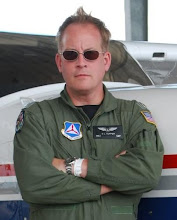
If you’re a pilot or aspiring non-pilot flight crew and you’re not a member of Civil Air Patrol yet, (a) what the heck are you thinking? and (b) go find a few units near you (http://cap.findlocation.com/) and visit them!