Showing posts with label Instrument flight training. Show all posts

Monday, September 28, 2009

Wringing out the RG - Commercial PIC Cross-Country Requirement Completed!


This is a regular blog post. Show notes and links to show audio appear in the other posts.

Yesterday started out as a CAP proficiency flight out of Ann Arbor. That is, until 1Lt Malek and I figured out that the aircraft was still in Lakeview getting its 100-hour inspection and that no one had mentioned this salient fact on the aircraft scheduling system. Bummage. Trip to Ann Arbor wasted, other than the fact that it’s always worthwhile to have breakfast with 1Lt Malek.

Not bitching about CAP by any means. This happens sometimes in any organization operated by humans. Just a little disappointing because I hadn’t flown since August and hadn’t flown approaches on round gages since April. The C-182T Nav III Form 5 qualifies me to fly the round-gage C-172s and 182s and I don’t actually have to demonstrate round-gage proficiency to a check airman if I don’t want to. But I’d be less than genuine about my commitment to safety and proficiency (and an idiot) if I failed to go out and fly approaches on round gages now and then to maintain proficiency.

Plus, I was only 1.6 hours away from completing my 50 hours PIC cross-country (greater than 50 miles) to qualify for my commercial certificate. I was hoping to get to Lansing for the approaches, which would have satisfied the distance requirement.


Crap. So I walked over to the ramp, where the CAP Great Lake Region’s Gippsland GA8 Airvan was preparing to take up some O-flight riders. I talked briefly with Maj Mario Accardo, the mission pilot, and then wandered to the approach end of Runway 24 to shoot a couple of photos of the Gippsland on final for the wing’s PAO library.

Fun, but – crap. I really wanted to fly some round-gage. I tweeted things to this effect. And, lo and behold, I get a tweet from Robert Ericson, ace KingAir pilot and CFII at Flight 101 at Pontiac, offering to go grab Flight 101’s C-172RG and head up for some instrument flight. How cool is that? It’s especially nice because Rob isn’t on the instructor schedule for the school but offered to go fly with me when I had the opportunity. He’s an Airspeed listener and had been really accommodating whenever I’ve been in to Flight 101.

So, a couple of hours later, we launched in N6274R, the school’s RG. I already had something like five hours in that aircraft, but wasn’t fully checked out in it. All of that was about to change.

Only failure on the prep was forgetting to set the transponder. And to get Rob his Scotch.

We filed IFR at 6,000 (to be assured of getting up into some of the cumulous clouds) and headed for Saginaw, a popular destination because of its multiplicity or approaches and its distance of a little more than 50 nm from Pontiac and other Detroit-area airports. Nice IMC on the way. Good clouds without a lot of convection or turbulence inside. Ragged tops at around 5,500 to 6,000 and bottoms between 3,800 and 4,000. Lovely in-and-out flying. The higher overcast kept everything mostly gray, but we got some nice sunlight on the tops at points.

I was really, really pleased about how my round-gage scan came back to me after more than five months. I’ll admit that I was too fixated on the attitude indicator in the early going, but I recognized that quickly. Several altitude excursions of around 100 feet, but generally pretty good.
See the track at http://flightaware.com/live/flight/N6274R/history/20090927/1730Z/KPTK/KPTK.

We shot the RNAV 32, then vectored around to the ILS 23. I landed beautifully. (Rob complained bitterly, but an elbow to the throat silenced him for the taxi to the FBO.)

We extended the time on the schedule for the airplane and then filed IFR back with an approach en route at Flint.

Same fun on the way back. http://flightaware.com/live/flight/N6274R/history/20090927/1900Z/KMBS/KPTK.%20. Wewere given V133 to POLAR and therefore flew that leg on the VOR with the GPS magenta line as backup. I made a perfect teardrop entry into the requested hold south on the Flint VOR, then did a full-procedure VOR 18 approach. For some reason, Flint Approach yelled at me about being below the vectoring altitude on the approach. The plate says I get 1,560 inside the applicable waypoint. I might have though that he was giving me grief because I was off the centerline for the approach, but I was only a dot off and correcting. Anyway, I climbed it up to 2,200 until the FAF and then hung out all of the junk (gear and flaps) and crowbarred down to the MDA of 1,300 before going missed and heading back to Pontiac.

Another spectacular landing at Pontiac on 27R. Full stall onto the mains six inches off the pavement and a gentle lowering of the nosewheel.


I couldn’t help but post this shot of a tire that’s sitting on the counter at Flight 101. Note the labeled “circle of shame” on the tire. I guess there’s been a rash of landings in the RG with one or more brakes engaged, this causing balding of tires. A good reminder to anyone, not just RG drivers. Keep your heels on the floor until you’re good and landed, folks. It’s an easy mistake to make and it’s a mistake that I’ve made myself. (No, I didn’t savage this tire . . .)

So, after that 2.6 hours (with 1.1 actual and 1.0 simulated IMC), I have a fresh IPC, I’ve completed the required PIC cross-country for the commercial, and I’m checked out to fly the RG (and, by extension, all of the C-172s and C-152s at Flight 101).

Many thanks to Rob for swooping in and saving what would otherwise have been a flightless day and a waste of good and very flyable IMC!

Lt Malek and I are going to head up later this week in the CAP C-182T Nav III to get him refreshed on the G1000 and keep me current. Should be a lot of fun!

Safety, currency, and proficiency. Good flying and good fellow aviators all the way around. One of those days when you’re particularly proud to be a pilot and when your training (and willingness to work to stay current and proficient) pays off.

I do so love this stuff!

Thursday, July 09, 2009

Capt Force Joins the Glass Mafia


This is a regular blog post. Show notes and links to show audio appear in other posts.

Last night, I wiped the bugs off the CAP Cessna 182T Nav III, buttoned up the plane, and then drove home with that sense of satisfaction that comes after a successful checkride. I had just passed my CAP Form 5 checkout in the aircraft. I’m now qualified to fly the airplane both VFR and IFR for CAP.

(By the way, some of you might not get the “Glass Mafia” reference in the title to this post. It’s hearkens back to the days of the Fighter Mafia, group of U.S. Air Force officers and civilian defense analysts who, in the 1970s, went against the grain and advocated the use of John Boyd’s Energy-Maneuverability (E-M) theory to develop fighter aircraft. We have the Fighter Mafia to thank for the F-15, the F-16, and many other of our favorite aircraft.)

For those not familiar with CAP procedures and/or the aircraft, I offer the following.

The Form 5 and CAP Operations

CAP flight operations require FAA currency and proficiency, plus a little extra special sauce. The ability to fly to FAA standards gets you into the diner on the morning of your checkride. But then there’s Form 5 with which to contend. Form 5 is simply a checklist of skills that CAP expects its pilots to have. They’re similar to the FAA PTS, but some require a little more of the pilot. For steep turns, CAP requires 720s instead of 360s. When possible, many CAP check airmen require engine failure simulations all the way to the ground (usually done at an uncontrolled airport with a runway suited to the task). You get the idea.

If you’re going to fly red, white, and blue airplanes with the CAP insignia, use a “CAPFLIGHT” callsign, fly cadets and AFROTC personnel on orientation flights, search to downed airplanes, and other CAP missions, CAP wants superior skills and wants them demonstrated.

The Form 5 ride is just like an FAA checkride in most respects. You brief, you fly, you debrief, and you get (or don’t get) your signoff. But there are also different kinds of Form 5 rides. The ride yesterday was to qualify me to fly the C-182T Nav III for training and currency and, once I have my Emergency Services card, I’ll be qualified to transport personnel and equipment for CAP missions. Additional training and check flights are required if you want to fly as a mission pilot or in other roles.

The Form 5 is a great way to demonstrate your pilot skills against objective standards. You get to fly well-maintained aircraft and fly with eminently-qualified check airmen. Getting and staying qualified in several CAP aircraft is a great way to keep your edge and get valuable commentary on your flying.

And, if you fail a Form 5 ride, it doesn’t affect your FAA qualifications. You’re still a pilot and can go rent all you want from the FBO. You just need to get through the Form 5 to fly CAP aircraft.


The Aircraft and Avionics

The NavIII variant of the C-182 comes with the Garmin G1000 integrated flight deck and the GFC 700 autopilot. It’s among the most sophisticated avionics packages available in general aviation. Most obvious to one looking at the panel for the first time are the twin 10” LCD displays. The Primary Flight Display (“PFD”) in front of the pilot gives you all of the information you’d expect from the usual six-pack of steam gage instruments and then some. The display on the right, the Multi-Function Display (“MFD”), gives you powerplant, weather, navigation, flight management, and other information .

Isaac Newton and Daniel Bernoulli still have final say about how the airplane flies, but you have a lot of tools available to help manage the airplane and conduct the flight. You give the airplane to the autopilot at 800 feet AGL and don’t take it back until you’re as little as 200 feet AGL and 1/4 mile off the end of the destination runway. Very cool.

None of this is to say that you must use the avionics all the time. But it is to say that you have a lot of tools available to you. It’s easier to stay ahead of an airplane that can fly itself en route and in the approaches better than you can.

I have always said that any kind of flying, and especially instrument flying, is about bandwidth packing. You only have so much bandwidth available. You can only think about so many things at once. The more you internalize processes, commit them to muscle memory, or find ways to automate things, the more bandwidth you have available to concentrate on what’s next.

The C-182T itself is a generally 172-shaped, but has a six-cylinder 235-hp engine in front and a higher cowl as seen from the flight deck, and it’s pretty nose-heavy and likes to come out of the sky quickly when you reduce power, especially when you hang out the barn-door-sized flaps. It’s not uncommon for C-172 drivers (like me) to have trouble handling the sink rate and related issues with the airplane. It’s also not uncommon for pilots coming to the C-182 from the C-172 or similar airplanes to bend the firewalls of C-182s by hitting the nosewheel (not hard to do – That engine up there is heavy!).

The Ride

No surprises on this ride. There never are. The Form 5 criteria are all pretty well laid out and the FAA PTS is always there underlying the whole thing.

Maj Alex Craig (the check airman who also did my instrument add-on in the C-172 in February) had me plan an IFR flight to Bad Axe (KBAX) up in Michigan’s thumb. We launched and I flew to the Pontiac VOR (PSI), the first waypoint, and then turned north toward KITNS, all with the G1000/GFC 700 flying the airplane from 800 AGL on.

We pulled it off autopilot, did some clearing turns, dropped the flaps, and slowed it down to between 50 and 60 KIAS for slow flight. Then a left-turning power-off stall and recovery to cruising altitude.

Another clearing turn and then the power-on stall turning to the right with a full break. A lot of sky in the window, baby! This airplane likes to climb! BE ON YOUR RUDDERS AND BE COORDINATED! The stall, even with a full break, was very benign, largely because we were very well-coordinated through the break and I stepped on the left pedal to right the airplane immediately after the break. We recovered 100 feet above the rotation point, so I feel pretty good about the survivability of a departure stall as long as I was on the rudders (and I usually am).

After that, I gave the aircraft back to the autopilot and continued en route. Three miles from Lapeer (D95), out comes the throttle and off goes the autopilot. We did a simulated engine-out emergency and I rocked the checklist pretty well. Yeah, I planned the flight to pass directly above Lapeer, so I had a pretty good idea of where we were going, but still had (as I usually do) the NRST inset in the lower right-hand corner of the PFD so that I could find the airport quickly and know the distance and CTAF frequency.

I should note that 123.0 (the CTAF for Lapeer) was loaded into the backup for COM1 when I looked up about five minutes before the engine-out, so I had a pretty good idea of where we were going.

I got the airplane down to 50 feet with a slip and lots of flaps. Had it been a real emergency, we would have run off the end, but all personnel would likely have been fine. Alex sent me back around for a short approach, pulling the engine downwind abeam, and I blew yet another power-off by being too high. Checkride in danger . . .

So he gave me one more shot. I hung it out a little longer this time and brought it in nice and soft in the first half of the runway. Whew!

Several short and soft field takeoffs and landings after that at Lapeer. These I nailed. The short and soft landing at the end was a thing of beauty.

Then on with the view-limiting device and proceed to Flint (KFNT) for the approaches. We shot the ILS 27, the RNAV 9, and the VOR 18.

For the ILS, he gave me the all of the avionics and the airplane flew a beautiful ILS approach to minimums. Yeah, I configured it and monitored it like I had designed the system, but the airplane, for its part, flew well.

For the RNAV, Alex took away my autopilot so I had to hand-fly it. The guidance is so good on the RNAV approaches with the G1000 that, as long as you can fly basic attitudes and airspeeds on the gages, it’s a dream. The G1000 even makes a glideslope for you and you just slide doen it to minimums.

For the VOR, Alex pulled the AHRS circuit breaker, which killed my primary instruments and left me with the backup instruments, the GPS course, and the VOR needle to fly. I flew it much better than I had expected to with only one real exception.

G1000 pilots seem to stand alone in CAP and pilots’ lounges everywhere. They’re kind of like the aloof UNIX guys, only without the suspenders and neck beards. They know things that you don’t know. (And, yes, I know things that you don’t know. Kiss my glass.) But, if there’s schism between glass pilots and steam-gage pilots, there’s also schism between those who fly glass with north always up on the displays (“north-up” pilots) and those who fly with the stuff in front of the airplane’s nose at the top of the screen (“track-up” pilots). And the two will never see eye-to-eye.

I’m a track-up guy. Alex is a north-up guy. Alex isn’t disagreeable about his north-up-ness. He’d willingly fly a track-up ride with a track-up pilot. I could have flown the ride track up with no problem and Alex, though benevolently thinking me mildly retarded for doing so, would have humored me.

Have you ever had complete brain farts when you forget how to spell “the.” Or similar moments where you forget your name or where you live? Here I was configuring and flying the avionics like I designed them and even getting compliments from Alex (an avowed G1000 fan who’s crazy good with the system). And I realized that I had completely forgotten how to switch the display over to track-up.

So I flew the ride using north-up for the first time. How hard could it be?

On the VOR approach, under the hood and partial panel with only the mag compass, the VOR needle, and the GPS display on the MFD to guide me laterally, I was watching the needle for fine guidance and the MFD for gross guidance and trending. When you fly a VOR 18 approach with track-up, the airplane flies up the screen, you just turn left or right according to the trend arrow, and the airplane turns in the same direction. Do that north-up and the airplane flied down the screen and everything’s reversed.

I got a good 40 degrees off course to the right before I realized that I was reading the MFD backward. Fortunately, I realized what I was doing, called it out, and did an immediate turn back to the course. I very nearly lost the needle to the left, but we were still several miles out and I had enough room to bring it back. It would have blown the ride if I had let it go to full deflection, so that was critical.

On the way back, I did the steep turns under the hood. Two full turns to the left and two more to the right. If I had problems with the C182 in the landings, we made friends during the airwork, especially the steep turns. It’s a big, stable aircraft and I just rolled in 50-60 degrees of bank and watched her go around with only minor changes in pitch to stay on altitude. Just beautiful. And Alex complimented me on them.

One more landing back at Pontiac and I was inducted into the Glass Mafia. I dropped off Alex at Pentastar and then taxied the aircraft back.

$90 for the airplane and $104 for gas. 2.5 hours in a $250,000+ airplane with a Cessna factory-trained ATP-rated check airman for less than $100/hour wet all in. At the risk of being a nag, if you’re a pilot in the US and you’re not a member of Civil Air Patrol, what’s wrong with you? Seriously!

I’m still basking in the glow of yet another successful Form 5 ride. Yeah, I have stuff to work on. Yeah, it wasn’t perfect, but I demonstrated competence to PTS and CAP standards by objective measures and it feels good.

Many thanks to Maj Alex Craig for the ride. And many thanks to Capt Tim Kramer, who did all of my training in the aircraft.

What’s next? Mission pilot? Time to retreat behind a shot of Jeremiah Weed and a bottle of Leinie’s and identify the next summit to challenge. Smoke on!

Saturday, February 07, 2009

Prepping for CAP Instrument Form 5 - Flying Sim


This is a regular blog post. If you’re looking for show notes or links to show ausio, please check the other posts.

The CAP Form 5 instrument check is tomorrow. So I headed in the DCT Aviation to fly some sim and do more preparation. As many of you know, I took the Form 5 ride in August in a C-172P. I opted not to go for the full IFR ride because I was unfamiliar with the panel and didn't want to waste the check airman's time. As it was, I flew a lot of the VFR checkride on the gages and I think I would have had a 60-40 chance of passing the instrument version of the Form 5, but that's not how I roll. I don't like walking in less than fully prepared.

Cole, my FO, went with me. As is wise before a grueling sim session, we hit grabbed breakfast.


I flew a lot of sim prior to my instrument rating checkride in 2007 and it helped a lot. Not least because the airplane is a heck of a lot easier to fly than the sim. It was so nice to get back in the airplane after flying hours and hours of sim.

Anyway, I shot the ILS 23L at KYIP twice, the VOR 24 at KARB twice, and then the VOR A KYIP with a circle to land on 32. Things really improved after the first approach and I seem to have dialed it in pretty well. Some of it was getting the throttle settings for various phases right. It turns out that the sim is pretty accurate in terms of performance. 2100 RPM and 10 degrees of flaps gets you 90 knots maneuvering and about 1700 RPM gets you a nice ride down the glideslope at 90 knots over the ground in most wind conditions.


Here’s the inbound leg of the parallel entry for the hold at SVM prior to shooting the VOR 24 at ARB. The simulator doesn’t lie. There are parts of my flying that I like and parts that I don’t. The turn here was nice. The outbound leg was offset very uniformly, which tells me that I just accepted the offset all the way out without correcting. Not the worst thing in the world, but I should be better on that. Altitude is very sawtooth-looking, but I’m not going to complain about that. I’ve never met a sim that was any good whatsoever in pitch. Pitch works so much better in the actual airplane.


Here’s how Cole spent much of the sim session. When I flew sim at DCT in 2007, Cole came along and sat at a desk and watched DVDs on a DVD player that I brought in. DCT has taken this idea to heard and there’s a DVD player in the sim room. You can bring your kid along, hook him or her up with headphones, and let him or her watch DVDs while you fly. Cole’s watching Fighter Pilot: Operation Red Flag. For the 20th time. Not kidding. And he loves it. Love my boy, I do!

If you’re near Oakland County International Airport (KPTK) and you want a really good and friendly sim environment to polish up for a checkride or anything else, check out DCT Aviation.

DCT Aviation
6226 N.Service Drive
Waterford, Michigan 48327
248-666-1800
info@dctaviation.com
Monday-Friday - 8am-8pm
Weekends - 8am-5pm


Friday, February 06, 2009

Spatial Disorientation Simulator


Subscribe to Airspeed through iTunes or your favorite other podcatcher. It's all free!

These are the show notes to an audio episode. You can listen online right here by clicking: http://media.libsyn.com/media/airspeed/AirspeedSpatial.mp3.


I spent some time recently at the Great Lakes Aviation Conference and Expo in Novi, Michigan. While there, I took advantage of the opportunity to go through the Spatial Disorientation Simulator made available by the FAA’s Civil Aerospace Medical Institute.


It’s a box that contains a single seat with a video screen and flight controls in front of it. You sit in the box in the dark and you fly some basic maneuvers like a climb and some turns. You have a horizon for the first bit of the climb and then you ascend into the clouds.

While you’re concentrating on flying, the box you’re sitting in rotates around its vertical axis something like seven to 12 times per minute. It’ll also pitch forward and back a little.

The simulator lets you experience two vestibular/somatogyral illusions: The coriolis illusion and the illusion that can put you in the so-called graveyard spiral.

The coriolis illusion occurs when you stimulate the semicircular canals by suddenly tilting your head while the aircraft is turning. The simulator rotates slowly for several minutes while you’re flying a simulator. You get used to the rotation and you begin to accept the sensations from your semicircular canals as telling you that you’re flying straight and level. When you move your head forward or back after this, you get the sense that the aircraft is moving in all three axes. I got the sense when I moved my head forward that the aircraft was snapping down and to the right. And the opposite when I moved my head back.

The graveyard spiral happens when you return to level flight after a prolonged bank turn. When you enter the turn, you feel the sensation of a turn in the same direction. If the turn continues for an extended period of time, you lose the turning sensation. Your body has settled into a stabilized mode that’s more or less just like level flight. Then you level the wings. That produces a sensation that the airplane is turning and banking in the opposite direction. If you believe the illusion of the turn (and it’s very compelling), you’ll re-enter the original turn in an attempt to counteract the sensation of the opposite turn.

If you re-enter the turn, you’ll continue in that turn and you’ll start losing altitude. If you pull to get the altitude back or apply power, you’ll only make the turn tighter. If you don’t recognize the illusion and level the wings, you’ll continue the left turn and keep losing altitude until you augur in.


The smooth rotation of the box lets your vestibular system get used to that rotation so that leaning forward and back gives you the coriolis illusion. It can also change rotation to give you that really, really convincing feeling that might lead to a graveyard spiral.

Today’s episode comes in two phases. First, I take the MP3 recorder into the box and fly the simulation. The simulation takes something like nine minutes, most of which is pretty quiet and consists of my flying a climbing turn. I’m going to accelerate the process by fading the audio up and down to tell you where I’ve omitted audio. You’ll hear the simulator giving me vectors and other instructions and, after each of the effects, the initial explanation of the effect that I just felt. You’ll also hear me give a “whoah” at appropriate times. I had intended to give a little more commentary, but I found that the illusions were so compelling that I was processing them myself and couldn’t really talk much about them. I guess that’s what the commentary on the show is for.

At the FAA staff’s suggestion, I exaggerated my head movements to really experience the effect. Note that I didn’t have to move my head much at all to get a really wild sensation in the graveyard spiral demonstration.

So here’s the simulator ride.

[Audio.]

Afterward, I talked to Rogers Shaw, the team leader of the Airman Educational Personnel. Here’s the interview.

[Audio.]

The take-home for this episode is that the things that the textbook tells you about physiological illusions are real. They’re very real. Even though I knew for a fact that I was in a box in an exhibit hall in Novi, Michigan, the sense of opposite rotation was overwhelming. If you’re going to fly on instruments or without a good horizon, you need to know that these illusions can happen and that they can happen to you. I’m glad that I experienced them for the first time in a simulator in Novi and not in an aircraft.

If you have the opportunity, go through this simulation. But even if you don’t, know and understand that your noggin is much more likely than your instruments to lead you astray. Flying in the clouds takes discipline in a number of different respects. Probably the most important is the discipline to get on your gages and believe them, even when everything you’re used to from walking around on the ground is screaming that things are wildly amiss.

Instrument flight is transcendental in many different ways. My personal favorite is breaking out of a cloud layer in a climb and then dragging my wheels in the cloud tops. But the price for that is building the ability to transcend what your senses have told you all your life and to rely on the science and instrumentation in front of you.

Thanks to the FAA’s Civil Aerospace Medical Institute for bringing the simulator to Novi. Make sure to watch for it at a conference or other event near you.

FAA Civil Aerospace Medical Institute
Aerospace Medical Education Division
AAM-400, PO Box 25082
Oklahoma City, Oklahoma 73125
Telephone: 405-954-4837
Fax: 405-954-2305
http://www.faa.gov/about/office_org/headquarters_offices/avs/offices/aam/cami/

Tuesday, January 06, 2009

CAPFLIGHT 2028 to Ride Again


This is a regular blog post. If you’re looking for show notes or links to show audio, please check out the other posts.

Okay, I’m back in the groove. Or at least I have plans to return to the groove (important if you’re trying to plan ahead and you live in Michigan in January). I have three planned flights so far.

This week, it’s instrument currency and initial commercial maneuvers at Flight 101. Flying with an instructor I’ve met once, but with whom I’ve never flown. I think that, once you have your flight skills reasonably down, it’s a good idea to fly with different instructors. You learn more that way. Sure, there are crazies out there and sure, you’re going to discard some of the advice that you receive, but you also pick up stuff that you wouldn’t otherwise get.

Next week, it’s up with Barry again in the Citabria. Banking and cranking and starting to build my aerobatic duration for the upcoming season. I want to be able to do an hour straight with tummy in good shape by late May. I got to that point in July, but then work got busy and I had to let the duration slide. I got up in November, but I was done after 20 minutes. Like so many things, you must use it or you’ll lose it.

And then the stuff I’m most excited about. Capt Norm Malek (the ops officer for my CAP squadron and fiercely competent instrument driver) and I are going to go grab 2CP (CAPFLIGHT 2028) in Ann Arbor (KARB) and go get some cross-country time and some instrument approaches and do some hangar flying. I’m thinking KARB-KBTL-KAZO-KARB. But the beauty of it is that we don’t have to go anywhere in particular. Just turning 100LL into noise and challenging each other to improve our skills. If you’re a pilot, why on earth (or off) would you not join CAP?

Really excited to be back in the air! Sorry about all of the griping and whining about work over the last few posts, but I’ll try to make up for it with the exuberance that you know I can develop once I get airborne. Yeah!

Sunday, May 25, 2008

DC-3 Type Rating - Day 2


This is a regular blog post. Please check out the other posts for show notes or links to audio.

Still in Griffin training on the Herpa DC-3. I initially set out to post a new episode daily, but discretion is the better part of valor in this case.

We closed the restaurant around midnight after having a few steaks and taking over the side room, where Dan, Julie Boatman Filucci, and James Wyndbrandt played guitar and banjo for the assembled group. I sat in on mandolin on a few tunes and took over on guitar for a few tunes. And sang. (Hope they let me back in the airplane!)

I don’t think I have it in my to go another day at full throttle for training if I don’t hit the sack now, so I’m just going to do a blog post and call it a night.

I was first in the left seat this morning. Got a normal touch and go, two high-speed passes, and two V1 cuts. Completely blew the V1 cuts and need to go over those tomorrow morning in order to improve. I think I’m in for one more stint at the controls, so I need to make it good.

Roland followed me in the left seat and I ran around the back of the aircraft shooting pictures and enjoying myself. There are only three headset jacks in back and they were all taken, so I just decided to have some fun before rotating back into the queue.


A few landings later, Tom (standing in the back of the aisle) got my attention and said that we had some hydraulic issues and that we were returning to Griffin. We had gone over the hydraulic systems in depth in the morning in ground training, so I wasn’t at all worried. The gear was down and our only worry was apparently brakes. But we belted in anyway for the landing.

Dan pumped up the system on final and we landed her at Griffin to check out the hydraulics. That took a couple of hours and a visit from the A&P, but we got the aircraft squared aware by dusk and Roland and Dan took her up to test fly it.

Dan had said that Plane and Pilot was going to be covering the training, but it turns out that the person doing the story is none other than James Wynbrant, a sometime denizen of the Uncontrolled Airspace podcast. Just after we shut down the aircraft and set about working on the hydraulics, I got James to head up to the cockpit for a picture of him in the left seat.


Here’s a shot of Roland in the right seat taxiing in after the test flight.

More in a couple of days, folks!

For more information about getting your SIC or PIC type rating in the Herpa DC-3, check out:

Dan Gryder
147 Sky Harbor Way
Griffin, Ga 30223
678-688-7069
Email: contact@TheAviatorNetwork.com

For more information about Herpa Miniature Models, see http://www.herpa.de/.

Thursday, May 15, 2008

Instrument Rating Checkride - Part 2


Subscribe to Airspeed through iTunes or your favorite other podcatcher. Or listen online right here by clicking: http://media.libsyn.com/media/airspeed/AirspeedCheckridePart2.mp3. It's all free!

Welcome to the second part of the instrument checkride. This is the second of two parts covering my checkride for the instrument rating. If you haven’t checked out Part 1, make sure that you download it and listen to it. It contains background information that’s helpful to understanding some of the material in this episode and will bring you up to speed on the checkride so far.

Also, if you’re following along at home, you can download the approach charts here.

Flint RNAV Runway 18: http://media.libsyn.com/media/airspeed/KFNT-RNAV-18.pdf
Flint VOR Runway 9: http://media.libsyn.com/media/airspeed/KFNT-VOR-9.pdf
Pontiac ILS 9R: http://media.libsyn.com/media/airspeed/KPTK-ILS-9R.pdf

To set the stage, we’re about an hour into the checkride and we’ve just completed the RNAV approach to Runway 18 at Flint, Michigan and gotten vectors for the VOR Runway 9 approach.

As we’re getting closer to the approach course, a hand reaches in from the right and places a cover over the attitude indicator. For those not familiar with the cockpit of most general aviation aircraft, that’s the instrument with the artificial horizon that helps you tell whether you’re pitched up or down or rolling left or right. It’s a central part of the instrument scan in most phases of instrument flight.

Mary asks me if I know what that means. It could mean that the individual instrument has failed. It could also mean that the vacuum system has failed, which would take out both the attitude indicator and the directional gyro. The directional gyro is in the middle of the bottom for of the “six pack” of primary flight instruments and it tells you which magnetic course you’re on. It’s your primary instrument for bank when you’re in most phases of flight because a change in heading usually means that you’re rolling.

I clarify with Mary that I’m not supposed to assume that I have a vacuum failure for the moment. If I was supposed to assume that, I brought along my own covers so that I could cover up the DG as well.

You cover an instrument in training to simulate its failure. But, if you have an actual failure, both the regulations and common sense require that you cover the instrument. If you don’t cover it, you’ll very likely continue to keep it in your scan and you’ll even rely on its indications at some lizard-brain level even though you know that it’s failed.

So now I’m relying on the altimeter for pitch. Soon, when Mary takes away the DG, I’ll be relying on the turn and bank indicator and the magnetic compass for roll and the altimeter, airspeed indicator, and vertical speed indicator (or “VSI”), in varying degrees, for pitch.

This is an opportunity for me to demonstrate that I can control the airplane using less than all of the instruments, but is also a reminder of the redundancy of the instrumentation in the airplane and the capabilities that we still have even if systems start to fail us.

By the way, when I say that I’m looking for the traffic that approach just called, it means that Mary is looking for it. As a part of our preflight briefing, we agreed that she’d do everything that required eyeballs outside the aircraft, but that I would run the radios just as though I was looking outside. She advised me whenever she had something in sight and I handled the communications to approach or the tower.

Also, I normally fly instrument approaches with the GPS overlay, which means that, even if it’s not an approach that requires GPS as such, I load in the approach and use the moving map and other elements of the GPS display to maintain situational awareness. It’s really helpful. For this approach, which is clearly going to be a partial-panel VOR approach, Mary takes me the rest of the way old school by having me dial down the brightness of the GPS screen so that I can’t see it.

[Audio 13]

Then we get clearance for the VOR 9 approach.

[Audio 14]

Then it’s over to the tower.

[Audio 15]


You heard the tower controller tell me that I was south of course, which is fine (I was, in fact, south of course), but then she asks my intentions.

I never know what to say that wouldn’t be sarcastic or taken the wrong way. You can hear me get tongue-tangled before Mary just tells me to say that I’m correcting. I actually wasn’t that far off. The needle was still well short of full deflection and I was correcting back to the center of the course. I was still eight miles out. The controller even said that I was only slightly south.

She may not know that I’m missing two of my most helpful instruments, have the FAA in the right seat, am gripping the seat cushion tightly with my butt cheeks, and am busier than a one-armed paper hanger. But I’m clearly trying to fly a bloody instrument approach.

Do I respond, “I’m flying the VOR 9 at Flint?” That would come off as sarcastic, right?

How about “I must have had problems in my early childhood that are now causing me to pollute your airspace. I am not worthy” Still not good.

Look, don’t piss off a controller on your checkride. But what to you say even if you’re trying to be respectful?

And how would that little dig from ATC go over in other circumstances? “Say, Mr. Woods, you seem to have failed to get it within 10 feet of the pin from the fairway bunker 250 yards out with your three-wood . . . Say your intentions.”

Hose off, eh?

Okay. Rant over. I’m pretty sure that the controller wasn’t being deliberately mean. Just bad timing.

But still, I get this.

[Audio 16]

What? I looked at my approach plate, I had thoroughly briefed the approach, I still had 100 feet to go. The transponder had the correct altimeter setting dialed in. I don’t know what the problem was. But Mary could clearly see that I had nailed everything and said nothing.

Okay. Time to just fly the airplane. Things don’t go as you expect them to all the time. You have to deal with unexpected distractions. This is especially true on an instrument checkride. I’m sure that the controller was doing her best and had her screen and other information to go by. Again, just bad timing.

And I’m pleased to report that I absolutely nailed this approach. A little after the tower gave me grief about being off course, I had the needle centered, power set, crab angle established, and all of the gages were like they were painted on.

I am not used to this happening, especially when partial panel. I actually tuned and re-identified the VOR on that approach because the VOR needle was centered and not moving and I entertained the thought for a moment that the VOR receiver or instrument was broken. That’s never happened to me before. Got to like it.

Okay. Here’s the final approach. I’m at the minimum descent altitude of 1,300. I maintain this until the missed approach point, which is going to be directly over the VOR on the airport. I can tell when I’ve passed the VOR when the indicator flips and tells me that I’m now going FROM the VOR instead of TO it. That’s what I mean when I say that I’m watching for the flip.

I also re-brief my missed approach procedure here because we’re going to be flying that missed approach out to an intersection called KATTY. KATTY is off the east of the airport at the intersection of the 097 radial of the Flint VOR and the 006 radial of the Pontiac VOR. I John King all of this to Mary so that she knows that I know what I’m supposed to do.

I also go through my pre-landing checklist.

[Audio 17]

So I complete the approach and tell departure that I’m going missed. Departure clears me to KATTY and tells me to hold as requested. Mary tells me that that was a good approach and I admit to why I re-identified Flint. She also gives me back my attitude indicator and DG, as well as the GPS. Thank you, thank you, thank you!

[Audio 18]

As we approach KATTY, I describe the hold and go through my cruise checklist.

A holding pattern is essentially a racetrack in the sky. You do all turns at standard rate (which means a minute for each of the turns, and you fly your outbound leg such that you get as close to one-minute inbound lets as possible. It’s trial and error for a few turns around and you usually get it nailed by the second or third time around. Unless there’s a massive crosswind. More on that later.

Then another snag. The scattered layer is such that we can’t stay far enough from the clouds at 3,500, so we ask for 3,000. No dice. I though that maybe we could hold somewhere else around Flint and asked for suggestions. I’ve held at various places around Flint and didn’t anticipate having any problems. I was pretty disappointed about not being able to go to KATTY, though. The outbound and unpound courses would have been more or less directly into or out of the wind, making the hold a lot easier. Remember, the winds aloft are howling along at around 50 knots.

But Mary decides to go to Pontiac. Not a problem because I’ve held west of the Pontiac VOR on several occasions and that would still give me a more or less directly into and out of the wind course for the outbound and inbound legs. Again, more on that later.

[Audio 19]

Okay, remember when I alluded that Korea had something to do with the checkride?

The ICAO identifier for the Oakland County International Airport (called “Pontiac”) is “KPTK.” But the VOR is “PSI.” Unlike Flint, where the airport is “KFNT” and the VOR is “FNT,” Pontiac’s VOR is different.

All of this would be less of a problem if it weren’t for the fact that there is, in fact, a VOR with the identifier “PTK.” But it is not near Pontiac. It is not in Michigan. It is not on the North American continent. “PTK” is a VOR-DME associated with a US military airbase near Pyeongtaek in the Republic of Korea.

Mary hints that I might have an issue. I know that the VOR is off the field and that, unlike Flint, there’s a material difference between flying to the airport and flying to the VOR. But I have it stuck in my head that I need to dial in “PTK.” “PSI” does not enter my mind until approach calls me up and ass if I’m taking the scenic route.

I reply that I’m going to the VOR, but by now I’m way off course for even the VOR. You can hear the departure controller key her mic and then let go of it trying to figure out what to say.

We finally get it cleared up and I admit that I’ve goofed up with the GPS.

Here’s the thing. I had the Pontiac VOR dialed in and was good to go before I started playing with the GPS. I wanted to get an overlay with the GPS so I’d be ready to have it help me with the hold. But I ignored the VOR needle that would have told me that I was deviating further and further from course as I gave my attention to the GPS.

I still recommend using redundant instruments to help navigate whenever you can. But always do two things. Make sure that you actually identify each navaid before you decide to fly to it and then cross-ckeck those instruments to avoid making the mistake that I made.

Alternatively, carry a lot of gas. You’ll need it to get to Korea.

[Audio 20]


Mary gives me my holding clearance.

[Audio 21]

North. She said north.

Hey, it makes a lot of sense. The VOR is west northwest of the field and they’re using 9R and 9L for landing traffic. Holding north keeps us further out of the approach path – even further than if we were to hold west with left turns (which would keep us on the north side of the inbound course).

But that means that I have to hold with 40 or 50 knots of direct crosswind. Get out your crab angles, ladies and gentlemen, because Mary’s going to be looking at the VOR out of her side window on the inbound course.

There’s nothing wrong with what Mary wanted to set up. And it’s safer from a traffic avoidance perspective. It’s just that I had put a lot of emphasis on nailing the inbound times during my training and fared that I was going to be all over the closk by the time I had my turns set up.

So we get the ATIS and call up Pontiac tower to let them know that we’re going to hold on the VOR.

[Audio 22]

So we get to the VOR, turn right, and fly outbound for a minute and then turn right again most of the way back to the inbound course. I’m trying to get to the course line, but we have a savage crosswind that’s keeping us from getting to the course line. I finally get to the VOR ar just about the same time as I finally intercept the inbound course. I just flew a course that would look a lot like one leaf of a clover. I didn’t even get to start my time on the inbound course.

Not horrible for the first trip around in a howling crosswind. At least I made it back to the VOR.

[Audio 23]

A little humming appropriate to the circumstances on the way back around for another trip. I tried to hit the timer when I got to the approach course, but the button didn’t engage. It wasn’t that far off, though. The amazing thing was that I had to take a 60-degree cut at the onbound course in order to maintain the proper ground track. That means that I was making a 180 course over the ground, but the nose of the aircraft was pointing at 120. The long and short of it was that, even though the button didn’t engage, I made it to the course line and tracked it in accurately in an amount of time reasonably close to where I was supposed to be. And Mary cut me some slack for the button, probably in light of the stupendous crosswind.

[Audio 24]

We call up Detroit Approach and ask for a clearance to shoot the ILS for 9R at Pontiac.

[Audio 25]

This will be the precision approach. The other two provided no vertical guidance. I had to monitor the altitude on the approach course myself. I still have to do that for the missed approach point on this ILS, but vertical guidance up to that point is provided courtesy of the glideslope broadcast and a horizontal needle on the panel that tells me whether I’m above or below the glideslope.

Detroit Approach gives me a vector for the ILS.

[Audio 26]

As I go through the approach briefing, we talk a little bit about the ground speed. It’s still pretty blustery at altitude, but it’ll likely slow down as we descend.

[Audio 27]

I do the last of the descent checklist and then talk through what I’m going to do about the pre-landing checklist.

[Audio 28]

Then I’m cleared for the ILS.

[Audio 29]

The approach tells me to contact the tower.

We’re flying the last part of the ILS. I’m inbound on the localizer and I identify WAKEL, which is the initial approach fix for this approach, by seeing that we’ve crossed the 199 radial of the Pontiac VOR and seeing that the outer marker light has come on. I start the timer so that, if I lose the glideslope, I can still fly the approach as a localizer approach and determine my missed approach point using the time.

[Audio 30]

The altitude ticks down and I announce out loud the remaining altitude down to the missed approach point. On the ILS for 9R at Pontiac, you follow the glideslope down to 1,180 feet, or about 200 feet above the runway surface. If you have a half mile of visibility and you can see the runway environment at that point, you can land. Mary tells me to tell her when I’m 100 feet above the minimum altitude. I get to about 1,300 feet and announce that I have a hundred feet to go. She takes the airplane to let me flip up my view-limiting device and tells me to land.

For the first time in about an hour and a half, I lift the view-limiting device and can see out the window. The runway is just as the instruments advertised – about a half mile in front of me and about 300 feet below. I follow the VASI light indications on the left side of the runway and maintain the glideslope all the way to the runway and put it down competently. Not the most graceful landing ever, but competent and safe. We’re a little fast because of the winds and the gust factor and I left the flaps at only 10 degrees, which seemed appropriate given the winds.

[Audio 31]

Then we clean up the airplane and taxi back to Tradewinds. As appears to be Mary’s custom, we sit in the airplane in the middle of the ramp for a couple of minutes after shutdown and she debriefs me on how the flight went.

Then she tells me that I passed. I’m not surprised by this. I trained hard for this ride and, other than a few moments en route to Korea, it was pretty solid. I never really got more than a few dots from the approach course on any of the approaches, kept the altitudes pretty solid, managed the hold reasonably well given the crosswind, and shot the best partial-panel non-precision instrument approach of my life.

A solid checkride of which I think I’m justifiably proud.

Having had a chance to think over the experience, I have the following reflections on the experience.

I used simulators a lot in my preparation for this rating. I knew it was a good idea from the beginning, but also got a lot of assistance from Tom Gilmore’s book, published by ASA, called Teaching Confidence in the Clouds. There’s lots of good information in the book about how to best use simulators for IFR training and you can also hear Tom talking with Jason Miller The Finer Points – Episode 91.

I took about three years to finally finish this rating. I started within a few weeks after getting my private ticket, but took breaks for the birth of my daughter and at the end of each calendar year when my law practice consumed all of my time, as it usually does. I took about 60 hours of dual training by the time it was all over, the excess over the Part 141 required 35 hours being largely knocking the rust off upon returning to instrument flight after long absences and getting to the point where I was actually improving and taking a few more flights in actual preparation for the checkride than I really needed to. I don’t have any problem with having taken that long. It allowed me to meet the other commitments in my life and, after all, it’s time flying an aircraft! How bad could that be?

If you really want to progress, you need to fly about twice a week and you need to reserve enough time to get at least 2.5 hours Hobbs for each lesson, especially if you have to go somewhere other than your primary airport in order to shoot instrument approaches. I shot most of mine at Flint, about 20 minutes from Pontiac if the winds permit. Early flights should be shorter because there’s a steep learning curve but, by the time you’re regularly shooting approaches and polishing your skills, you need enough time to shoot at least four to six approaches on each flight and the usual two-hour block that results in 1.3 hours of Hobbs time won’t cut it.

Many people find the instrument rating “the toughest ticket” and it is in a lot of ways. But I actually found it easier than the private ticket. It required a lot more cerebral stuff and book learning, but I’m a better book learner than a kinesthetic learner. If you’re like me, you’ll find the instrument rating a really wonderful intellectual exercise. I’m not saying that it’s not hard work, but it’s the kind of work I really enjoy.

If, like me, you do most of your training in Class C airspace with full ATC service and vectors galore. Make sure that you go fly in less congested airspace where you’re talking to a center controller who doesn’t baby you and wants to clear you onto the CTAF of your destination uncontrolled airport as soon as possible. Out there, you’re much more responsible for your own destiny and have to be a little more on your toes.

Also, get used to flying instrument approaches into uncontrolled airports and the techniques and communications that that involves. Bear in mind that you have VFR traffic at those airports that has no idea what you’re talking about if all you speak is IFR. “Cadillac traffic, Cessna Zero-Tango-Alpha is inbound on the localizer for Runway 7 at Cadillac” doesn’t tell the VFR traffic much. Say something like “Cessna Zero-Tango-Alpha is five miles out on the localizer for Runway 7 and will be making a long straight-in approach over the lake. Cadillac.” Describe what you’re doing in a way that VFR traffic will understand. And watch for that J3 Cub with no radio. Remember that, in some cases, he could be out there in the pattern with no radio even if it’s one-mile visibility and be completely legal.

Lastly, I’ve had some of the most inspiring experience of my flight career during instrument training. Three things here. Breaking out of the clouds or coming out from under the hood at 400 feet and a half mile after not looking out the window for more than an hour and finding yourself lined up on a runway more than a hundred miles from where you launched never ceases to amaze me. Flying broadside into a big, white, puffy cumulus cloud the size of an aircraft carrier in the sky is absolutely unmatched for inspiration. And that rare and precious flight where ATC gives you an altitude where you can literally drag your wheels in the clouds for miles and miles at a time. Those experiences just don’t happen if you don’t take the leap and go after your instrument ticket.

I remember coming up through an overcast layer for the first time with Eamon Burgess and Eamon saying “This is why we learn to fly on instruments.” He was right.

Monday, April 21, 2008

Multi-Engine Rating - Day 2 - Rating Complete!


Subscribe to Airspeed through iTunes or your favorite other podcatcher. Or listen online right here by clicking: http://media.libsyn.com/media/airspeed/AirspeedMultiDay2.mp3. It's all free!

The feeling is starting to come back in my right leg and I can almost open and close my left hand again.

But it’s all worthwhile because I just added Airplane Multiengine Land to my ticket! And it doesn’t have the VFR restriction. Too cool!

I just finished the two-day accelerated multi-engine course with Tom Brady of Traverse Air. We flew at Wexford County Airport in Cadillac (KCAD) Saturday and Sunday. Two flights of 2.0 each and four instrument approaches and nine landings Saturday. Sunday was two shorter flights of 1.5 hours each and four instrument approaches and seven landings. Then the checkride Sunday afternoon with 1.2 (pilot in command!) hours, one instrument approach, and two landings.

I also got my complex endorsement as part of the process.


Lots of studying for this. A lot to get into your head in just two days. Here’s the obligatory parking-lot engine failure drill. I think I had just stomped on the ball and was going to full forward on the levers here.


That would be the left engine and prop and, yes, that would be the prop feathered and not turning. We did two or three full-feathered shutdowns throughout the training and the checkride. This is the second one – on the last flight with Tom. Pretty benign, actually. It’s really amazing how much drag you get with a windmilling prop that’s full forward. Other than a fair amount of rudder and some bank into the good engine, it’s pretty much like flying with both engines at lower power once you get the dead engine shut down and feathered.


Capt. Force at the controls. This was on the way out to the practice area after an engine failure on the runway and another right after takeoff. Note the maneuver cheat sheet stuck in the headliner, ready for reference. Whereas I simply memorized the setup for other checkrides, there’s just too much information and too short a time to internalize all of the maneuver setups. Memorize the stuff that is truly memory stuff (e.g. push up, clean up, gas, pumps, verify, feather) and use checklists for the other stuff. I made a lot of outlines in law school, but the primary benefit of the outlines were actually making the outlines. It usually took only a couple of glances at the cheat sheet in the course of setting up for a given maneuver, but it was very helpful knowing that it was there.

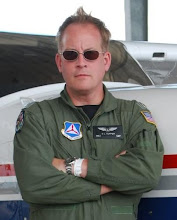


Multi instructor extraordinaire Tom Brady in the right seat. Tom made the whole thing systematic and as easy to digest as possible. I’m not saying that it was easy. It wasn’t. But Tom did a great job of presenting the material in a cogent way that could be rapidly absorbed by a competent pilot who arrived prepared.

It’s an accelerated course. In Tom’s or any other accelerated course, you’re going to have to show up having read all of the materials and having a good understanding of the theory before you get in the car to go to the airport. You should be current and proficient in single-engine aircraft and it would be a great idea to have some complex time, too. (I got my only complex time just a few days before the multi training, but even that little bit really helped.)

You’ll have to have all of your stick and rudder skills second nature because you will spend the entire weekend working on the multi-specific stuff. You must have your A-game together so that you can pay attention to the multi-specific information. There’s only enough time (and you probably only have enough energy) to learn the multi stuff. If you’re not used to holding an airspeed within five KIAS, holding an altitude within 50 feet, and otherwise doing what you need to do in a single, all of those basic things will take up bandwidth that you need for the multi. You don’t have time or energy enough to take the rust off of your single-engine flying skills while picking up the multi skills. I’m usually pretty good with airspeed, altitude, and other precision matters. But I was consistently 100-200 feet high and a little fast in the Apache until late the second day. I don’t want to think about what this weekend would have been like if I hadn’t gotten up in the Cutlass a few days before.

Lastly (at least until I get an episode out covering the whole training experience), is it just me or does everyone draw great designated examiners? Kevin Spaulding gave me a great checkride. He started with a measured and thoughtful discussion of what we were going to do and used that discussion as an outline to talk through the required information. Weight and balance, performance, the elements of Vmc, how those elements affected maneuverability, etc. Then he was relaxed and objective during the checkride.

I floated the cabin once on the instrument approach. I think I pushed at the same time there was a downdraft, but if there really wasn’t a downdraft, I’ll take the responsibility. But that was a huge float.

Unlike many of the training approaches, I nailed the heading the whole way down the stairs. I got a little busy playing with the power and that might have contributed to some of the pitch oscillations. As soon as I relaxed a little on the corrections, things got a lot smoother. Funny how that works . . .

If you’re near Traverse City or Cadillac, Michigan (or if your family can find ways in those places to amuse themselves while you’re flying your ass off for a couple of days), consider the accelerated multi-engine program at Traverse Air with Tom Brady.

Traverse Air, Inc.
294 West Silver Lake
Traverse City, Michigan 49686
231-943-4128
tbrady294@charter.net
http://www.traverseair.com/

Tom also does seaplane ratings in a PA-12! Hmmmm. I think we’re going to Traverse City for vacation this summer . . .


Saturday, April 19, 2008

Multi-Engine Training - Day 1

Subscribe to Airspeed through iTunes or your favorite other podcatcher. Or listen online right here by clicking: http://media.libsyn.com/media/airspeed/AirspeedMultiDay1.mp3. It's all free!

Day one of multi training. I am a noodle. Nothing like four or five hours of mortal combat in the skies to take a little out of you.

Two flights today with Tom Brady of Traverse Air in his 1957 Piper Apache (PA-23-150) N3207P. Met Tom at the terminal building at Cadillac (KCAD) this morning at about 9:30. We talked about the training and the maneuvers and then went out to see the aircraft. After a brief tour, it was time to start her up and get airborne.

The maneuvers are fairly straightforward and basically amount to all of the elements of flying that you don’t get in a single-engine aircraft. The most similar stuff to single-engine flying was the stalls and steep turns. Steep turns are essentially the same, except that there’s no power change involved. You just go around at 20” MP and 2,200 RPM.

Stalls are a little different in that we didn’t go to full break. Additionally, power-on stalls are done at 18” manifold pressure (as opposed to 25” of more manifold pressure on a normal takeoff takeoff). Fine with me. I’d rather not be at full takeoff power with 150 HP on each wing with the possibility of asymmetric evils if the break happened in an uncoordinated way.


The other maneuvers are concentrated on engine-out operations. All of this is brand new territory. The instructor fails an engine in one way or another, depending on the circumstances, and you compensate in all of the appropriate ways.

If you’re close to the ground, the instructor will simulate an engine failure using the throttle, which isn’t as authentic, but is safer. We did a couple of failures on takeoff, at least 500 feet AGL. Failures at altitude are usually done by the instructor pulling the mixture.

In any case, you look at the ball of the inclinometer and step on it hard and then bank about five degrees into the good engine. Then it’s “power up” (all of the handles – throttles, props, and mixes full forward), “clean up” (flaps and gear up), check the gas, and check the electric boost pumps.

After that, you configure the aircraft to fly as best it can with just one engine. That means identifying the dead engine (“dead foot, dead engine” – whichever foot isn’t pushing on the pedal is the “dead foot” and that tells you which engine is out). You pull the throttle on that engine. No change? Leave it off. Same with the prop. No change? Leave it off. Then you secure the dead engine by pulling the mix.

Then you fly the airplane at blue line (Vyse or 95 MPH on the Apache) until told to recover or land.


The other maneuver is Vmc demonstration. This amounts to flying the airplane to (but not over!) the edge of its control envelope. This amounts to flying the airplane to or near Vmc (generally 78 MPH) in the configuration that has the most asymmetric thrust condition with as many factors as possible set to make control difficult and, generally, producing the circumstances most likely to put the airplane on its back. Left engine out and windmilling (not feathered) right engine full power and prop full forward. Gear up. No flaps. You get into this condition and then you slow up the airplane to Vmc and recover at the first sign of incipient loss of control. That means a buffet, a heading change, or similar indications.

And here’s the thing. Unlike a lot of single-engine maneuvers that are very reminiscent of this condition, you don’t push the good engine to full power. After all , it’s already there and that’s part of what’s getting you into the situation. No, you push the nose over and decrease the power on the good engine. That’s so the good engine doesn’t whip its side of the airplane over when the other wing stalls.

And here’s the other thing. Big thing, kind of. Unexpected anyway. I assumed that I was just getting the rating VFR. I assumed that the multi-engine VFR and multi-engine IFR ratings were separate things. After all, I’m getting the multi primarily so that I can qualify for the SIC type rating in the DC-3 in May down in Georgia. But it turns out that there’s simply a multi-engine rating and, if you don’t do the IFR part, you simply get a restriction saying that the multi-engine rating is VFR only.

I know. Six in one and a half dozen in the other. And I may still have it wrong. But I found out when Tom and I sat down that I can get the rating without the VFR limitation this weekend. All I have to do is fly an approach as a part of the checkride with an engine failure thrown in for fun.

I flew four localizer approaches today, the first two without the hood and the second two with the hood. Talk about being busy! Holy crap! I won’t be disappointed if I end up having the restriction on my ticket, but it would be really nice to get the rating without the VFR-only restriction. I’m going to have to chair fly a few approaches tonight in preparation.

More later!

Monday, September 17, 2007

Stage Check Almost Complete


I'd consider throwing all of my approach plates in the lake at this point, but I fear that, even with dual VORs, IFR-certified GPS, and vectors, I'd have trouble finding the lake.

I had my final stage check this afternoon - well, most of it. 2.1 under the hood with rapid-fire changes of clearance, two holds (one VOR and one at an airway waypoint), a DME arc, unusual attitude recoveries (both full and partial panel), compass turns, approach and departure stalls under the hood, and a takeoff under the hood. That's f%&$ing work! I was a noodle by the end.

My check pilot (the senior training pilot at Tradewinds) had a headset malfunction when the portion near the plug separated and made it tough for him to hear. So we shouted at each other for most of the maneuvers (par for the course on some of my flights, even when the instructor's headset is fully funcitonal) and packed it in at the end.

We'll do the approaches and clean up the other stuff soon. Gotta go fly some sim between now and then, especially partial-panel approaches.

Here's N916TA, a Cessna 172R in which I've probably logged 20-30 hours. It and its sister aircraft, N920TA, have two-axis autopilots and an audio Aux input (great for iPod addition to your avionics). 16 and 20 are contemporaries of N918TA, the subject of the So Long, One-Eight! episode. Nice aircraft and none older than 2002. N915TA is a glass-panel (Garmin G-1000) is also on the line, but I'm going to finish up the rating with the steam gages and then maybe transition.


Wonder why I like Tradewinds? Here's my walk from the lobby to the Pilot Center flight line. Right past the King Airs and the Hawkers. Got to like that. And look at the floor! Could you eat off of that or what?

Last thing: I'm the guest on Episode 3 of The Pilot's Flight PodLog, which you'll recall is Will Hawkins' new podcast. Check it out and subscribe to Will's new podcast at iTunes or your favorite other podcatcher or listen online at http://media.libsyn.com/media/pilotwill/pilots_flight_podcast_3.mp3.