Wednesday, February 14, 2007

Airspeed Audience Hits 1,000


Airspeed just topped 1,000 subscribers! Thanks to all those listeners who have made the podcast such a success over the last year.

Note that the 27,000 impressions listed above is just since Labor Day, when I moved the show onto Libsyn. About 18,000 of these downloads are of the 30 or so old episodes that I posted to Libsyn on Labor Day - They've received an average of about 600 downloads each in the last six months. Not too shabby!

Thanks again, everyone! Keep on listening and I'll keep on bringing you the best content that I can!

Saturday, February 10, 2007

Aircraft Icing and the Researchers of the Icing Branch at NASA Glenn Research Center

Subscribe to Airspeed through iTunes or your other favorite podcatcher using the feed http://airspeed.libsyn.com/rss or listen to audio at http://airspeed.libsyn.com.

It's the season for icing here in the midwest. As some instrument-rated and other pilots can tell you, few things have higher pucker factor than looking out at your wings while you're in the clouds and seeing ice begin to form. Most general aviation aircraft don't have de-icing equipment on board and even those that do often aren't certified for flight into known icing conditions.

For most GA pilots, that means avoiding icing in the first place - and that requires the development and use of the most effective anti-icing tool you have. Your noggin.

Few are more qualified to provide authoritative information about icing than the professionals on the Icing Team and in the Flight Operations team at NASA Glenn Research Center in Cleveland, Ohio. We had the opportunity recently to talk to NASA Glenn pilots Kurt Blankenship and Bill Rieke and researcher Dr. Judy Van Zante, a contractor with ASRC Aerospace.

Bill Rieke is chief of aircraft operations at the NASA Glenn. He began his flying career with the U. S. Navy in 1966 and flew with Fighter Squadron 74 aboard the USS Forrestal and later flew tactical aircraft with the U. S. Air Force (Air National Guard). He also flew as a captain for the Standard Oil Company before joining NASA. He has flown research and test missions for NASA since 1981.

During his time at NASA he has been the lead project pilot for numerous projects ranging from zero-gravity flight to advanced cockpit technology for the U. S. Air Force. He has also been deeply involved in airborne icing research since 1982.

Bill has an airline transport certificate, five type ratings and 12,000 hours of flight time. His military flight experience was almost exclusively in tactical jet aircraft.

Kurt Blankenship is an NASA Icing Research Tunnel Operator, NASA Glenn Research Center Pilot and the Center’s Aviation Safety Officer. He served in the United States Marine Corps as a CH-53 Helicopter Crew Chief from 1981 to 1985 and then worked for Continental Air Lines as a mechanic. He then attended Bowling Green State University and was a flight instructor and director of maintenance for the school’s flight department during that time. He was a corporate pilot and mechanic from 1990 to 1994 and has been with NASA Glenn since 1994. He holds commercial, flight instructor, and airline transport pilot certificates and, in addition to flying NASA Glenn’s icing research aircraft, he is type rated in Learjets and has over 1,000 hours of flight research time.

Judy Van Zante is a researcher and project lead for the pilot training aids at NASA Glenn and has also done flight test engineering. She holds a Ph.D. in Aerospace Engineering. She flew on the icing research aircraft and did substantial other research as part of the NASA/FAA Tailplane Icing Program.

NASA Glenn's icing research aircraft is a modified DeHavilland DHC-6 Twin Otter. It is powered by two 550 hp Pratt & Whitney PT6A-20A turbine engines that drive three-bladed Hartzel constant speed propellers. Its relatively large size makes this aircraft a versatile test bed for in-flight icing research reaching speeds of 150 knots with a range of 500 nautical miles with a maximum fuel load. The Twin Otter has been modified to carry a full complement of sophisticated instruments that measure and record important properties of icing clouds. A stereoscopic camera system documents ice accretion characteristics of the aircraft in flight.

Most test flights are conducted below 10,000 ft., but the Otter has an oxygen system onboard for flight up to 16,000 ft. Research flights are performed with two pilots and up to three research personnel on-board. The ice protection system on the Otter is a combination of pneumatic boots, electrothermal anti-icing, and electrothermal de-icing. NASA has added pneumatic de-icing boots to the vertical tail, wing struts, and main gear struts. The high level of ice protection allows safe flight into known icing conditions, as well as the ability to selectively de-ice aircraft surfaces. By selectively de-icing, it is possible to evaluate the performance, stability, and control effects of ice on various surfaces. The Twin Otter supports the Icing Research Tunnel research and new icing protection systems. It has two experimental sites, the overhead hatch and the wing cuff, that subject test models to the icing environment while the aircraft remains clear of ice through de-icing. This aircraft is currently being used to acquire extensive experimental data about icing effects on aircraft flight. The aircraft has been used for, and is adaptable to other flight research projects.

Those who aren't pilots or who haven't undertaken instrument training might be a little mystified by some of the terminology that you're about to hear, so here's a quick glossary.

MEA: Minimum Enroute Altitude ( or "MEA") is the recommended minimum altitude that an aircraft should fly on a segment of an airway in instrument meteorological conditions. Flying at or above the MEA ensures clearance from terrain and obstacles, ensures reception of signals from ground-based navigation aids and, in a radar environment, makes it so that relevant air traffic controlfacilities can see the aircraft on radar.

Pirep: A pilot report. It is a report of weather conditions given by a pilot of an aircraft that is aloft. Pireps for turbulence, icing, and visibility are considered particularly valuable pireps.

STC: A supplemental type certificate. Aircraft that have type certificates (such as most production airplanes) must conform to the specifications in their type certificates or be registered as experimental or not flown. You can't mess much with an aircraft without losing the type certificate. An STC issued by the FAA permits the owner of an aircraft to make the covered modifications while maintaining the aircraft's type certificate. Frequent subjects of STCs are engine modifications and de-icing systems. There are also several STCs that allow installation of ballistic recovery parachutes in various production aircraft.

So on to the interview with NASA Glenn pilots Kurt Blankenship and Bill Rieke and researcher Dr. Judy Van Zante.

[Interview audio.]

Thanks to Bill Rieke, Kurt Blankenship, and Judy Van Zante and thanks to NASA Glenn Research Center in Cleveland, Ohio!

With all this talk of icing, it might be easy to forget that NASA Glenn does a lot more than icing research. Space exploration systems, microgravity science, bioscience, aeronautic propulsion, instrumentation, and turbomachinery all form a part of the program at NASA Glenn. For example, many shuttle and space station science missions have an experiment managed by Glenn. The Center also designs power and propulsion systems for space flight systems in support of NASA programs such as the International Space Station, Mars Pathfinder, and Deep Space 1. Glenn also leads NASA' Space Communications Program which included the operation of the ACTS satellite and systems for Cassini. The general public benefits from NASA's investment in the future through the knowledge gained, the inspiration provided and often technology dividends. NASA Glenn has won many awards including an Emmy, a Collier Trophy, and the 1996 Invention of the Year.

Thanks also to Dave Schwartz, an Otter pilot and one of the hosts of Skydive Radio for his contrinbution of background information about flying Otters. You can hear Dave, Stump, and Cory on Skydive Radio by subscribing through your favorite podcatcher or visiting Skydive Radio's website at www.skydiveradio.com.

More information about the Icing Branch of NASA Glenn Research Center: http://icebox-esn.grc.nasa.gov/

More information about Kurt Blankenship: http://quest.arc.nasa.gov/ltc/special/ltp/kurt.html

More information about Judy Van Zante: http://quest.arc.nasa.gov/people/bios/aero/vanzante.html

NASA print resources: http://aircrafticing.grc.nasa.gov/resources/reading.html

Information about the icing videos: http://www.aopa.org/whatsnew/newsitems/2002/02-2-214x.html or http://aircrafticing.grc.nasa.gov/.

Information about the Otter: http://facilities.grc.nasa.gov/hangar/hangar_desc.html

Image address: http://www.nasa.gov/centers/glenn/images/content/156287main_C-89-7713.jpg.

Image used per NASA's policy entitled Using NASA Imagery and Linking to NASA Web Sites (October 13, 2005) located at http://www.nasa.gov/audience/formedia/features/MP_Photo_Guidelines.html.

Friday, January 26, 2007

NASA's Shuttle Carrier Aircraft (Part 2) - Interview with SCA Pilot and Former Astronaut Gordon Fullerton


Subscribe to Airspeed through iTunes or your other favorite podcatcher using the feed http://airspeed.libsyn.com/rss or listen to audio at http://airspeed.libsyn.com.

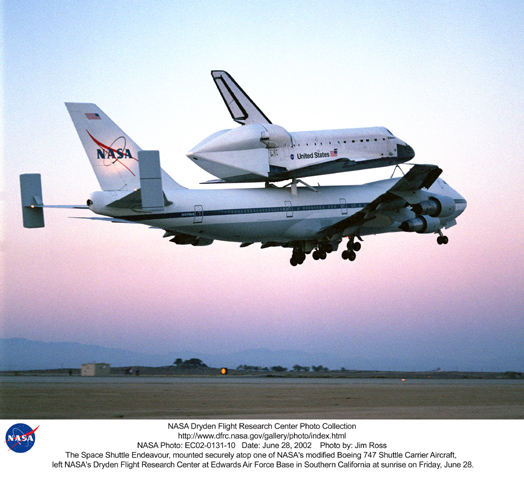
Welcome to the second episode in our two-part series covering the modified Boeing 747s that NASA uses carry the space shuttle orbiters when they need to be repositioned between Edwards Air Force Base in California, Kennedy Space Center in Florida, and other locations.

We talked about the basics of the Shuttle Carrier Aircraft, or "SCAs" in Part One, in which we also interviewed SCA crew chief Pete Seidl. If you missed that episode or if you're a recent subscriber, please be sure to download that episode as well.

Today we're going to talk to one of the pilots who flies NASA's SCAs.

To say that Gordon Fullerton is an SCA pilot would be true, but to stop there would be to fail to outline as rich an aviation and aerospace career as anyone could claim.

He's presently associate director of flight operations at NASA's Dryden Flight Research Center in Southern California. In addition to flying the SCAs, his assignments include a variety of flight research and support activities piloting a variety of multi-engine and high performance aircraft.

Fullerton entered the U.S. Air Force in 1958. After primary and basic flight school, he trained as an F-86 interceptor pilot and later became a B-47 bomber pilot. In 1964, he attended what is now be called Air Force Test Pilot School at Edwards Air Force Base and was later assigned as a test pilot with the Bomber Operations Division at Wright-Patterson Air Force Base in Ohio.

While still in the Air Force, he went on to become a NASA astronaut and served on the support crews for the Apollo 14, 15, 16 and 17 lunar missions.

[Audio]

The voice there saying "Roger, you have good thrust" is Fullerton, who was the man at the CAPCOM station in Houston for Gene Cernan and Jack Schmidt's liftoff from the Taurus Littrow Valley as part of Apollo 17 - the last manned mission to the moon.

In 1977, Fullerton joined one of the two two-man flight crews that piloted the Space Shuttle prototype Enterprise during the Approach and Landing Test program, which involved flying the orbiter to altitude on an SCA, separating the orbiter from the SCA, and then gliding the orbiter to a landing to validate landing procedures.

Fullerton logged 382 hours in space during two space shuttle missions. He was the pilot for the eight-day STS-3 orbital flight test mission in 1982. STS-3 landed at Northrup Strip at White Sands, New Mexico because Rogers Dry Lake at Edwards Air Force Base was wet due to heavy seasonal rains. He was also the commander of the STS-51F Spacelab 2 mission in 1985, which landed at Edwards.

Fullerton has logged more than 16,000 hours of flying time and flown 114 different types of aircraft, including full qualification in the T-33, T-34, T-37, T-38, T-39, F-86, F-101, F-106, F-111, F-14, F/A-18, X-29, KC-135, C-140 and B-47.

Since joining Dryden as a research pilot, Fullerton has piloted nearly all the research and support aircraft flown at the facility and currently flies the center's Beech King Air 200 as well as the B-747 Shuttle Carrier Aircraft.

He was inducted into the Astronaut Hall of Fame in 2005, and the International Space Hall of Fame in 1982.

We started the research for this episode intending to focus on the SCAs themselves. We were delighted to have access to one of the pilots of these magnificent machines. But we had no idea when we submitted the initial inquiry that that we'd end up talking to a man whose career has been so intertwined with the space program and the national dream that has captured so many imaginations. With your indulgence, then, we couldn't help also asking Gordon for his thoughts about the space program - where it's been and where it's going.

We caught up with Gordon by phone at his office at NASA's Dryden Flight Research Center in Southern California.

[Interview audio.]

Image used per NASA's policy entitled Using NASA Imagery and Linking to NASA Web Sites (October 13, 2005) located at http://www.nasa.gov/audience/formedia/features/MP_Photo_Guidelines.html. NASA does not endorse Airspeed or any commercial good or service associated with Airspeed.

See more pictures of the SCA at http://www.dfrc.nasa.gov/Gallery/Photo/STS-Ferry/index.html.

Saturday, January 13, 2007

NASA's Shuttle Carrier Aircraft (Part 1) - Interview with SCA Crew Chief Pete Seidl

Subscribe to Airspeed through iTunes or your other favorite podcatcher using the feed http://airspeed.libsyn.com/rss or listen to audio at http://airspeed.libsyn.com.

Everyone knows that the orbiter of the Space Transportation System (or "STS," and more popularly called the "Space Shuttle) doesn't always land back at the Kennedy Space Center at Cape Canaveral in Florida. Sometimes, it lands at Edwards Air Force Base and, if needed, it could land at White Sands or one of several other emergency landing sites around the world.

That's great, but it puts the orbiter several thousand miles away from its launching facility at the cape.

So how does the orbiter get around? Most of you know that the answer is that you mount it on the top of a specially-modified Boeing 747 called a Shuttle Carrier Aircraft or "SCA." But, if you're like me, you probably didn't know much about the SCAs. How are they different from a stock 747? How many are there? What's it like to maintain an aircraft like that? What's it like to fly it?

Well, if there's one thing you know about Airspeed, it's that we never pass up the opportunity to go right to the source to get real answers from the people closest to the aircraft. And that's just what we did for this special two-part series.

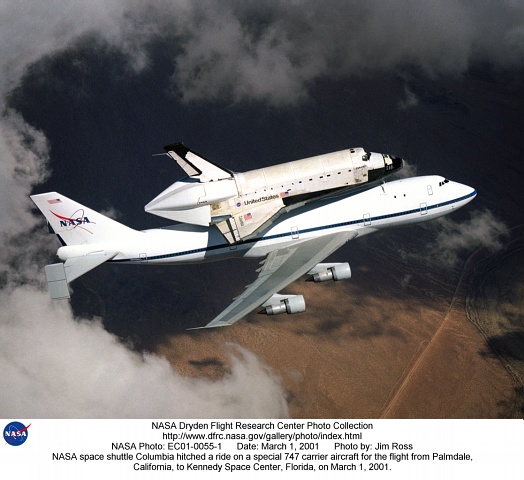
First, a bit about the SCAs. There are two of them. NASA 905 (tail number N905NA) is a Boeing 747-100 and the other, NASA 911 (tail number N911NA) is a short-range Boeing 747-100SR.

The two aircraft are very similar and have nearly identical operating characteristics. If you happen to be lucky enough to see one on the ramp but can't see the tail number, NASA 905 has two upper-deck windows on each side while NASA 911 has five.

The SCAs have a maximum gross taxi weight of 711,000 pounds. A stock 747-100 weighs about 380,000 pounds empty and an SCA weighs even more than that. Once you add 180,000 pounds or more for the orbiter, you have less than 140,000 pounds or so left for fuel and other stuff. And there's precious little other stuff because even using the entire remaining 140,000 or so pounds for fuel only gives you about a 1,000-mile range.

That's actually a little gratifying, because these are some of the same concerns that those of us who have flown ultralights, Cessna 152s, or light sport aircraft know a thing or two about. If you've ever left your flight bag, spare change, and shoelaces back at the FBO and still had to closely manage the amount of fuel in the plane to get two average-sized guys into a C-152 under max gross, you've had the same thing on your mind - at least at some scale - that our guest today deals with very frequently.

We start off the series on the SCA by talking to SCA crew chief Pete Seidl. Pete started working with the SCAs in 1979. He's an employee of Computer Sciences Corporation (or "CSC") under contract to NASA's Shuttle Support Operations Office at NASA's Dryden Flight Research Center in Southern California. He heads a team of five at NASA Dryden that does the regular maintenance on the two SCAs. Among other things, Pete was on the crew that took NASA 905 and the Enterprise orbiter to the Paris Airshow in 1983.

Before we get going, a couple of notes for non-space-junkies.

You'll hear us talk about hypergolic fuels. Hypergolic fuels ignite immediately when the two components of the fuel come together. They're very reliable, even if their components are sometimes highly toxic. Examples are hydrazine paired with nitric acid and monomethylhydrazine (MMH) paired with nitrogen tetroxide, the latter pair of which is used in the space shuttle's reaction control system. Early uses included a critical application for the Apollo program's lunar modules.

One other insider point. Moving orbiters is complex enough with a crack team, lots of support, and only one orbiter at a time to move. But, in early 2001, NASA came within 37 minutes of having a formation flight of the two SCAs, each with an orbiter aboard.

On February 20, 2001, Space Shuttle Atlantis unexpectedly had to land at Edwards. Atlantis needed to be received, processed, and ferried back to the Orbiter Processing Facility at Kennedy Space Center in Florida. Space Shuttle Discovery was undergoing upgrades at Boeing's facility in nearby Palmdale and needed to be at the cape in preparation for launch by March 8. NASA 905 was already in Palmdale awaiting mating of Discovery for the ferry flight, but NASA 911 was at Evergreen Air Center in Marana, Arizona undergoing maintenance.

Two orbiters, two SCAs, an almost simultaneous deadline, and not much time to organize and carry out an amazingly complex set of operations. Pete and his team faced an unprecedented challenge. But, on March 1, 2001, the two SCAs, each with a national treasure mounted atop it, launched for Kennedy Space Center with NASA 905 and Columbia taking off at 11:00 a.m. local and NASA 911 with Atlantis taking off at 11:37. Although each encountered bad weather and other difficulties, each made it to Florida in time.

The aircraft took separate routes and a formation flight would have been impractical and beyond the mission risk profile, but at least I'm not the only one to have allowed the thought to enter my head and think that that would have been a deeply moving picture.

Anyway, on to the interview. We caught up with Pete Seidl at an office at NASA Dryden a mere 150 feet from the nose of NASA 905.

[Interview audio.]

Many thanks to Pete Seidl for taking some time out of his day to talk to us.

Tune in next time for the view from the cockpit of the NASA Shuttle Carrier Aircraft with SCA pilot, project pilot, former astronaut, Shuttle Approach and Landing Test pilot, STS-3 pilot, and STS 51-F commander Gordon Fullerton.

_________________________________________

A special note of thanks from the Airspeed crew goes out to a heroic listener who works for Apple. We redirected the feed for the podcast on Labor Day weekend over to Libsyn from a prior RSS provider. Apparently, whether due to a glitch in the RSS provider's system or iTunes, when we let the old forwarded feed go away, we winked out of existence on iTunes. Thanks to some fast footwork on the part of a listener and the willingness of the folks at iTunes to hustle the re-listing of the podcast through, we got back online quickly and lost little, if any, or our subscriber base that subscribes through iTunes.

Thanks to Apple and to that heroic listener for helping us keep Airspeed up and available.

_________________________________________

Image used per NASA's policy entitled Using NASA Imagery and Linking to NASA Web Sites (October 13, 2005) located at http://www.nasa.gov/audience/formedia/features/MP_Photo_Guidelines.html.

See more pictures of the SCA at http://www.dfrc.nasa.gov/Gallery/Photo/STS-Ferry/index.html.

Tuesday, January 02, 2007

Air Traffic Control with Terminal Controller Mark Schad

Subscribe to Airspeed through iTunes or your favorite podcatcher using the feed http://airspeed.libsyn.com/rss or listen to the audio at http://airspeed.libsyn.com.

An air traffic controller gave me a number to copy the other day. And it was a good thing.

I spent a little time this week on the phone with Mark Schad, who is a terminal area controller for the area surrounding Lambert-St.Louis International Airport. 13 million passengers went through the airport in 2004. Besides being the airport featured in Planes, Trains & Automobiles and a Seinfeld episode, it has 25 separately-charted approaches, including simultaneous close parallels. And that doesn't include all the satellite airports for which St. Louis approach provides approach and departure control. More than enough for any controller or pilot to shake a stick at.

Mark is also a pilot with enough ratings to have to get a separate bag for his logbook, and his perspective as both a provider and a customer of the air traffic control system is invaluable.

I called Mark at the control facility this week and we spent some time demystifying the men and women at the scopes and talking about what it's like at a workstation, how best to interact with a controller, what happens in an emergency, and lots of other good pilot talk. So, if you've copied your ATIS (and, for the love of Pete, copy your ATIS when you're in Mark's airspace!), let's go to the interview.

Saturday, December 23, 2006

Mike Agranoff and The Ballad of the Sandman

Subscribe to Airspeed through iTunes, use your favrite podcatcher with the feed http://airspeed.libsyn.com/rss, or listen at http://airspeed.libsyn.com.

Sometimes, it's good to stir things up a little.

This episode has nothing to do with aviation, aerospace, jet fuel, or tearing up the sky. If you're in the mood for an aviation-related episode and don't want to listen to anything else, please skip this episode and pick us back up in January. If you're tuning in ffor the first time, my apologies. This really is an aviation and aerospace show and you can check out prior episodes for your aviation fix until the first new episode of 2007 comes out.

But we're going to change things up this time. Airspeed is about to pay an homage that the podsphere owes to a very special medium and a very special time.

Airspeed is finishing out a great first year. A year in which we've met lots of new people, flown in a lot in different aircraft, and realized the dream of the podsphere - Ordinary people making the closest thing they can to art and reaching out to touch other ordinary people.

If you're older - over 40 or so - and you lived close enough to a metropolitan area - and you had an FM radio receiver in the mid to late 1960s - and if you were very lucky - you had a front-row seat for one of the most magical times in all of media before or since. When FM radio reached its critical mass and a backwater of the electromagnetic spectrum leaped up and captured imaginations and expanded horizons.

By the 1960's AM radio was a homogenious morass of largely mediocre programming. Relatively few people had FM receivers and FM radio stations were relatively few and far between, so you pretty much listened to what was on AM or you didn't listen at all.

Then, in the mid to late 1960s, guys like Jonathan Schwartz on WNEW FM in New York City started playing eclectic but carefully-chosen music and put out programming of a kind that you just can't get on the radio any more. It wasn't long before the iron heels of the program directors homogenized the airwaves and turned FM into the stereo version of AM that continues through to today. But, for a short time, there was a renaissance on the airwaves.

Podcasting brings back a little bit of what it was like during those pioneering years. It's as though your radio dial has grown by thousands of stations and, if you look, you can find places in the podsphere that are as eclectic, entertaining, and inspiring as the airwaves were in the late 1960s.

All of which is by way of introduction of what you're about to hear.

This, by very special permission, is The Ballad of the Sandman by Mike Agranoff. Mike is a folk musician from New Jersey who plays a mean fingerstyle guitar, concertina, banjo, and ragtime piano and sings. I have seen him live at a library, in a church basement, and in a community center and he is the consummate journeyman purveyor of melodies, spoken word, and traditions new and old.

I heard this piece for the first time in 1998 or so on public radio in Detroit. Mike has been kind enough to perform this at every show that I have attended. He does it entirely from memory and with a conviction that puts you in the darkened studio of the narrator.

The airing of this piece around the end of the year has become a tradition on WION in Ionia, Michigan, where this podcast also airs as a radio show. And it's always a part of my listening around the same time. I hope that you will adopt it as your own as well.

So, without further ado, let's let the podsphere pay tribute to the magic of the radio - Magic that once was and magic that can be again.

Here's Mike Agranoff with The Ballad of the Sandman.

[Audio]


The Ballad of the Sandman, (c) by Mike Agranoff. Used by permission. Thanks, Mike!

Mike's website: www.mikeagranoff.com

Mike's e-mail address: mike@mikeagranoff.com

Text of The Ballad of the Sandman: http://www.mikeagranoff.com/lyrics/Sandman.htm

Wednesday, December 13, 2006

Airspeed Temporarily Off iTunes

No idea what's going on here, but it appears that Airspeed is temporarily off iTunes. Some problem with WebPasties, my former RSS provider (who supposedly forwarded the feed over to Libsyn) when I requested it. Thought I had left these giys for good, but they apparently still have some hooks into my feed.

Anyway, it's completely gone from iTunes. Crap!

I resubmitted the podcast to iTunes a moment ago, but it will likelytake a few days to re-populate. In the meantime, please stay subscribed or re-subscribe. I'll try to get this fixed.

- Steve

Sunday, December 10, 2006

Airspeed - Music (Part 2)

Subscribe to Airspeed using iTunes, visit us at http://airspeed.libsyn.com, or use the RSS feed http://airspeed.libsyn.com/rss.

Today we’re going to revisit one of the most important aspects of flying – And that’s the music you listen to while you do it!

Sure, there are more important things – like safety – but the fact remains that putting together the right soundtrack can make your flying even more inspiring. If you have an audio input to the intercom in the aircraft you fly or otherwise have a means of listening to music while you fly here's some music that you should consider adding to your playlist.

Bear in mind that safety comes first. If the music results in any chance of discraction or a miscommunication or failure to give or receive a communication necessary for the safety of the flight, leave your music player at home. But if you can manage the volume of the player, not have to fumble with it when your should be doing other things (playlists are helpful here), and satisfy yourself as pilot in command that you can hear and be heard in the cockpit and at the controller’s workstation (such as by using a squelch or cutout feature like I use), by all means add a soundtrack to your flight.

Here’s what has been in my iPod while I fly.

Eric Johnson has a way with the Fender Statocaster that is unlike that of any other player. He's melodic and heavily jazz-influenced. Music from his Ah Via Musicom and Venus Isle albums got lots of airplay in the 1990s and he has toured with the likes of Steve Vai and Joe Satriani and recently hit the road with Sammy Hagar. This is All About You from Venus Isle. Note the arpeggios and underlying drive. Really good for high airwork.

[Audio]

(Buy Eric Johnson albums, DVDs, and other stuff at http://theconnextion.com/ericjohnson_index.cfm?ArtistID=175.)

I'd be really surprised if composer and conductor John Williams isn't a pilot. I promised myself that I would use the word "evocative" only once in this episode, and this is it. I put this on one of the first flight mixes I ever made and it was one of the first tunes that jumped off the CD player and became a soundtrack for what I was doing at the time. It was on short final at Lapeer in southeast Michigan. Nothing quite like Williams to swell up when you're locked in to approach and have your attitude and airspeed nailed.

This is, of course, Flying from E.T., The Extraterrestrial. Those who fly aircraft with yokes instead of sticks will have an easier time imagining that they're holding on to bicycle handlebars, but both should avoid the temptation to strap a milk craft to the cowling for your little buddy to ride in.

This version comes from John Williams and the Boston Pops Orchestra's album, The Classis Spielberg Scores.

[Audio]

(Buy the album at http://www.amazon.com/Williams-Classic-Spielberg-Scores/dp/B000002C0F/sr=8-1/qid=1165705583/ref=pd_bbs_1/103-4775352-7547032?ie=UTF8&s=music).

No playlist is complete without some heavy metal. And there's none heavier than Iron Maiden. This is Aces High from 1984's Powerslave. Great driving metal groove and lyrics that tell a story of aerial combat in World War II.

[Audio]

(Buy the album at http://www.amazon.com/Powerslave-Iron-Maiden/dp/B000063DFN/sr=1-5/qid=1165706163/ref=sr_1_5/103-4775352-7547032?ie=UTF8&s=music).

Unless you count the diggery-doo, the English accordion, or the great highland bagpipes, there is probably no more technically ungainly instrument than the bassoon. It's four or five feet tall and has a double-reed that begs to sqwawk and evade the player's efforts to control it. There's an old joke that the definition of an optimist is a bassoon player with a pager.

Well, if there's one guy who can carry both a bassoon and a pager with confidence. He's Paul Hanson. Paul has taken the bassoon into jazz and other circles with amazing aplomb. He can out-sasxophone a saxophone and it all sounds completely organic. Ever run into one of those phases in your training when the controls seem to defy you, nothing goes the way it's supposed to, and you're constantly behind the aircraft? Usually right before you solo or right before get the hang of the landing flare or just before you start to nail your instrument approaches? This one is for you, my brothers and sisters.

Let Paul remind you of what can happen with even the most ungainly of hardware if you train hard and believe that the music will come. This is The Gold Coast from Voodoo Suite. It's in 7/4 and he's playing a bassoon and yet it sounds great. Yeah, your first full-procedure VOR approach is going to be ugly, but that's okay. Listen to how you'll feel on your 50th . . .

[Audio]

(Buy the album at http://www.cdbaby.com/cd/hansonp.)

We started with one guitar god and we're going to end with another. When Sony went looking for a great song to use in its ads celebrading the 20th anniversary of the compact disc, it looked no further than Joe Satriani's Summer Song from his album, The Extremist. This is great music for whatever you want to do while listening to it. It has energized me in the wee hours studying for exams and it has caused more than a few oscillations over the speed limit out on the highway. Now I'm no A&P and this is largely unscientific, but I'll bet that, if you plug Summer Song into the intercom of your aircraft, you'll get two or three additional knots of airspeed. Airplanes love Joe Satriani! Sound crazy? Well, it's a lot cheaper than wheel fairings!

(Buy the album at http://www.amazon.com/Extremist-Joe-Satriani/dp/B000002BWH/sr=1-1/qid=1165711434/ref=pd_bbs_sr_1/103-4775352-7547032?ie=UTF8&s=music.)

That's it for this installment of what should be cranking while you're turning and banking.

Got your own suggestions? E-mail us at steve@airspeedonline.com. Links to information about the artists and how to buy this music are on the blog at www.airspeedonline.blogspot.com. Although we might

As always, this is not flight instruction or a recommendation about how to operate an aircraft. Consult a qualified instructor, obey the regulations, and, above all, fly safely!
_______________________________

[Illustrative musical snippets used as permitted by 17 USC § 107 (http://www.law.cornell.edu/uscode/html/uscode17/usc_sec_17_00000107----000-.html) for criticism and comment and as otherwise permitted by applicable law.]

Saturday, November 18, 2006

Aerial Photography with Dave Higdon


Subscribe to Airspeed through iTunes, through your other favorite podcatcher using the feed http://airspeed.libsyn.com/rss, or listen online at http://airspeed.libsyn.com.

We all love those gorgeous air-to-air photos of aircraft that grace the covers and the insides of our favorite flight magazines. We even like the ones in the ads. Sometimes especially the ads. Ever wonder who shoots those pictures or how they do it?

Enter ace aviation photographer Dave Higdon.

Dave has been a working journalist for more than 25 years and currently freelances for a number of media outlets. His magazine work lands his images on several covers each year and on ever more advertising pages. He is an accomplished pilot with almost 5,000 hours flown in a variety of aircraft, including hang gliders, ultralights, and light-sport aircraft, as well as general aviation aircraft ranging from piston singles to light business jets.

He is the president and creative director of PhotoProse Productions in Withita, Kansas. He is also a regular part of the panel on Uncontrolled Airspace, a relatively new entry to the podsphere that just hit its sixth episode and is one of the best hangar-flying shows out there.

[Interview audio.]


Thanks to Dave Higdon for taking time to talk to us.

We’ve covered some ground here about techniques, planning, and other aspects of flight and about aerial photography. As ever, nothing you hear on Airspeed is flight instruction or any recommendation with regard to the operation of an aircraft. Consult a certified flight instructor and otherwise get the proper training from qualified personnel before you consider doing anything you hear about here on Airspeed. The Airspeed legal staff thanks you – and maybe now they’ll let me take my thumbs out of this vice.

_________________________________

Dave's Website: http://www.davehigdon.com

Uncontrolled Airspace podcast: http://www.uncontrolledairspace.com

Avweb: www.avweb.com

Sunday, November 05, 2006

Balloon Flight with Dave Emmert

Subscribe to Airspeed through iTunes or listen to the audio at http://airspeed.libsyn.com.

You’re already familiar with Airspeed’s dogged pursuit of things that tear up the atmosphere and get from point A to point B as fast as possible – With sonic booms if at all possible.

Today we stretch those horizons a little and talk about tearing up the air a little less. In fact, we’re talking about floating along suspended under about 80,000 cubit feet of air that’s a little warmer than the surrounding atmosphere. We’re going up in a hot air balloon.

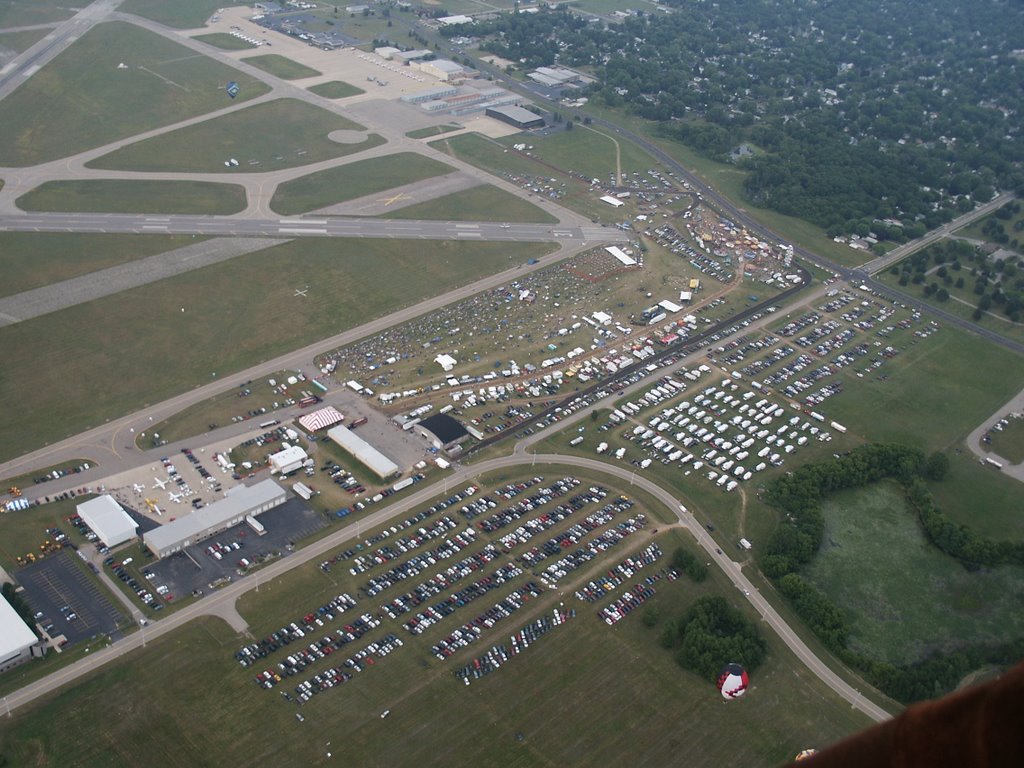
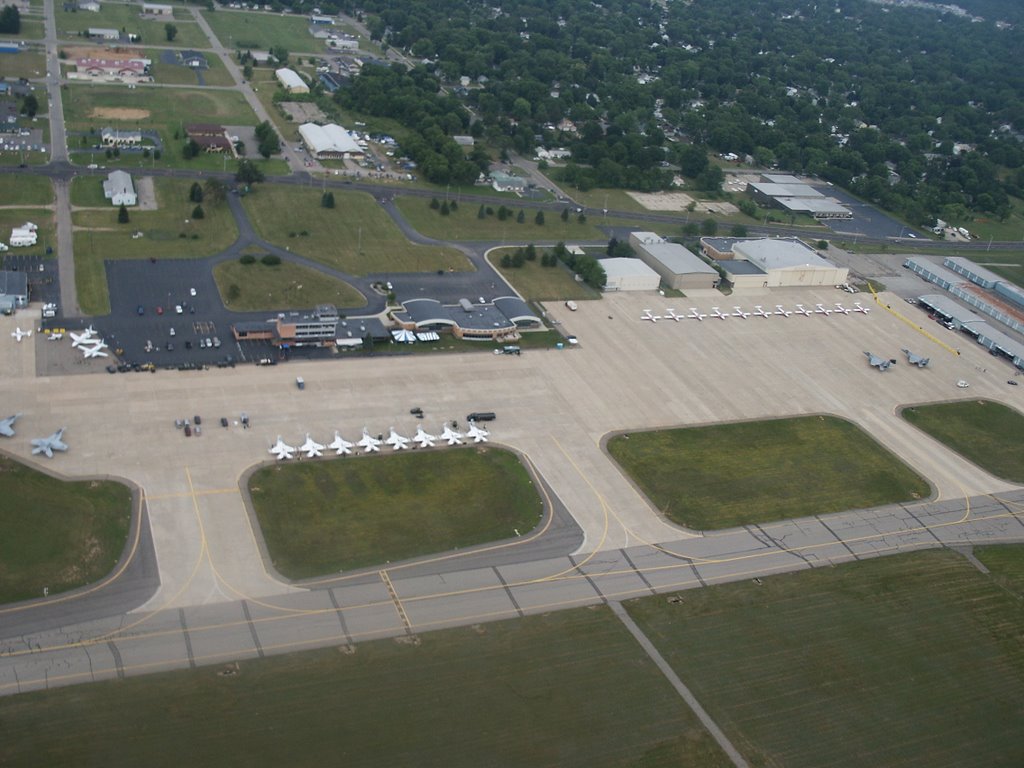
You’ll recall that we spent a few days in July at the Battle Creek Balloon Championships and Field of Flight Airshow in Battle Creek, Michigan. We went primarily for the noise and excitement of the Thunderbirds and the Snowbirds, but the fact remains that hot-air ballooning is has always been a big part of the show. Dr. Bob Kinsinger of Battle Creek played a key role in bringing the World Hot Air Balloon Championship to Battle Creek and his legacy remains. Dr. Kinsinger lived down the street from where I grew up and I still remember the hot air balloon that he painted on his mailbox.

Tim Reed and I made it a point to be at the field by 5:30 a.m. each day, primarily because we wanted the opportunity to do the dawn patrol and be as close to the airplanes as possible without all the crowds around to disturb the deep thoughts that we came to think. The festival opens that early for the media primarily because the balloon pilots are there getting their briefings for the morning flight. As long as we were there, each morning and each evening we put in our names on the chance that one of the balloon pilots might take one or both of us up. A few launches either didn’t happen or happened without a pilot having a spot for us but, on Sunday evening, they called my name.

A few minutes later, I was in the van with Dave Emmert and his family driving to the nearby town of Climax for my first balloon ride.

02

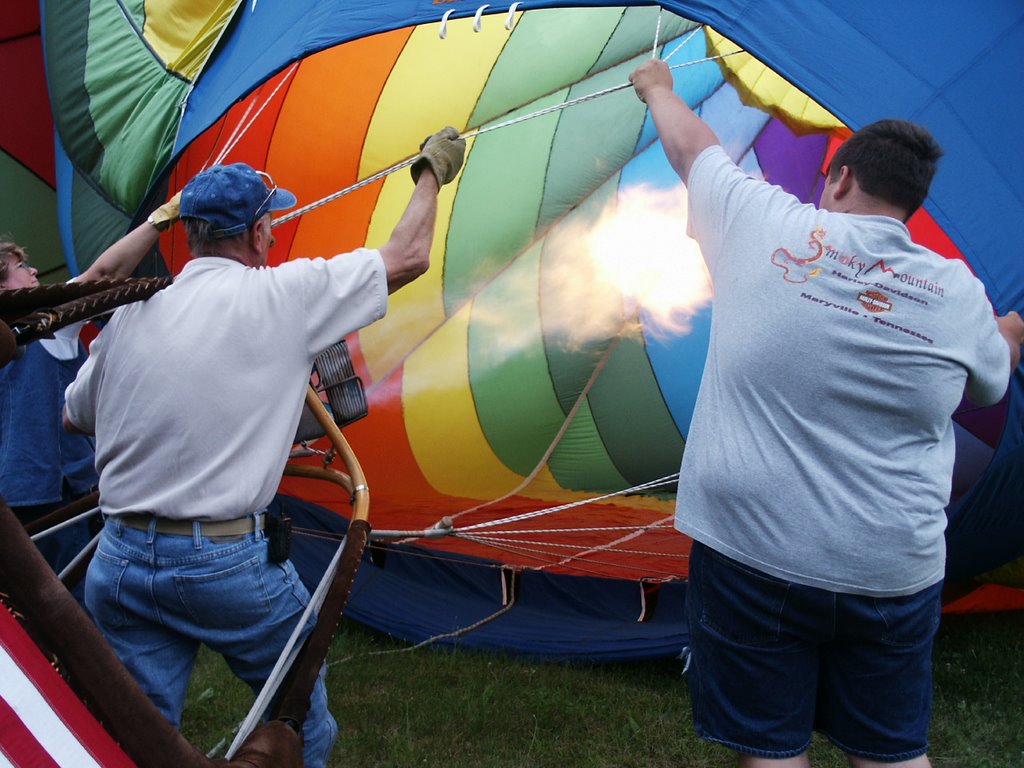
A couple of notes here. Most peoples’ paradigm of hot air balloon flight is silently floating over the countryside. That’s most of it, but that quiet is frequently broken by the fury of the propane burner that produces more than 40 million BTUs of heat from 200 PSI of propane tank pressure. Here’s what it sounds like.

[Burn audio.]

03

As you’ll soon hear, Dave is a soft-spoken guy. Nothing wrong with that, but it’s virtually impossible to engineer the recording levels on a handheld MP3 player to capture Dave’s voice while not slamming the meters ever time Dave lights up the burner. In order to capture the conversations, I edited out most or all of the burns. You may hear some clipped sentences (Dave doesn’t structure his comments around burns but, rather, talks right through them) and you may hear shifting audio levels and the general effect of the audio in the basket will be a lot more serene than it actually was. But the authenticity and pragmatism in Dave’s voice more than makes up for the loss of authenticity caused by editing out the burns.

We went up in Dave’s balloon, Cloud Nine. Cloud Nine is a Firefly 7-15 registered as N1515E. The part of the balloon that most people think of as the balloon itself is called the “envelope.” Cloud None’s envelope is 57 feet across, 47 feet tall, and has a volume of 77,000 cubic feet. The whole rig is 62 feet from the top of the envelope to the bottom of the basket. Its max gross weight is about 1,750 pounds.

Firefly balloons range from 56,000 cubit feet and 1,200 pounds gross weight to 280,000 cubic feet and 3,940 pounds gross weight.

We arrive at the appointed gathering place – A grocery store parking lot in Climax, just south and a little west of the airfield. There’s some convective weather off to the west and the organizers elected to get everybody down to Climax and make the call to launch as close to the scheduled launch time as possible.

We walk a hundred yards or so to the briefing just in time to hear the organizers announce that we were go to launch.

The walk back is the first chance I have to really talk to Dave.

[Audio – Dave 1]

04

As we return from the briefing, we stop to talk to one of Dave’s acquaintances. Dave’s friend reaches inside the trailer and blows up a little black party balloon from a helium tank. Moments later, while a small knot of balloonists watches, he lets the balloon go.

The little black balloon is what balloonists call a “pieball.” As it rises through the air, they observe it to try to determine the wind direction and speed at various altitudes. Dave’s friend sights the pieball through something he’s holding up to his eye. It could be an inclinometer or a compass or something else.

As we’re standing there, my MP3 recorder draws some attention. [Audio – Dave 2]

______________________________________________ 05

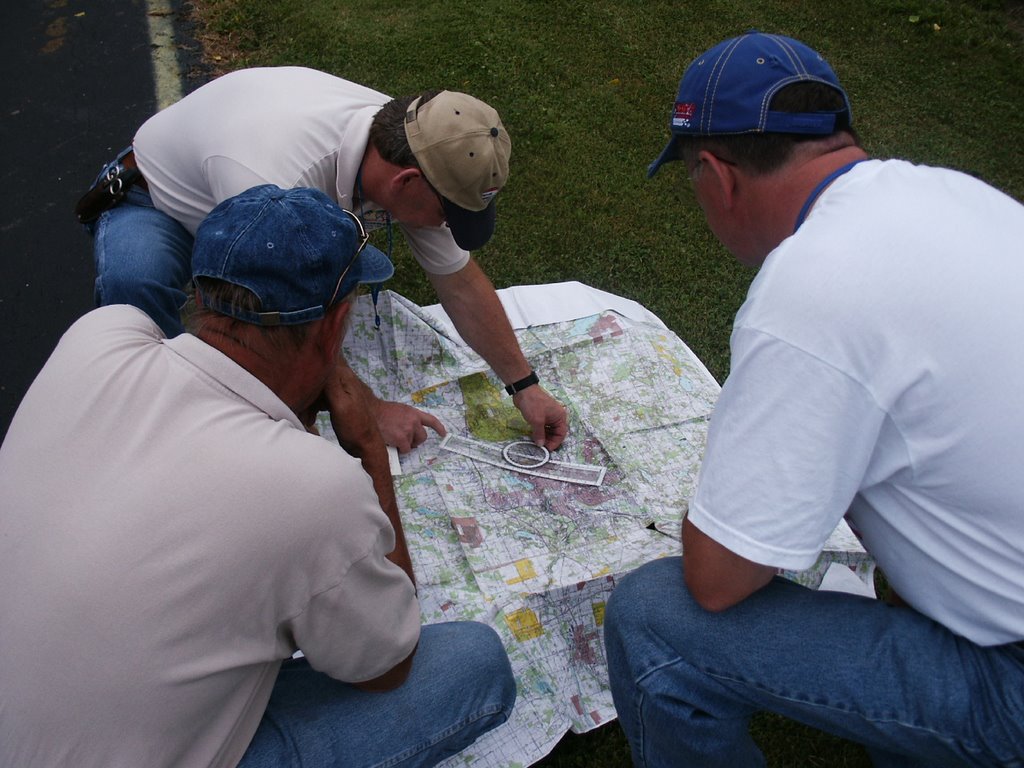
At balloon competitions, you basically “fly in” or you “fly out.” “Flying in” is setting up somewhere upwind of the drop zone and trying to bring the balloon in directly over the target. “Flying out” is setting up on the field at what would otherwise be the drop zone and flying out to some other place downwind. This allows the audience at the airfield to see one of the two more dramatic phases of ballooning on each flight: The launch and the approach to the target. We’re obviously flying in on this one. Based on the wind direction and speed, we now have to go find a place to launch from which the available winds will take us over the big white “X” on the airport in front of the crowd. Dave lives nearby and knows the area well. Looking at the map and considering the wind direction, Dave and his friend decide to head for a nearby subdivision to see if they can find a place to launch. Toward the back of the subdivision, we find an empty lot. Balloon crews are not an uncommon sight around Battle Creek, but they still draw interest. The people in the home next door were out in their front yard. Dave asked whether they’d mind if we launched a couple of balloons from the lot. They weren’t the owners of the lot, but they allowed as how they themselves didn’t have a problem with it.


Dave and his friend each set up on the lot and started the gasoline-engine-powered fans that inflate the balloons with ambient air before firing up the burners.

[Audio – Dave 4]

06

Okay, it’s time to man the basket. Dave has been firing the burner on and off for a few minutes and the balloon has stood up enough to climb into the basket. The basket itself is tied to the bumper of the van with a quick-release knot that Dave could pull to release the balloon. I make sure that my camera is snugly in the case and that the MP3 recorder is at the ready and they wave me over. Here we go.

[Audio – Dave 5]
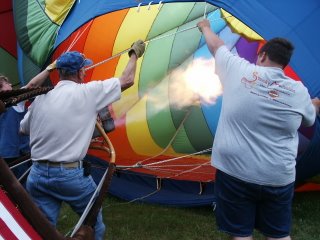


07

We cleared the trees on the north side of the lot easily and then floated out over a corn field with railroad tracks running through it. Dave stayed on the burner pretty frequently to get us to around 1,000 feet.

A few impressions here.

There is no apparent wind in the basket of a balloon. You are essentially within the air mass and a part of the air mass. Other than in the case of shear where air masses meet or when you ascend or descend through a shear zone, there's no wind.

Another odd thing is that you can actually see the cross-section of the wind currents by using a very sophisticated and high-tech procedure. You spit. As the spit recedes, you can see it shear this way and that for a good hundred or more feet.

There’s also the way you experience the altitude. Altitude in an airplane is your friend. It’s time and options and, to a great extent, that’s also true in a balloon. But your position in an airplane is such that you don’t really get to look straight down. You’re usually looking at least 20 degrees or so off to the side. Not so in a balloon. You look over the edge of the basket and you’re looking straight down.

I was uncomfortable, but not overly so. I found a place in the corner of the basket where I could hook an arm around the frame and I felt a lot better.

You navigate a balloon by making use of wind direction at different altitudes. While you're confined to a general direction of flight, you can tweak that direction by ascending or descending to where the wind will take you in the right direction.

On the flight with Dave, is became pretty apparent that the wind up at a few thousand feet would take us about 30 degrees to the right of the target. But the wind below us was a little quicker and from right to left. So the drill on this flight would be to remain high and drift until some distance before the target and then descend at such a time and at such a rate so that we swoop down and to the left directly over the target.

Here’s the conversation.

[Audio 6]
_________________________________________________________


08

Dave notices how I’m hugging the strut and wants to make sure that I’m comfortable. Then we talk a little bout his ballooning experience and some of the instrumentation in the basket.

[Audio 7]

09

Pretty soon, we’re just about over the field and Dave talks about what we’re about to try to do.

[Audio 8]


10

Closer and closer. A balloon ahead of us has hooked right into the target and its crew is getting ready to drop its marker.

[Audio 9]
____________________________________________________________

11

The task for today is to drop a weighted streamer as close to the center of the big white “X” as possible. According to the Balloon Federation of America’s competition rules, a weighted streamer is supplied by the organizer for each given task. The marker's streamer must be unfurled before release. A marker's total weight is 70 grams (2.5 oz.). The marker's tail width is 10 centimeters (3.9 in.) and its total length of 170 centimeters (66 in.). Some competitions require that you hold the marker by the tail and drop it without imparting any lateral velocity to it. You can throw the markers in this competition, but you can’t throw a marker sideways very far even if you try because it’s too light to go very far.

We’re at least a couple of hundred feet from the target and Dave considers not throwing the marker at all, but he eventually decides to toss it. He’s hot and heavy on the burner as we maneuver and then go to climb out from the target area.

[Audio 10]


12

Some of the balloons are oblong and look like rugby balls standing on end.

Looking behind us, there's a parade of balloons. Different types at different altitudes at different positions near the target area.

Dave says that, by going early, we've given up a bit of an advantage in that the other contestants can gage their approached by looking at what happened to us with our approach profile.

Looking back, there's a rugby-ball-shaped balloon hovering over the target. Maybe 30 feet off the ground. I can see a person leaning out and it's pretty apparent that this toss is going to be within a few feet of dead center. It's going to be close enough that even the bounce is going to be material.

Off to our right, one of the rugby-ball-style balloons is landing in a field behind a school. It looks like they’re breaking up a soccer game, but none of the players seem to mind.

[Audio 11]


13

Drifting clear of the airfield, we begin to think about places to land. By now, I’m a lot more comfortable in the basket. I still have an elbow hooked around the strut, but I no longer have the death grip. I tell Dave about that.

[Audio 12]

14

Another observation. Ballooning is the ultimate in low and slow. You have a lot more opportunity to look at things on the ground and you notice a lot more. Like an enormous outdoor lot with thousands of something line up in it.
_________________________________________________________

[Audio 13]

15

As we drift past the developed area around the airport and over the railroad tracks toward the northern suburbs, I ask Dave about his training and experience.

[Audio 14]

16

Now well past the airfield, the terrain is a lot more wooded, punctuated only infrequently by small clearings and residential subdivisions.

Observation: You can hear an amazing amount of what’s going on the ground. It makes sense, actually. Sound generated on the ground only has an average of 180 vertical degrees within which to propagate. In other words, a lot more of it goes up than down. You can hear a conversation from 100 feet away. It’s easy to say hello to people on the ground and they can talk to you without even raising their voices. The person in the balloon has to talk a little louder because the sound he or she makes has a full 360 degrees in which to propagate. But it’s still a lot more social between the ground and the air than it is with airplanes.

I actually proved this point by telling a knock-knock joke to a little girl in a subdivision as we glided overhead. Dave was adjusting our altitude and was on the burner enough to make the audio unusable, but the fact remains that two-way communication is possible without a radio.

[Audio 16]

17

By now, Dave is actively looking for a place to land. He tells me that he knows of lots of places up ahead. That’s good, because all I can see is trees.

[Audio 15]
_________________________________________________________

18

A good landing place is open, flat, away from trees antenna farms, and electrical wires, and close to a road so that the chase vehicle can get to you. Dave has humped Cloud Nine from the landing zone out to a road a few times, but not often. Worst case, he can pull the propane tanks out of the basket and then no individual part would weigh more than one or two people can carry.

Up ahead is a small clearing. The trees are bout 40 feet high all around. There’s a mobile home at the far side and a dog tied up near the mobile home. We’re hooking in more or less directly toward the center of the clearing. Dave is about to get on the burner and pass up this opportunity, but it’s hooking in so nicely that he reconsiders. A guy about 30 years old has just stepped outside of the mobile home. He doesn’t see us right away, but looks up when Dave asks permission to land.

[Audio 17]

19

There’s a flap of fabric in the top of the balloon called the “parachute.” You can pull on a line connected to the parachute and release some or all of the hot air in the envelope. It does for balloons what flaps do for airplanes by letting you descend more quickly in a stabilized way. But, unlike flaps, you can really haul on the parachute line and deflate the envelope to take it down and pack it up. Try that with a Being 727.

As we come in over the trees, Dave gets on the parachute line. I look up and see the parachute flap moving and letting a measured amount of air out of the envelope. Our rate of descent increases and we descend into the clearing. Going about two feet per second, we settle onto the grass. Dave warns me to expect a gentle bounce, and then we come to rest.

[Audio 18]

20

For whatever reason, I have this initial urge to get out of the basket. But I think better of it. If I get out, two hundred pounds of podcaster and podcaster gear would become suddenly unavailable as ballast and the balloon would likely try to ascend again. So I stay put.

Once we’re down, the occupants of the mobile home come out to meet us. The guy’s wife and their toddler have joined him and they come out to examine this colorful monstrosity that has just occupied the clearing. The kid’s eyes have grown huge. Clearly, this is not something that happens every day.

[Audio 19]


21

Dave gets on the phone and tells the chase crew where to find us. It’s about ten minutes before they show up. Dave keeps the envelope heated just enough to keep it standing up until the crew can help him take it down. Dave spies a moth flying around in the lower reaches of the envelope and, in a moment of unexpected whimsy, he kills some time by going after the moth with the burner. The moth evades the flame ably, possibly because of the turbulence of the burner output itself. If he got it, I didn’t see it happen.

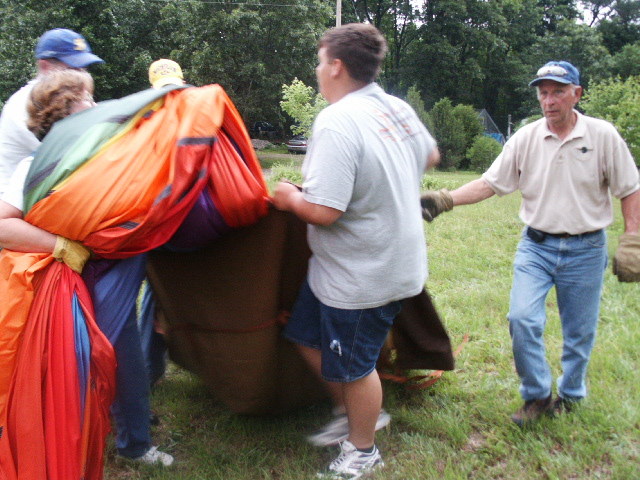
The chase crew arrives a few minutes later. Pack-up takes all of 15 minutes. Everyone seems to know his or her job and falls to it immediately and efficiently.

I slide into the van and we head back to the airport. It’s getting dark off to the west and thunderstorms are moving in. We head to the Air National Guard side of the field and everyone but Dave gets out. Dave is cleared onto the base to go refill his propane tanks. We hang out under a tarp with the friendly but heavily armed guardsmen until Dave comes back, picks us up and swings back around to the other side of the airport where I’m parked.

The crowds are arriving for the fireworks show as I pull out and head for the highway. The more mundane demands of my work and family life await my return 140 miles or so to the east. The drive gives me a chance to reflect on the really singular experience I’ve just had. It’s not the same as the coast down off the adrenaline peak of an airplane media ride. It’s much more reflective.

For all the bombast and fire of the jet demonstrations earlier in the day, this experience stood out for its own reasons. Ballooning is perhaps the first means by which men slipped the surly bounds of earth and got a taste of what was to come in aviation. It demands competencies that are unique among the modes of aviation. Perhaps more than any other form of aviation, it is dependent upon weather and other uncontrollable variables. Success in competition demands humility, keen observation, and a sixth sense about the atmosphere.

Dave Emmert is much like his balloon. Even-tempered, steady, and deliberative. Soft-spoken for the most part. Sharing the skies in easy and close proximity with his fellow enthusiasts.

He is an approachable emissary for his sport. Dave frequently takes up media people and others in Cloud Nine. On the flight that morning, Dave had taken up Maj. Steve Horton, the Thunderbirds’ slot pilot who flies the No. 4 jet. Although I have no real way of knowing, I suspect that Dave gave me, as a mere podcaster and flight enthusiast, the same treatment, consideration, and experience that he have a Thunderbird. It was a privilege to fly with him

Many thanks to Dave Emmert and to the Cloud Nine chase crew.

_______________________________________

Battle Creek Balloon Festival and Field of Flight Airshow: www.bcballoons.com

Firefly Balloons: www.fireflyballoons.net