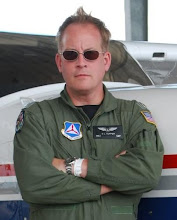
Thursday, May 03, 2007

Airspeed - Ballistic Recovery Parachutes with BRS CEO Larry Williams

Subscribe to Airspeed through iTunes or your favorite other podcatcher, listen to audio at http://airsleed.libsyn.com, or download directly at http://media.libsyn.com/media/airspeed/AirspeedBRS.mp3.

Long-time listeners to Airspeed will recall the episode we did last February about whole-airplane ballistic recovery parachutes and about Ballistic Recovery Systems, Inc., better known to some as BRS Parachutes.

I’m a fan of the whole idea of ballistic recovery chutes. They provide an out in those relatively rare cases where no amount of diligence, skill, or luck will prevent you and your aircraft from having an unplanned interface with the planet. I’m talking about a control surface malfunction, loss of certain instruments in IMC, midair collisions, and engine failures where you’re too low, over unlandable terrain, or flying at night.

Recent deployments in both a Cirrus SR22 and a German ultralight that produced the company’s 200th and 201st saves – as well as the popularity of the systems in new light sport aircraft – warrant revisiting the company and its products.

BRS was founded in 1980 and is based in South St. Paul, Minnesota. The company develops and commercializes whole-aircraft emergency recovery parachute systems for use primarily with general aviation and recreational aircraft.

BRS parachute systems are designed to safely lower the entire aircraft and its occupants to the ground in the event of an in-air emergency. The parachute system is designed for in-air emergencies that include mid-air collisions, structure failure, engine failure, pilot incapacitation, and unstable meteorological conditions, among other things. BRS is the largest manufacturer of whole-aircraft recovery systems in the world. Since inception, the company has delivered more than 23,000 systems that have been installed on general aviation aircraft (including more than 2,800 on FAA-certified aircraft).

As I disclosed the last time I covered BRS, I continue to own a small amount of the company’s stock and have held it since 2001. I try to let you guys know every time that I have anything that approaches a conflict of interest, so there it is. Take it for what it’s worth. I look at it as putting a little bit of my retirement fund where my mouth is.

We talked to Larry Williams, who is the chief executive officer, president, chief operating officer, and a director of BRS. Prior to joining BRS in 2000, he was vice president of business development at AmSafe Aviation in Phoenix, Arizona, the world’s largest manufacturer of aviation restraint systems. Prior to that and since 1995, he was group president at Rural/Metro Corporation, a Scottsdale, Arizona -based services company that engages in mobile health services, including emergency and non-emergency fire and ambulatory services. From 1985 to 1995, he was executive director of the Emergency Response Training Academy, a firm specializing in training of airport emergency response personnel.

Let’s go to the interview.

[Interview audio.]

E-mail us at steve@airspeedonline.com or leave voicemail at 206-339-8697 any time - day or night.

BRS contact information:

Ballistic Recovery Systems, Inc.
300 Airport Road
South Saint Paul MN 55075-3551
Phone: 651.457.7491
Fax: 651.457.8651
e-mail: info@brsparachutes.com
www.brsparachutes.com

Associated Press: Bigger Planes Need Bigger Parachutes - http://news.postbulletin.com/newsmanager/templates/localnews_story.asp?z=7&a=292524


Monday, April 23, 2007

Flying the Flags at Half Staff

Subscribe to Airspeed throught iTunes or your favorite podcatcher (RSS feed: http://airspeed.libsyn.com/rss) , listen to audio at www.airspeed.libsyn.com, or download the audio directly at http://media.libsyn.com/media/airspeed/AirspeedDavis.mp3.

They're flying the flags at half staff at the airport today. As many of you know, LCDR Kevin Davis, the Blue Angels' opposing solo, was killed on Saturday toward the end of a demonstration at Naval Air Station Beaufort, South Carolina. Our thoughts are with LCDR Davis's family and with the team.

Friday, April 20, 2007

Airspeed - Aerobatics and Airshows with Michael Mancuso


Subscribe to Airspeed throught iTunes or your favorite podcatcher (RSS feed: http://airspeed.libsyn.com/rss) , listen to audio at www.airspeed.libsyn.com, or download the audio directly at http://media.libsyn.com/media/airspeed/AirspeedMancuso.mp3.
Here in the US and elsewhere in the northern hemisphere, airshow season is either here or right around the corner. We’re making some early calls to some of the performers that you’ll see this summer to get a preview of the upcoming season and to find out a little more about what makes them tick.

Michael Mancuso is a fixture on the airshow circuit and this is his 10th year doing shows. He has 7,000 hours total time and commercial and instructor certificates. He started flying gliders at age 11 and soloed for the first time when he was 13. He and his family own Mid Island Air Service on Long Island in New York and Michael started Gyroscopic Obsessions in 1995 to teach aerobatics.

He competed in IAC aerobatics from 1992 to 1997 and then spent from 1998 to 2000 with the Northern Lights.

Michael flies the Klein Tools Extra 300L. The 300L is about 23 feet long and nine feet tall at the tail, and has a wingspan of about 25 feet. It’s powered by a Textron Lycoming AEIO 540-L1B5 300 horsepower engine connected to an MT three-blade prop that pulls the aircraft through the air at 170 knots when cruising at 75% power. It’ll get off the pavement in 315 feet, climb at more than 3,000 feet per minute, pull plus and minus 10 g’s, and do all kinds of crowd-pleasing gyrations between its 55-knot stall speed and Vne of 220 knots. The aircraft is built in Germany and certified in the United States.

We caught up with Michael as he was preparing to head down to Sun-n-Fun to talk about the Extra, aerobatics, airshows, and flight training, and we even got to talk a little about light sport aircraft.

Let’s go to the interview.

[Interview audio.]
A couple of administrative notes and other cool things for you.

We've added a voicemail system so that you can leave us feedback and enter some of the upcoming contests! Call 206-339-8697 any time - day or night and leave us voice mail.
It's a Seattle number, but it's free to me, so that's all that matters! And it's always free when you call from work (thanks, TMBG!).

No, I haven't moved to Jet City. Still here in southeast Michigan waiting for the frost to melt off the planes so I can get up and train without turining the airplane into a Cessna-cicle.

To get us warmed up, let's kick off the first contest of the year. Call the Airspeed voice mail line and leave us a short message telling us one thing about aviation that non-pilots don't experience and probably won't understand until they get up. For me, the main thing that comes to mind is flying with a head cold and feeling like my face is caving in during descent. Or what it's like to fly with just your wheels in the clouds. But I'll bet that you guys can come up with even more funny, strange, and inspiring observations. Call us at 206-339-8697 and leave us your observations.

Also, please leave us your e-mail or other contact information because the best observation gets an Airspeed embroidered logo hat and we'll need to know where to send this standard-setting garment of 21st century aviation that will surely soon to take its place next to the silk scarf and the bomber jacket in the pantheon of aviation icons.

Lastly, but not leastly, there's good news from The Pilotcast! Everybody loves the video content that The Pilotcast has posted of late, but many of us miss the hangar-flying sessions with Pilot Mike, Pilot Dan, and Pilot Kent. the've recorded a new hanger-flying episode that should be up very shortly. If you haven't checked the Pilotcast feed lately, watch it over the next few days for the new episode. The Pilotcast is one of my two favorite hangar-flying shows on the net and I'm delighted that they're back talking shop. See the Pilotcast website at http://www.pilotcast.com/.


Aditional information for this episode:

Michael’s web page: http://www.mmairshows.com/

Extra Aircraft: http://www.extraaircraft.com/

Battle Creek Field of Flight Air Show and Balloon Festival: http://www.bcballoons.com

Klein Tools: http://www.kleintools.com/

Tuesday, April 17, 2007

Yankee Air Museum Breaks Ground!


The Yankee Air Museum broke ground yesterday for its new facility. As many of you know, a fire destroyed the museum's main facility on October 9, 2004.


The groundbreaking proper.


Architect's rendering of the new facility.


B-17G Yankee Lady and Jack Roush's P-51D-30NA Gentleman Jim in formation during the flyovers.

The B-25D Yankee Warrior taxiing in front of the crowd at the groundbreaking.

Friday, April 13, 2007

Talk Back to Airspeed

We've added a voicemail system so that you can leave us feedback and enter some of the upcoming contests! Call 206-339-8697 any time - day or night. It's a Seattle number, but it's free to me, so that's all that matters! And it's always free when you call from work (thanks, TMBG!).

No, I haven't moved to Jet City. Still here in southeast Michigan waiting for the snow to melt off the planes so I can get up and train without turining the airplane into a Cessna-sicle.

Stay subscribed and keep listening. Next Friday, we post the interview with Michael Mancuso, the pilot of the Klein Tools Extra 300. He's slated to perform at Battle Creek Independence Day weekend and we'll try to catch him there in person.

Friday, April 06, 2007

Airspeed - Shut Up and Listen to the Airplanes!

Subscribe to Airspeed through iTunes, or your favorite podcatsher using the RSS feed http://airspeed.libsyn.com/rss or listen online at http://airspeed.libsyn.com.

Here's a change of pace from me running at the mouth. It's audio culled from three or four days of stalking airplanes through the rain, mist, clouds, and some sunshine.

I though that it might be nice to shut up and just listen to the great big radial engine of Gene Soucy's Showcat or the JP-5 conversion stylings of the F-16 (both Thunderbirds and ships from the 107th Fighter Squadron at Selfridge ANGB), the F-15, and the A-10.

The picture above is from the first day at Battle Creek. Spitting rain most of the day, but Gene Soucy was right up there in it, flying his heart out for the crowd.

The F-16 sound is pretty realistic. I finally managed to get the levels just right. I recorded a couple of passes at KPTK during the open house while on duty with CAP. I then plugged the MP# recorder into the 200-W Klipsch sound system I'd brought to handle the audio for the recruiting video and cranked it up behind some unsuspecting cadets. When they ducked and started scanning the skies, I was pretty sure that the system was working well.


Here's Gene Soucy's heavily-modified Ag Cat with its throaty Pratt & Whitney 985. Probably the sweetest non-jet sound out there.

The pulled pork and Diet Coke. I haven't had a sandwich this good before or since. Absolutely amazing. I'd go to the show just for the sandwich!

Friday, March 23, 2007

Airspeed - Test Pilot: You


Subscribe to Airspeed through iTunes or your favorite podcatcher or listen to the audio right here by clicking: http://traffic.libsyn.com/airspeed/AirspeedTestPilot1.mp3.


Many of us think of test pilots as leather-faced guys in Nomex flight suits with eyes permanently reduced to slits by squinting into the sun across Rogers Dry Lake Bed at Edwards Air Force Base. And there are some of those.

But today we're going to talk about some test pilots who look a lot more like you and me. In fact, they are you and me.

Now I'm not suggesting that you go strap some JATO rockets to your RV-4 and push the big red button. What I'm talking about is systematically exploring the operating characteristics of the aircraft you fly and yourself as the pilot.

Here's an example. I've always wondered just how much altitude I would need to have before I'd consider trying to turn around and land on the departure runway if I lost the engine shortly after takeoff. There's even a great article about that very subject in AOPA pilot from four or five years ago. But I wanted to know what the numbers would be for the aircraft that I regularly fly and especially for me personally as the pilot in command.

So I decided to go play test pilot.

I set up a profile for the test in advance of the flight. I briefed it on the ground with the instructor and then briefed it again in the air right before the maneuvers. This isn't something you want to pull out of your ear while in flight. You won't have the test fully thought-out and you'll be distracted to boot.

So here's the test:

1. Establish a full-power climb at 79 knots (which is Vy - or best rate of climb - for this aircraft).

2. At a known altitude, pull the throttle to idle.

3. Wait for five seconds. This pause is to simulate the amount of time that it would likely take for a pilot to realize that he had an engine-out, evacuate his bowels, and initiate action.

4. Initiate a turn at 65 knots (which is the best glide speed for this aircraft) and up to 45 degrees of bank.

5. After 210 degrees of turn (180 degrees to reverse direction and another 30 degrees to point back at the runway), level out and note the altitude loss.

Because I'm already recording this for the podcast using an MP3 recorder plugged into the intercom, I don't have to worry about capturing data on paper or remembering it. I can just call out the data as it happens. Everything I'm calling out is something that I'd have to monitor anyway as a part of flying the airplane, so I'm not worried about being distracted. The only additional workload beyond that required to fly the plane in the first place is saying the instrument readings out loud so I can record them. Being that I'm preparing for my instrument checkride concurrently, I’m already doing my John King call-outs, so this isn't much of a departure from normal procedure.

After putting together this rough outline of the test, I thought about what, if anything, might approach the operating envelope of either the aircraft or the pilot.

As far as the aircraft is concerned, the only thing I could think of that would approach the edge of the envelope would be being banked over pretty far and flying pretty slow. Any slow-speed maneuver necessarily makes one think about possible stalls and spins. So I looked at the pilot's operating handbook to verify that I'd have enough of a margin above a stall during the turn. The POH says that, in the clean configuration and with the weight and balance we had for that flight, the stall speed with 45 degrees of bank is 53 knots indicated. Plenty of room.

How about the pilot? I'm pretty good at slow flight and my steep turns are great. But I can't say that I'm good – or current – at doing both simultaneously. So I'll practice both separately before we do the test and I'll have a high-time CFII in the right seat and close to the controls as a safety measure.

There is perhaps some benefit to not being very current with slow steep turns. It might be a good proxy for being surprised or stressed. Additionally, low-speed, steeply-banked turns are not something that it’s likely that I’ll end up practicing that often anyway, so not being current is a great proxy for not being current, too!

So, all that said, ace flight instructor Jamie Willis and I got into the plane on a beautiful severe-clear Thursday morning and went up to see what we could find out.

I hadn’t been up in months, so we went through some VFR basics to warm up. The steep turns were like the airplane was on rails. A nice little burble at the end of each one to tell me that I had flown through my own wake turbulence from the start of the turn. Slow flight and stalls were also all fine.

So we set up to do the test. Three iterations with the same procedure each time.

Here’s the first one.

[Audio 1]

The airspeed was all over the map. As expected, I had a lot of trouble nailing the airspeed while rolling into the turn and then getting her around those 210 degrees. So we tried it again. This time, I asked Jamie to really ride me about the airspeed and he obliged.

[Audio 2]

Guys, this podcast is the real deal. Who else would let more than a thousand people sit in the back seat while he got dope-slapped by his instructor for chasing the airspeed needle up and down the dial? I’m learning stuff here. But I’m also not going to let it go at that. This needs another try, so here we go.

[Audio 3]

Much better. I’m a little happier with that one.

So that’s the test run. We proceeded to knock off the rest of the VFR rust on that flight and I’m pleased to say that I greased all four landings after not having flown since September. I didn’t hurt that the wind was dead calm, but I’ll take at least some credit for pilot skill.

Like any good test pilot, my debriefing included a frank discussion of the shortcomings of the test. Here's what I identified.

· The five-count may or may not be a good proxy for the amount of time that I might need to identify an engine-out and make the decision to turn back. I've never had an engine out, so I really don't know how I'd react.

· Accomplishing a 210-degree turn is not the same as getting back to a runway. Depending on the wind and any number of other factors, even a 210-degree turn might leave you a long way laterally off the runway and needing to glide back to the centerline – and then turn back that 30 degrees to align the aircraft with the centerline. If you're at, say, Willow Run airport with lots and lots of flat real estate even if not all of it is paved, that's less of a problem. Grass is okay by me in a pinch and I'll even take out a marker if I have to. But if you're at Troy Executive Airport with shopping centers, industrial buildings, and power lines hemming in the runway, that's an issue. Shopping centers are harder to land on than grass. I took a handheld GPS up on the flight with the intention of analyzing the vertical and horizontal track so that I could correct for winds at altitude (the preflight briefing called for winds at 320 at 33 at that altitude), but it turned out to be too complicated to work out in time for this episode. Maybe again on a day where the winds at altitude are closer to what you'd expect on the surface.

· The data I got would all go out the window if I don't pre-brief the procedure on every takeoff. That includes wind and turn direction. It also includes situational awareness of what's going on other runways, especially if the wind is such that your best turn direction is toward a parallel runway. The offset is good because you have less lateral distance to travel back to a runway (assuming that you're going to land on the parallel), but, if you're not sure that the parallel is clear, you could risk eating Learjet. Learjets are sometimes worse to land on than shopping centers. And they usually cost more.

· I need to work on my ability to establish and maintain pitch for a given airspeed when in steeply-banked turns. I was all over the map on two of the three trials and even the last trial had me behind the airplane a little. I think I’ll make this maneuver a consistent part of my periodic VFR training.

Long story short, I now know that, if I’ve pre-briefed the procedure before taking off and I’m a little better than I have been at maintaining the best-glide speed of 65 knots while banked over 45 degrees, I could get probably get the plane turned 210 degrees within four hundred feet. What I don’t know is what kind of lateral position I’d be in after the turn and whether I’d be in a position to make it to the runway from there. Before I turn this into an actual operating procedure, I’m going to have to figure out how to get event data out of the GPS and figure out the lateral part – and the remaining horizontal part – of the situation.

But that’s what’s good about going out and – within reason – being a test pilot. You add to what you know and you figure out what you don’t know. Done well within the flight envelope of the airplane and the pilot in command, and with appropriate safety precautions (and seasoned flight instructors who have had upset training tend to be good safety precautions), you’ll be a better, safer, and more thoughtful pilot.

Long-time listeners won’t be surprised by the following disclaimers. I am by no means suggesting that you go out and do risky stuff. All of the maneuvers that I'm talking about are well within the normal operating envelope of the aircraft involved.

I have well over 100 hours in C-172s and probably 20 hours in this particular airplane. I went up with a 900-hour CFII who has hundreds of hours more than I do in C-172s and who has had training in unusual attitude and upset recoveries. The CFII had the seat forward and was close to the controls the whole time. It was a severe clear day over known territory. And we had flight following from Flint Approach the whole time for traffic advisories and in case we needed to talk to someone immediately in an emergency.

Nothing in what you've heard here is flight instruction or a recommendation about aircraft operations. Consult a qualified flight instructor before attempting anything you hear about on Airspeed.

Different aircraft do different things at different airspeeds and in different configurations and even the characteristics of the same model of aircraft will vary from specific aircraft to specific aircraft.

Don’t integrate anything you heard on this episode into your operating procedures. As you can tell from my commentary, I’ve only figured out about half of what I need to know before even thinking about making any firm decisions about what I’d do at any particular altitude or situation. And bear in mind that my personal flight skills and biases are inseparable from the results that I got. None of this is transferable to your particular situation because you’re probably not flying the same aircraft and you’re definitely not me (the latter of which will probably come as a relief to many of you).

Remember your training, observe the limitations in the pilot's operating handbook, and - above all - fly the airplane. But you knew that.

See also:

ASF Safety Advisor – Would You Make It? http://www.aopa.org/asf/publications/inst_reports2.cfm?article=5317

Tuesday, March 20, 2007

Instrument Rating - In Hot Pursuit


Is there anything quite so great as getting to preflight indoors on a cold, windy winter day? Got 2.5 hours in with seven approaches at KFNT. ILS 9 (2) (full and partial panel); VOR 9 (3); and RNAV 9 (2). Then shot the ILS 9R at KPTK.

Almost too nice a day to waste under the hood. Few at 2,000, scattered at 22,000. Visibility 10+. CAVU!

After not having shot an approach in an actual airplane since September, this was great. The first approach sucked and we didn't get down fast enough (mostly due to approach keeping us way high until the inbound procedure turn for the VOR full procedure 9 at KFNT), but all else was pretty reasonable. Got yelled at by the tower for dropping below the MDA on final during the first RNAVs (What the heck? MDA on the plate was 1,300 and we even double-checked the altimeter and verified our radar return with the tower).

New episode coming out on Friday! Stay tuned!

Friday, March 09, 2007

Airspeed - Powered Paragliding with Bruce Brown


Subscribe to Airspeed through iTunes or your other favorite podcatcher using the feed http://airspeed.libsyn.com/rss or listen to audio at http://airspeed.libsyn.com/.


Check out the audio for a great description of the fast-growing sport of powered paragliding. An aircraft that costs less than $7,000 that you can easily fit in your trunk and that you can learn to safely operate with five days of training? You bet!


Not much in the way of transcript for this episode. I managed to get up on a flight this morning and did the intro and other housekeeping over the aircraft intercom for that "Yes-Captain-Force-actually-flies-aircraft-every-so-often" effect that's been so lacking since the weather and my professional obligations have conspired to keep me on the ground.

We were recording for an upcoming episode that'll be called "Test Pilot: You" or something to that effect. The order of the day was to determine the minimum altitude from which one might consider returning to the runway in the case of an engine failure on departure. The larger mission was to show how GA pilots can - and should - explore the actual operational capabilities of their aircraft and themselves under controlled conditions.

We had a lot of fun and I also got in some steep turns, slow flight, stalls, and pattern work. The VFR rust is basically off and I'm ready to go back under the hood for the last push toward the instrument rating!


Photo courtesy Ohio Powered Paragliding. Forward launch sequence performed by Bruce Brown as photographed by Rick Grimm. http://www.flyohio.com/Bruce%20Launch%20small%2072.jpg

Other information about Ohio Powered Paragliding and Powered Paragliding in general:

Bruce Brown
Ohio Powered Paragliding
20683 Hull Prairie Road
Bowling Green, Ohio 43402
419-823-1270
brucebrown@wcnet.org

In northwest Ohio near Toledo at the crossroads of the Ohio Turnpike(I-80/90) and I -75.


FAR Part 103: http://www.usppa.org/Resources/FARs/part103_far.htm


US Powered Paragliding Association: www.usppa.org

Friday, February 23, 2007

Airspeed - Flight Training with John and Martha King


Subscribe to Airspeed through iTunes or your other favorite podcatcher using the feed http://airspeed.libsyn.com/rss or listen to audio at http://airspeed.libsyn.com.

This episode is the first in a series that will run through spring. No yet idea how many episodes will be in the series or exactly what the content will be, but we know this: Spring will be here soon and with it the best time of year in the Northern Hemisphere to learn to fly. And, for that matter, there's still a lot of good flying weather left for those listeners in the Southern Hemisphere.
If you've never been up in a general aviation airplane - or if you have, but haven't yet made the decision to start flight training in earnest, these episodes are for you. They're also for people who have started training on a certificate or rating but, for whatever reason, have stopped training.
I know exactly what I'm talking about here. I didn't start flight training until my mid thirties. I had a year-long hiatis in my training for the private pilot certificate when my son was born. And I always seem to have a hiatis toward the end of the year because my law practice tends to get very busy at that time of the year. Case in point, I'm probably four or five flights away from the instrument rating in a Part 141 program, but I'm almost embarassed to say how long it's been since I was last at the flight controls of anythng other than a Frasca 142 simulator - mainly because the weather hasn't been flyable, I'm slammed at work, and I have a couple of great kids that justifiably demand my attention.
But this is the year. I'm going to polish off the instrument rating. And if you have unfinished business at the airport - or have yet to start that business, the time is either now or very soon.
So we're doing a few episodes to give you the motivation and drive to get to the airport - or get back to the airport, as the case may be.

And what better way to start than to bring you John and Martha King.
John and Martha King are two of the best-known flight instructors and aviation advocates in the world. Starting in the early 1970s, they have built a business that has grown into an 18,000 square-foot complex in San Diego and reaches to every corner of the general aviation world through mail order, multimedia training, and personal appearances. Not to mention at least one podcast episode.
The Kings' bios would take at least 2o minutes to try to completely cover (I know - I tried), so we're just going to hit the highlights here. Each holds every single category and class of FAA pilot and instructor certificate. Each of them continues to be active in many categories, regularly flying everything from jet and piston airplanes and helicopters to weight-shift trikes and powered parachutes. They even serve as backup pilots for the Fujifilm blimp.
They lecture widely and make many public appearances. You may guess from some prior episodes that it was tough to get access to the people I've interviewed and you'd be right in some cases. Not so with the Kings. I was on the phone with then very quickly after requesting the interview. Lots of aviation icons talk a good game at the big events about being champions of general aviation and aerospace education, but the Kings put their day-to-day time and energy where their reputations are.
Lastly, I should tell you that I've been through the Cessna Pilot Center (or "CPC") series of CD-ROM training courses for both private and instrument pilot. Those programs featured the Kings heavily, in addition to Rod Machado and others. Even though I had already been through a private ground school in a Part 141 program before taking the CPC courses, I learned new things from the CPC courses and developed a better understanding of the things I already knew. I have not been through other multimedia courses except a but of the ASA instrument DVDs, and can say little one way or another about other courses, but I was already a pretty sophisticated consumer as private pilot training materials went, and found the Kings' materials very effective.
Anyway, on to the interview with John and Martha King.
[Interview audio.]
Thanks to John and Martha King for appearing on Airspeed. You can find more information about John and Martha and about King Schools at www.kingschools.com. There's a link in the show notes at www.airspeedonline.blogspot.com to the article that I mentioned: Battling the "Big Lie:" John King's Crusade to Change Aviation's Culture. It's definitely worth a read by every pilot and by every every pilot's family and friends who have questions about safety in general aviation.
One other thing. I make it a point of telling you guys when I have anything that comes close to a conflict of interest. Like the episode about ballistic recovery parachutes where I disclosed my small stock holding in BRS Parachutes. One could be forgiven for thinking that my enthusiasm about the Kings is motivated by some advertising deal. But I received no promotional consideration from King Schools or anyone connected in any way with the Kings for this episode. None asked and none offered. Their materials are just that good and their generosity with their time is just that . . . well, generous.
There might be better training materials out there - and you should avail yourself of whatever works for you - but I was really happy with my experience with the Kings' materials and you probably would be, too. It's all about what makes your flight training experience most productive and what gets people up in the air sooner, more safely, and so inspired after each lesson that they spend five minutes in the parking lot of the flight school trying to figure out which key unlocks the car. Yeah, it can be that way sometimes. And it can be that way soon if you get yourself to the airport and take the first - or the next - step.
Lastly - and I'll get to this more in depth in a future episode - the best first step in pursuing pilot training is to visit www.beapilot.com. You can obtain a certificate right then and there that's good for your first flight lesson for $99 or less at any of about 2,000 flight schools that participate in the program.

More about John and Martha: http://www.kingschools.com/MeetJohnAndMartha.asp

King Schools: www.kingschools.com

Battling the "Big Lie:" John King's Crusade to Change Aviation's Culture: http://www.kingschools.com/news/BigLie.htm

Cessna Pilot Centers: http://learntofly.com/howto/cpc.chtml