Sunday, July 23, 2006

Muskegon Air Show and a Ride with the Golden Knights

Spent the day at the Muskegon Air Fair. (www.muskegonairfair.com). Up at 5:00 and on the road by 6:00. 188 miles to Muskegon. (Planning to fly that on Tuesday for the long cross-country for the instrument rating, but that's another story).


Sublimely-run air show! Mike Murphy was an absolutely outstanding media coordinator. I pulled up to the VIP gate, they were expecting me, they showed me to the parking spot, and Mike was right there in no time with a golf cart and gave me the grant tour. Couldn't have asked for better.

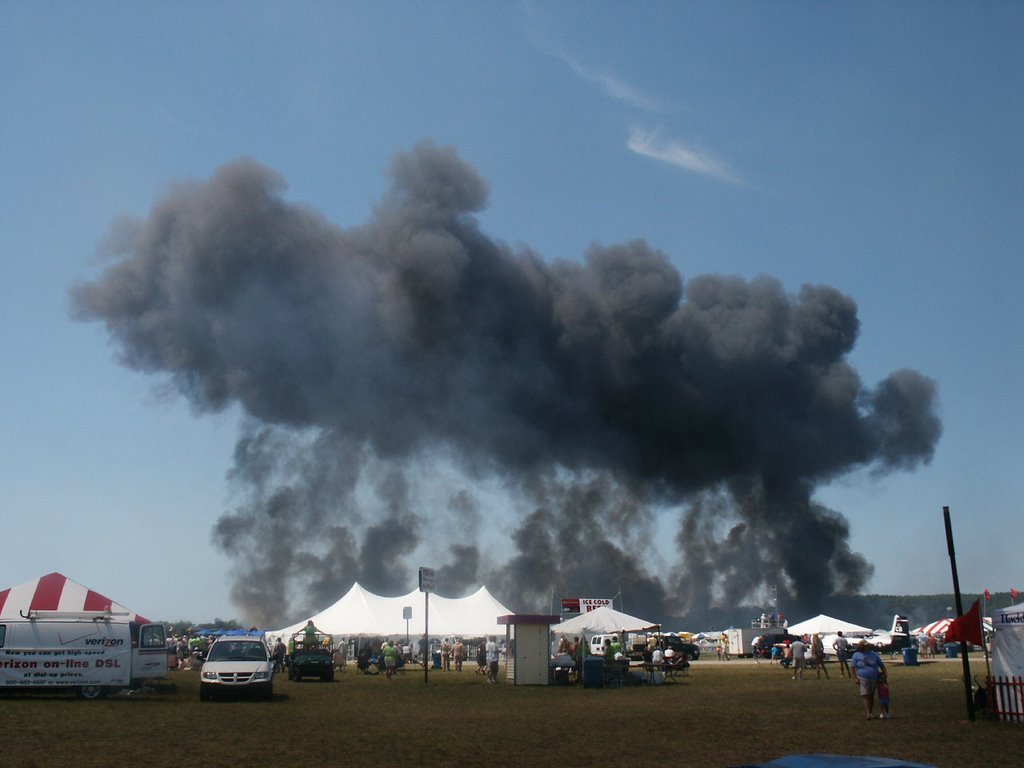
Lots of explosions and pyrotechnics during the bomber flyovers (see above). Made it hell to try to record interviews and get the levels right, but that's okay.

I ran around and interviewed anything in a Nomex jumpsuit that would hold stilllong enough for me to put a mic in its face. All of the military personnel (especially the Canadian Forces C-140 crew and the Wisconsin ANG KC-135 crew) were very forthcoming. A couple of the enlisted guys begged off on interviews, but that's perfectly fine by me. Probably instructions from their public affairs officers. But anyone with lieutenant's bars or better was all talk and they were enthusiactic about their aircraft and their roles.


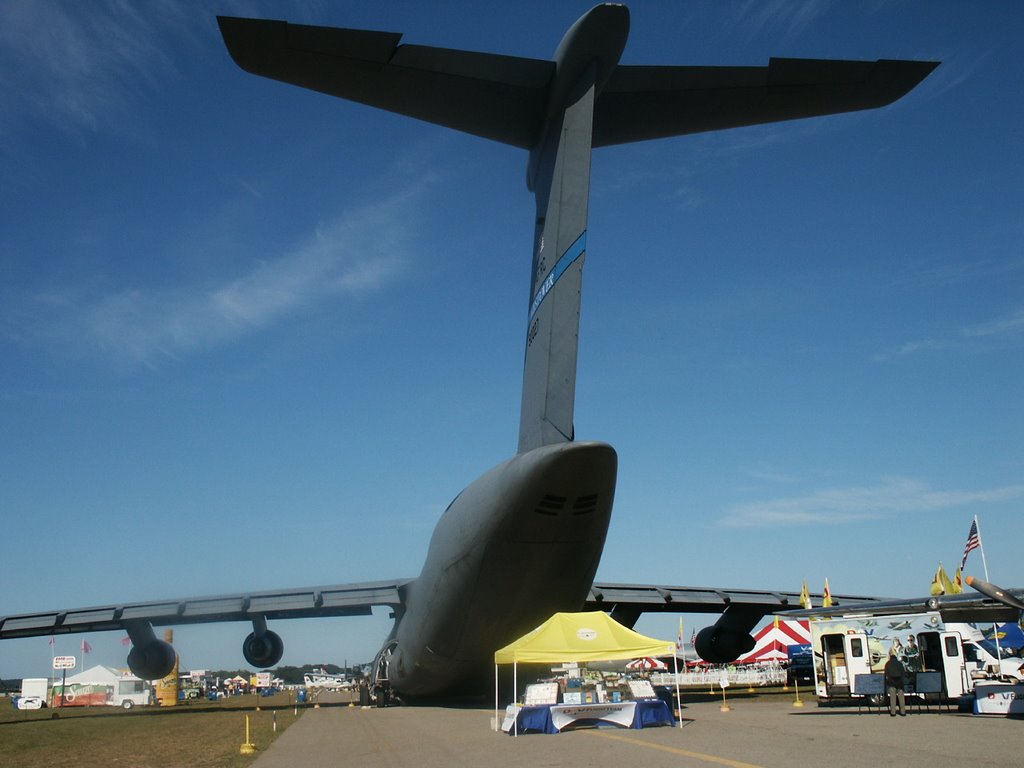
Biggest thing at the show was the C5 Galaxy. I tried to take pictures of it up close, but you couldn't tell what it was. Tried to take pictures (like the one above) from further away, but you just don't get the scale of the aircraft. It's farging huge. They set up a rock band on the rear ramp toward the end of the day and still had room to play a respectable game of basketball (or golf for that matter) in the remaining volume of the aircraft. They say that it'll carry two M1A1 Abrams tanks or six helicopters and I believe them. Explains why the standard crew on the Galaxy includes three (count 'em: three) load masters.

More very soon. The highlight was a ride in the US Army Golden Knights' Fokker C-31A Friendship. Strapped in right next to the open door, we climbed to 12,500 AGL (about 13,000 MSL) and I had the best seat in the house for the jump. The team left the aircraft en masse just a few feet from me. I'm still startled by the transition from the comparative gloom and stability of the plane to the brightness and fury into which the team exploded out the door. A guy who is standing right next to me one minute is suddenly outside the plane and then he's gone. Really cool.

I was in shorts, but remembered to bring along my fleece vest. Good thing, too, because it was in the 30s Farenheit up there. They warned us once we were on the plane, but it's a little late by then. One of the guys from the local cable access show was very lightly dressed and they lent him a Golden Knights jumpsuit. His camera person got a sweatshirt. Nice guys, all of them. And laid back for a bunch of guys that are about to freefall for almost two miles.

I got two interviews on the plane, but it was noisy as hell, what with the door open and all. I'll see if I can clean up the audio with a filter.

Interview with a Thunderbird


Subscribe to Airspeed using iTunes, visit us at http://airspeed.libsyn.com, or use the following RSS feed. http://airspeed.libsyn.com/rss.

See Maj. Jeremy Sloane's bio at: http://www.nellis.af.mil/thunderbirds/06officerhtms/06officers7.htm.

If you’re been listening to Airspeed for awhile, you know that we have a Jones for the F-16 Fighting Falcon that just won’t quit. We also have a high regard for air demonstration teams.

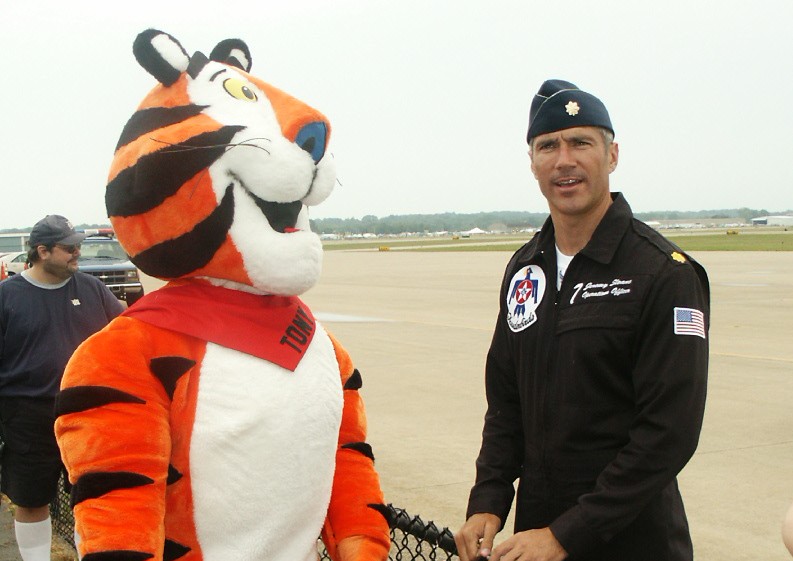
Well, get set for a treat because we went to Battle Creek, Michigan over the Independence Day weekend and entered that special confluence where the F-16 and the air demonstration team come together to produce that wonderful mix of noise, precision, and inspiration that is the United States Air Force Thunderbirds. We were fortunate enough to talk to Maj. Jeremy Sloane shortly after the team landed.

Major Sloane is the operations officer of the Thunderbirds and the squadron’s second in command. He’s in his second season with the squadron and he flies the No. 7 jet. He attended the Air Force Academy and entered the air Force in 1992. Prior to joining the Thunderbirds, Maj. Sloane was an assistant operations officer, instructor pilot, and flight examiner with the F-16C Formal Training Unit, 62nd Fighter Squadron, at Luke air Force Base in Arizona. He has more than 1,800 hours in various configurations of the F-16.

We’ve covered the general information about the Thunderbirds in past episodes, so we thought we’d get a little more in-depth on this one. Not all Thunderbirds have flown the F-16 their whole careers, so we asked about what other aircraft they’ve flown. We also noticed that the team always seems to arrive in tight formation, even on nasty days like the day that they arrived in Battle Creek, and wondered how they flew en route. We asked questions about general aviation and how it compares with military aviation. We also wanted to know how Thunderbird pilots dealt with the high g-forces associated with their demonstrations. And we got answers to all of these questions and more.

Hear the audio on the podcast! Or click here.

[A special shout out on this episode to Dan Lewis!]

Sunday, July 16, 2006

So You Want to Be an Astronaut - Part 3

Subscribe to Airspeed using iTunes, visit us at http://airspeed.libsyn.com, or use the following RSS feed. http://airspeed.libsyn.com/rss.

This is the third of the three-episode series called “So You Want to Be an Astronaut.” I’ve researched the information that NASA and others have made available about the astronaut selection process and I’m condensing it and presenting it here.

Remember through all of this that I don’t have any particular “in” with NASA. I’ve simply done a bunch of research for you and I’m presenting it to you in a mildly entertaining way. If you happen to hear something that ain’t so, please e-mail me at steve@airspeedonline.com and I’ll be happy to correct or update the information. In any case, make sure that you listen to the disclaimers in the first episode in the series.

So on to Part 3: Ruminations

Here’s where I go a little far afield and presume to offer advice on how best to present yourself. Lots of this comes directly from NASA publications, some of this comes from literature written by astronauts and professional aerospace writers, and some of it comes from distilled common sense that I think is universal, but bears repeating.

A lot of the selection process is going to be out of your hands. I’m on the recruiting committee for a nearly 400-lawyer law firm and I interview or evaluate more than a hundred candidates each year. We get more than 2,000 applications or expressions of interest every year. I know that we miss some future Clarence Darrows in the process because the process isn’t perfect. But it remains that we only need so many associates and there are always more candidates than we have slots. If I don’t recommend hiring someone because he or she had an off day or we didn’t click, I feel really bad about it, but those are the breaks. I try really hard and the candidates try really hard, but there’s noise in the system that’s unavoidable.

NASA is made up of human beings, just like my firm’s recruiting committee. I’ll bet that NASA misses some Jim Irwins and Sally Rides every time, but the fact of the matter is that there are boatloads of candidates that will make fine astronauts and, in the final analysis, NASA is splitting hairs at the very top the talent pool.

There are a few things in particular that various sources say are helpful. I tried to weed through them and I’m summarizing here the ones that I think make sense and are probably true. But take them with a grain of salt because, while some is direct from the horse’s mouth, some is ribald and smelly third-hand hearsay.

  • Become a pilot. Even if you only want to be a mission specialist. Even a garden-variety private pilot certificate will do, but the higher the certificate and the more your ratings, the better. Remember that mission specialists have to learn how to fly T-38s and you’ll already have proven the that, at the very least, you can handle a single-engine piston airplane.
  • If you’re at that age, join scouting or a similar organization. An overwhelming proportion of astronauts were scouts and lots of the males made Eagle Scout. A little editorializing here: I was an Eagle Scout and was as involved in scouting as you could be in the late 1970s and early 1980s. Camps staff, Jamboree, Philmont, you name it. I’m a captain in the Civil Air Patrol now, and I’m very, very impressed with the cadet program, at least as it’s run in my squadron. For my money, CAP is the better program. Don’t send me hate mail. I’ve seen both and, by all rights, ought to come out on the side of the Boy Scouts. But I think CAP is better. In any case, I think what matters is that, if you’re at that age, you should join a youth organization like the scouts or CAP and ascend as high as you can.
  • Keep your nose clean. Maybe it goes without saying, but I’ll say it. Everybody does stupid things when they’re young. I was surprised at how many of my law school classmates had records of stupid stuff like public urination infractions or open container violations on their records when they filled out their character and fitness questionnaires. Not that I looked. They told me. Serious guys with sterling academic credentials who had just beaten eight or more out of every ten classmates in one of the most rigorous educational processes around, yet they still had these moments of stupidity following them around. As an astronaut applicant, you’re going to be in exalted company with razor-thin margins between those who forward their mail to Houston and those who go home and stay there. You may also have to get a top secret clearance from the US government in order to handle some of the payloads or systems and criminal records are pretty touchy things when they’re thinking about handing you the keys to the room with all of the really important state secrets. Don’t let a stupid thing in college turn into a reason not to put you in a spacecraft. Drink soda pop and hold it until you can get to the rest room.
  • Don’t be extreme in your dress, mannerisms, public persona, or otherwise. Every astronaut is an ambassador of the US space program. Think of NASA as a big, conservative bureaucracy that doesn’t like surprises – and behave like NASA is watching – and you’ll probably do fine. Don’t get tattoos that show outside a tee-shirt and shorts. Better yet, don’t get tattoos at all. And if you’ve got a tongue piercing, at least don’t wear the tongue stud to the interviews. I’m belaboring the point. But put yourself in the shoes of a NASA administrator. You love science and space exploration and want to sustain a manned space program in the face of the Herculean efforts that it takes to get congressional appropriations and despite the fact that most of the public doesn’t understand science very well and is quick to criticize any real or perceived tomfoolery. Now who are you going to select as an astronaut and put out in front of the taxpayers as an example of what they get for their money?
  • We all know that grades in school aren’t fully reflective of our achievements and that “B” or “C” students often outperform “A” students in the real world. But if you were a NASA astronaut selection team member who had to find some way to cull the hundreds of applications down to a manageable number of interviewees, you could be forgiven for leaning on grades and other objective measures in order to make the paper cut a little easier. And the fact of the matter is that “A” students do outperform “B” and “C” students most of the time. Good grades are also an indicator of the ability of a person to internalize information within a set amount of time. Whether the information you internalized in school was worth internalizing or not, it’s never a bad thing to show NASA that you can internalize information. Regardless of what you learned or what value you received out of the exercise, information internalization is a skill that’s important to astronauts. If you thought that getting through the Pilot’s Operating Handbook for a Cessna 172 was a chore, imagine the number of binders of documentation that an STS orbiter has. It doesn’t matter if you’re taking three credit hours of Comparative Haiku during your last semester of your degree in particle physics. Show them the “A” in Haiku. They probably won’t ask you to compose haiku in the interviews, but you might impress someone by having proven that you have learned how to learn. Even if it involves exotic stuff.
  • Get a PhD or other advanced degree. NASA is all about hard science and the more education and training you have, the better your chances.
  • Don’t have anything done to your eyes, like RK or other surgery unless you know for sure that the surgery won’t disqualify you.
  • If NASA doesn’t offer you an astronaut candidate or astronaut slot, but offers you another job, think long and hard before you reject it. You’re probably being told that you’re just on the wrong side of the bubble and that NASA likes you well enough to keep you around in another capacity. In any case, these are smart people and they wouldn’t offer you a job if they hated you. And remember that NASA employees are disproportionately represented in the ranks of those who do get selected. There’s nothing wrong with applying again for the next round of selections and, in fact, several of today’s astronauts made it after they were unsuccessful on their first attempts. And unless your uncle is Burt Rutan, Paul Allen, or Richard Branson, NASA is probably the only game in town in terms of getting you out of the atmosphere. Consider it an inside track, work your hiney off, and keep your application updated.
That’s it for the “So You Want to Be an Astronaut” series.

If you take away one thing from this series, it should probably be this: You don’t achieve the big things without a long-range plan and a lot of hard slogging. You have to take risks and be willing to go up against seemingly impossible odds. It’s a longshot that requires a fabulous ante in terms of commitment and endurance just to get a seat at the table. But the surest way to not get selected is to not try. And even if you fall short, I’d hang out with, work with, and fly with, the people who just missed astronaut candidate selection any day of the week. You will still have made of yourself the best human being you can be and that ain’t bad.

This last comment is for anyone who’s in a position to pursue a slot as an astronaut. If you’ve got the smarts and the physical characteristics and the time to make this a possibility, consider making a commitment and going after it. I mean get out some paper and a writing utensil and make yourself a checklist. Most of the information you need is in these podcast episodes and there’s lots more information on the web, whether from NASA or other sources. Then follow the checklist. If something changes, go ahead and modify the checklist, but only if it’s necessary to get you to that goal. Make it your highest priority and do at least one specific thing each week toward the goal.

I remember working at a bank in Kalamazoo, Michigan in 1993. My friend Sam bought me a beer and explained in urgent terms that I should go become a lawyer. I really thought about it and decided that I was willing to make the sacrifices to do it. It took a relocation, a job change, five years, some all-nighters, and thousands of hours of effort, but I did it. It wouldn’t have happened unless I had committed to it and followed up tenaciously.

Same thing with becoming a pilot. I remember looking at my barber’s copy of Flying magazine about nine years ago and thinking to myself that flying was way too expensive and difficult for me to consider. Then my friend John walked into my office in 2000 and suggested that we go to flight school together and learn how to fly. Really do it. That triggered a reexamination of my situation and a realignment of priorities. We made plans and, in 2004, I got my ticket.

I’m no astronaut. I’ve got a bum shoulder and my education is all in social sciences, finance, and law. Plus I’m staring 40 in the face.

But, if you’ve got the brains and the body, I am walking into your office, or your living room, or your classroom right now, just like John did, and I’m doing the virtual equivalent of buying you a beer or your other choice of beverage just like Sam did, and I’m saying: Gee, have you ever thought of becoming an astronaut?

Make a checklist. Follow it. Check off the milestones as you achieve them. And maybe one day you’ll be able to attach that checklist to the wrist of your space suit just before you open the hatch and step out onto the surface of Mars.

And what a fine thing that would be.

Thursday, July 13, 2006

Photos from the Battle Creek Airshow - Part 1


I'm still producing the shows from the audio I garnered at Battle Creek over the Independence Day holiday, but here's some eye candy to tide you over.

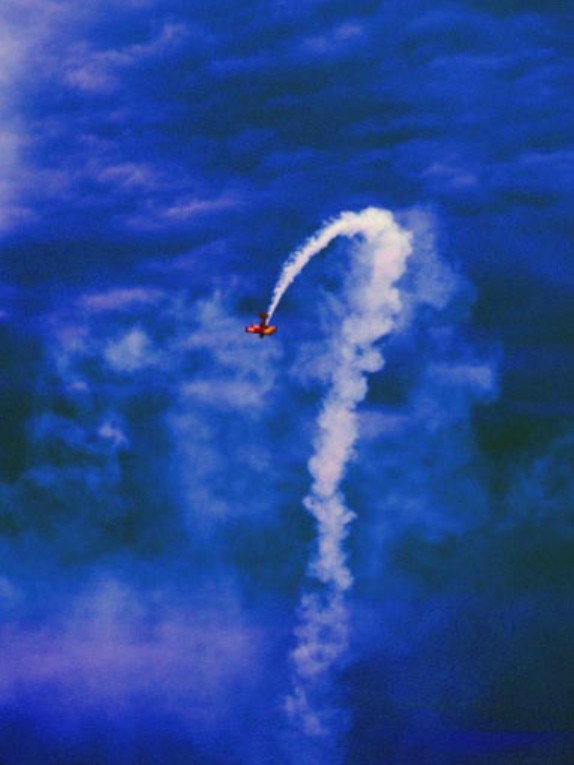
My photographer and cousin, Tim Reed, is a freaking genius. Above is a shot of Gene Soucy's Show Cat (a heavily-modified Grumman G-164A with a Pratt & Whitney R1340-series engine) in aerobatic flight on July 3. It was overcast at 10,000 fet or below and spitting rain and mist, but Gene was out there flying his ass off for us. Tim processed the sky a little using Photoshop, but this is otherwise pretty much what it looked like.

The Show Cat makes some of the sweetest noise you've ever heard and, because Gene's performance is mostly at or below 1,500 feet AGL, you can really see what's going on., even if you're not right up against the snow fence.

We'll feature an interview with Gene and with Theresa Stokes, the wingwalker, on a future edition of the podcast. In the meantime, you can find out more about Gene and Theresa at www.genesoucy.com and you can contact photographer par excellence Tim Reed at tnrglock@msn.com.

Image (c) 2006 Timothy Reed. All rights reserved. Presented by permission.

Thursday, July 06, 2006

So You Want to Be an Astronaut - Part 2

Subscribe to Airspeed using iTunes, visit us at http://airspeed.libsyn.com, or use the following RSS feed. http://airspeed.libsyn.com/rss.

This is the second of the three-episode series called “So You Want to Be an Astronaut.” I’ve researched the information that NASA and others have made available about the astronaut selection process and I’m condensing it and presenting it here.

Remember through all of this that I don’t have any particular “in” with NASA. I’ve simply done a bunch of research for you and I’m presenting it to you in a mildly entertaining way. If you happen to hear something that ain’t so, please e-mail me at steve@airspeedonline.com and I’ll be happy to correct or update the information. In any case, make sure that you listen to the disclaimers in the first episode in the series.

So on to Part 2: Selection

Once you apply to become an astronaut, NASA determines whether you have the qualities that qualify you as an astronaut on paper. Panels of experts in the relevant disciplines screen the applications to determine who’s qualified and who gets to be a finalist.

Provided that you make the “paper cut” and are selected as a finalist, you and several hundred other applicants get interviewed, poked, and prodded in person. It’s a week-long process that includes personal interviews, medical evaluations, and orientations. In addition to your physical status, NASA reviews your education, training, experience, and any other qualifications that might make you a valuable astronaut. Remember that you have several hundred candidates milling around down there and each of you already qualifies on paper. The real selection is going to happen in the personal interviews.

If you’re selected as an astronaut candidate, you go to the Johnson Space Center in Houston and begin a one- to two-year training and evaluation program.

Astronaut candidates receive training in space vehicle systems, math, geology, meteorology, navigation, oceanography, orbital mechanics, astronomy, physics, and materials science, in addition to other technical subjects. They also train in land and sea survival techniques, scuba diving, and space suits.

Every astronaut candidate gets tossed in the pool in a flight suit and tennis shoes during the first month of training and must swim three lengths of a 25-meter pool dressed that way. You can freestyle, breast stroke, or sidestroke and there’s no time limit. You also have to tread water for ten minutes.

You have to go through the military water survival training syllabus before you begin flight training. I get the sense that that includes the simulated inverted cockpit escape like the one in An Officer and a Gentleman. That gives me the willies just thinking about it, although it’s probably worth it.

You also have to become SCUBA qualified in order to do your extravehicular training because the primary extravehicular practical training facility is a great big pool where neutral buoyancy simulates the zero-gee work environment.

NASA also trains candidates in high- and low- atmospheric pressure environments (think Officer and a Gentleman again).

Candidates also get zero-gee exposure in an aircraft flying parabolas designed to give about 20 seconds at a time of weightlessness. New candidates are trained in a McDonnell Douglas C-9, the successor to the perennial favorite Boeing KC-135 Vomit Comet was retired in 2004.

Pilots get 15 hours or more a month of proficiency flying in the Northrop T-38 Talon, a two-seat jet trainer. Pilots destined for STS missions fly one of four Shuttle Training Aircraft or “STAs,” which are Gulfstream II business jets modified to perform like the STS orbiter in the landing phase. NASA says that pilots assigned to this duty get about 100 hours in the STAs, which is equivalent to 600 orbiter landings. The implied landing every 10 minutes seems a little quick to me, but maybe not. The STAs come in with thrust reversers on and the gear down to get the 17-20 degree glideslope and the brick-like handling qualities of the orbiter right. Bear in mind that most commercial and general aviation aircraft land using a three-degree glideslope.

Mission Specialists also get to fly a minimum of four hours a month, but it’s always dual training. Still, time in a T-38 is time in a T-38.

If, at the end of the training program, NASA selects you, you’re an astronaut.

But the training doesn’t stop there. Much of the astronaut training is a continuation of the training that started in the astronaut candidate program. You augment a lot of your training by training in both the single systems trainers (which, as the name implies, simulate discreet systems or system groups) and you train in the Shuttle Mission Simulators.

You may train at the Sonny Carter Training Facility or the Neutral Buoyancy Laboratory. You’ll almost certainly train on the full-scale mockups of the spacecraft that are current at that time, as well as on mockups of the subjects of your mission, such as satellites and other research platforms. A lot of scientists on the ground are going to depend on you to be their eyes, ears, and hands. They’ll have perhaps ten years tied up in that little drawer or compartment in the payload area and they’re going to depend on mission specialists and others to make sure that their experiments go perfectly.

Civilian astronauts are government employees and are classified for pay as GS-11 through GS-14, which equates to an approximate range of $56,000to $128,000, assuming the Houston, Texas Locality Pay Area (about 26% greater than the base level for those grades in other areas). You placement in the pay grades depends on your education, experience, and other factors. Military personnel continue with their military pay and are simply detailed to NASA. Civilians who are selected as astronauts are expected to stay in the program for five years. Military astronauts are assigned a specific tour of duty with the space program.

That’s it for Part 2 of “So You Want to Be an Astronaut.” In the next episode, I’ll go into some ruminations on the selection process and pass on some ideas that seem to make sense if you’re looking for an advantage in the selection process.

Tuesday, July 04, 2006

Battle Creek Airshow - Days 3 and 4


Just back from days three and four of the five days at the Battle Creek Field of Flight Airshow. As you can see from the picture,lots of cool stuff happened. For one thing, I got a balloon flight, courtesy of Dave Emmert in Cloud Nine. I also met and interviewed a Thunderbird, a Snowbird, and several others. Lots of editing and production to do, but we'll get the material up and on both the podcast and the blog as soon as we can.

Saturday, July 01, 2006

Battle Creek Airshow - Day 1

Airshow update:

I hit the Battle Creek Balloon Championships and Field of Flight Airshow on Friday. See www.bcballoons.com for background.

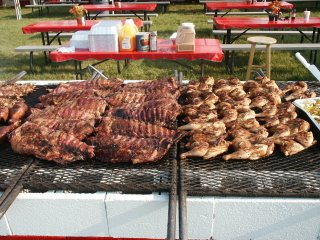
Wandered the field a little andscoped out the concessions. Good-looking barbecue for starters. Turkey legs, ribs, chicken - you name it. And the usual assortment of elephant ears, lemonade, sausage, and other stuff.

And the Budweiser Clydesdales. They were blaring the theme music the whole time. I've still got that damned music in my head.

Here comes the king, here comes the big number one . . . I can only imagine how annoying that would have to be if you toured with the Clydes. Maybe you become impervisous to it after awhile. Beautiful horses, though. And well-trained.


I saw my first balloon launch. Rotten photo opportunity because it was impossible to get up-sun of the balloons. So they were either harshly side-lit or blacked out against a too-bright sky.

Plus, it was hazy. Actually a good thing, that haze. It means that there's not a lot of lifting action and that the atmosphere is pretty stable. If it were more clear, it would mean that the atmosphere was churning around enough to more the particulate matter around.

But on to the good stuff.

This is a powered pilot's commentary. I can't help but wonder about a flying apparatus where you can take your hands off of the controls for 20 minutes at a time without dying. It's probably very cool in that you have to land the thing without as much control of where you're going to land it. That takes some talent. I also understand that the balloonists had banners that they were supposed to drop on Xs marked in town near schools. I would imagine that then jockeyed around for altitude trying to find layers of wind that would take them over the places where they wanted to be. I also understand that the football-shaped balloons are easier to control, although I have no idea how one would control direction even with the oblong shape.

But here's the thing that captivated me. They launched 44 balloons in about a half hour. As many as a dozen or so were aloft within a 1,000-foot cube at one point. It seemed (and was) a lot more three-dimensional than powered flight feels. When you fill a three-dimensional space with a lot of balloons, the whole scene just looks a lot more three-dimensional. The scene out the window of an airplane looks pretty flat in comparison.

Maybe it's the proximity. Airplanes move faster and are harder to see so we keep ourselves separated (or ATC separates us). Heck, a few of the balloone collided. The commentator (now being very informtive) explained that this is "kissing." And it's no big deal. I saw a guy drag his gondola right up the side of another balloon. Apparently, it's no great shakes.

You don't want to ascend into someone so you collide with the top of your ballon. Apparently, they have velcro-attached top panels designed for quick release upon landing and you could inadvertently rip that open while aloft. It's apparently not 100% fatal because one of the pilots that went up on Fruday had had that happen. But heaving for the planet with a rapidly emptying and floppy envelope above you has got to suck.

Anyway, I'll try to interview one or two of the balloon pilots and might do a podcast on it.

I'm heading back tomorrow and will be there July 2-3. The Thunderbirds arrive tomorrow and many of the other performers should be there as well.

I'm doing some more homework tonight so I can be ready. I get the sense that I may have a big group of folks around and that I may not have enough time to corner everbody serratim. So I'll see if anybody's going to object if I hang around on the ramp looking for interviews. Should be fun regardless.

So You Want to Be an Astronaut - Part 1

Subscribe to Airspeed using iTunes, visit us at http://airspeed.libsyn.com, or use the following RSS feed. http://airspeed.libsyn.com/rss.

If you’ve been listening to Airspeed for very long, you know that I have a huge thing for the space program. Although we cover a lot about airplanes and flight training here, let’s all take a moment to acknowledge the obvious. Being an astronaut is being at the pinnacle of aviation and aerospace. Ever since NASA selected the first seven astronauts, these men and women have captured our imaginations and been examples of what humans can achieve. They’re not the only examples, mind you, but they’re high on the list and they deserve most or all of the admiration that goes their way.

Everybody knows, or should know, the names Cooper, Grissom, Slayton, Glenn, Carpenter, Schirra, and Shepherd. Many know the names Ride, Collins, and Lininger.

But to you know Smith and Garcia? Bob Smith and Carmen Garcia are middle school students. Bob lives in a suburb in the Midwest and likes to study weather and computers. Carmen lives in New Jersey and loves chemistry and animals. Both take their studies seriously. Bob’s mom took him to the Very Large Array in New Mexico last summer and Carmen’s dad is a pilot for a regional airline. They’ll become good friends when they’re assigned to a long-duration flight on the next-generation International Space Station.

Okay, I made up both Bob and Carmen, but the fact of the matter is that this is how it starts. At some point, whether in middle school, high school, college, or whenever, a person gets bitten by the space bug.

But here’s the thing. Most people have no idea how one gets to be an astronaut. And it’s possible and even likely that many potential astronaut candidates – even ones who might be better astronauts than many already in the astronaut corps – never even apply because they don’t know the requirements or because they make a decision along the way that, though small in and of itself, makes them ineligible.

So I thought, hey! Let’s do a show or two about what it takes to become an astronaut. NASA’s technical requirements, some characteristics that seem to give a person a better or worse chance of selection, and whatever else I can dig up.

So here it is. Part 1 of a three-part series I’m calling “So You Want to Be an Astronaut.” Let’s call this episode “Qualifications.”

This information is based on the best information I could find on the net. NASA itself doesn’t appear to have a lot of information out there. Most of the links to materials like the astronaut application are dead at the moment. Some of the information dates back to 1997. And that’s probably reasonable, considering that the shuttle fleet is probably going to be retired soon and NASA is probably working on coming up with the next set of requirements for astronauts based on what astronauts will need to know or be able to do for the next generation of space vehicles and missions.

This is all based primarily on the criteria that NASA has used for the STS-era (that’s Space Transportation System or “Space Shuttle” era). I can’t imagine that the criteria are going to change much. NASA has been at this awhile and probably has a pretty good idea of what makes a good astronaut regardless of the equipment or mission.

If you’re listening with the idea that you might want to become an astronaut (and if you are, you’re the primary audience here) bear in mind that the criteria may already have changed and, if you’re planning to apply ten or fifteen years down the road, things will probably be even more different. Don’t rely entirely on this information. If you’re going to make life-changing decisions because you want to be an astronaut, do your own research and, better yet, contact NASA yourself. Don’t go changin’ to try and please me.

Remember through all of this that I don’t have any particular “in” with NASA. I’ve simply done a bunch of research for you and I’m presenting it to you in a mildly entertaining way. If you happen to hear something that ain’t so, please e-mail me at steve@airspeedonline.com and I’ll be happy to correct or update the information.

Okay, on with the information.

NASA brings in two kinds of astronauts that we care about. Note that we’re not going to talk about payload specialists here because those folks come through a path that is largely dictated by the contracting foreign government or foreign or domestic institution.

Most astronauts come in on either the commander/pilot track (I’ll refer to those folks simply as “pilots”) or the mission specialist track. Pilots fly spacecraft. Those that are commanders have responsibility for the entire mission, as actually doing stick and rudder operations. Pilots may also help with deployment of satellites and other operations. Mission specialists work with the pilots, but primarily handle systems operations, conduct experiments, and do most of the meat-and-potatoes scientific work on the spacecraft.

Physically, pilots have to be able to pass a NASA Class I space physical, the requirements for which are very similar to those of an FAA Class I medical certificate. Among the requirements are vision of 20/70 or better uncorrected, correctable to 20/20, in each eye. Blood pressure can’t be higher than 140/90 in a seated position. Height has to be between 64 and 76 inches. I guess you have to be tall enough to reach the pedals and short enough so that the instrument panel of a T-38 won’t take off your kneecaps if you have to eject.

Mission specialists have to be able to pass a NASA Class II space physical, which, again, is similar to the equivalent class of FAA medical certificate. Vision has to be at least 20/200, correctible to 20/20 in each eye. The maximum blood pressure is the same, but your height can be between 58.5 inches and 76 inches. Apparently, the pedals in the shuttle are further away than they are in the T-38.

Lest you think that NASA will take expert pilots who don’t know much other than aviation, there are stringent educational requirements. An astronaut candidate must have at least a bachelor’s degree from an accredited institution in engineering, biological science, physical sciences, or mathematics. Be careful how you pick your major. Degrees in “technology” (like Engineering Technology and Aviation Technology) don’t qualify. Certain kinds of psychology don’t work either.

Mission specialists also have to have three years of related, progressively responsible professional experience after the bachelor’s degree. Advanced degrees are preferred, and NASA lets you substitute a master’s degree for one year of experience and a doctorate covers all three years.

Pilots have to have at least a thousand hours of pilot-in-command time in jet aircraft and they really prefer flight test experience. Remember that the earliest astronauts were all test pilots and NASA has really fond memories of those guys.

You must also be a US citizen.

Civilians apply directly to NASA. NASA takes applications on a continuous basis and then selects new astronaut candidates from the pool of applications every couple of years or so. Military applicants apply through their branch of the armed services and that branch makes recommendations to NASA of the candidates that apply.

That’s it for Part 1 of “So You Want to Be an Astronaut.” In the next episode, we’ll cover the selection process and the astronaut candidate training and evaluations.

Thursday, June 22, 2006

Shooting a GPS Approach at Flint

Subscribe to Airspeed using iTunes, visit us at http://airspeed.libsyn.com, or use the following RSS feed. http://airspeed.libsyn.com/rss.

If you wish, you can follow along on the approach using the approach plate available at the link below.

Approach plate for RNAV (GPS) Runway 36 at Flint Bishop International Airport
http://www.naco.faa.gov/d-tpp/0606/00618R36.PDF

More information about US terminal procedures is available at the following link.

FAA - Aviation System Standards - Main Page for US Terminal Procedures
http://www.naco.faa.gov/index.asp?xml=naco/online/d_tpp

As regular Airspeed listeners are no doubt aware, I’m training for my instrument rating. For those non-pilots out there, an instrument rating essentially qualifies a pilot to fly an aircraft without looking out the window – To fly solely by reference to instruments. To simulate those conditions on nice days, I fly with a view-limiting device that attaches to my headset. At about 400 feet off the ground, I flip it down and I can only see the instruments in front of me. Sure, I could cheat a little if I wanted to (it’s hard not to catch a glimpse out the front window when you look at the magnetic compass up on the dash), but I expect to go fly in the clouds for real once I get the rating, and I really need to learn this without sneaking peeks.

Anyway, I thought I’d take you along on a flight so you could get a better understanding of one of the most crucial aspects of instrument flight, and that’s communication with Air Traffic Control or “ATC.”

Air traffic controllers are some of the most talented people with whom I interact. Bear in mind that I interact with some of the smartest people in the country on a daily basis as a technology and aerospace lawyer, so when I say that ATC personnel are special, I’m really saying something. I talk to at least a half dozen on each flight. They’re ground controllers, tower operators, approach and departure controllers, center controllers, and others. Each does a special job that bears on a different phase of flight.

The flight today is a standard training flight as I prepare for my Stage Three check flight as part of the Part 141 program at Tradewinds Aviation at the Oakland County International Airport just outside of Pontiac, Michigan. The airport is called “Pontiac,” even though it’s located in Waterford, and I tell you this because you’re going to hear me call it that on radio calls.

We’re going to take off from Pontiac and then fly about 30 miles north to Flint Bishop International Airport. On this particular day, we shot a total of five approaches. An approach is a way of navigating an airplane to a runway to land without being able to see out the windows until you’re very close to the runway. Many approaches will make it so that you can be in clouds and rain and other clag all the way until you’re 500 feet or so off the ground and a half mile from the runway. Believe me, that’s low and close.

You’re going to hear the first approach we did, which the “RNAV” approach to runway 36 at Flint. “RNAV” stands for “area navigation” and you fly RNAV approaches using GPS – the Global Positioning System. An RNAV approach is just one of about a half dozen different kinds of approaches that I have to know how to do.

Runway 36 is a strip of pavement that runs basically north-south. When you land on it going north, it’s Runway 36 (“36” meaning that the nearest ten-degree magnetic heading to the landing direction, which is 360 or 36 for short). That same strip of pavement is Runway 18 if you land on it going the other direction because your heading is roughly 180.

RNAV approaches usually look like the letter “T.” The runway is at the foot of the T. There are named waypoints at each end of the crossbar of the T and at the intersection of the lines of the T, as well as along the vertical part of the T. Because we’re inbound from the south, you have to turn the T upside down to visualize it on a map that has North at the top.

There’s a link to both the FAA’s Aviation System Standards office, which prepares the approach charts, as well as a link to the chart for the RNAV 36 approach in the show notes at http://www.airspeedonline.blogspot.com/. We’ll repeat that link at the end of the show. Download it and follow along if you can.

Anyway, let’s go flying. We’ll start out sitting on the ground at Pontiac with the engine running. I have my view limiting device at the ready and my flight instructor is in the right seat. Ground control has cleared us up to a taxiway intersection near the departure end of the runway. I key the mike and call the tower to tell them that I’m ready to go.

[Audio 1]

I’m now cleared to pull up to the runway – but not onto it – and wait for clearance to take off. The tower controller is checking to see if the route I’m flying is clear and make sure that there will be room for me to land when I get to Flint.

Then it’s time to go.

[Audio 2]

Here’s the takeoff run. I self-brief the important airspeeds as the aircraft gets going and then call out the speeds up to rotation at 55 knots.

[Audio 3]

Very shortly after I get off the runway, the tower hands me off to a controller in Detroit who will control my progress to Flint. The tower controller does this over a land line to Detroit. Normally, I have to call up Detroit approach by saying something like “Detroit approach, Cessna Niner One Eight Tango Alpha, with you at one thousand five hundred climbing for three thousand.” But the approach controller is really on the ball today – or really busy and wants to get me going north as soon as possible. Here’s the handoff. Note how quickly this happens after I switch frequencies.

[Audio 4]

I’m “under the hood” now – I have pulled down my view limiting device and I’m completely on instruments.

After five or ten minutes, Detroit approach hands me off the Flint approach. The Flint approach controller will handle me until I get within about five or ten miles from the airport itself. I have filed an instrument flight plan that tells the Flint approach controller and tower that I’m going to do practice approaches. But they don’t know precisely what I want to do, so I need to tell them. The approach that we’re going to hear here is the first one for which I ask the Flint controller. I call it the GPS approach, but he uses the RNAV nomenclature, which is more proper. He clears me to a waypoint called FISKU, which is the eastern tip of the crossbar of the inverted “T.”

[Audio 5]

We’re getting closer. The controller tells me to descend from my present altitude of four thousand feet above sea level (or about three thousand feet off the ground) to three thousand feet above sea level (or about two thousand feet off the ground).

[Audio 6]

I’m approaching FISKU now and passing it. We approached FISKU heading almost due west and we’re supposed to fly a course of 275 degrees magnetic between FISKU and the next waypoint. The next waypoint is called HITMO and it’s at the intersection of the two lines of the T. A lot of self-talk here as I brief the approach out loud.

Approach clears me for the approach, which means that I can fly the approach all the way to the runway, but I’m not cleared yet to land. That will happen after approach hands me off to the tower controller.

[Audio 7]

Now the approach controller hands me off to the tower. I’m now past HITMO and on my way to JORDI, which is about halfway along the vertical part of the T. I’ve been stepping down my altitude here so that I arrive at the runway low enough to get down and land. I’m at 2,400 at HITMO. JORDI is the “final approach fix.” On this approach, it’s the place from which I can descend to 1,260 feet (or about 500 feet off the ground) and start looking for the runway so I can land.

[Audio 8]

The tower now clears me to land. “The option” means that I can land and stop on the runway, do a touch-and-go, go around, or shoot a missed approach. As a courtesy to the tower, I tell him that I want to do a missed approach. This has two functions. First, we only have about two hours to fly, so I don’t want to take the time to actually land and then take off again. I want to get to the point where I could land the plane if I wanted to, then go full throttle and then get on with the rest of the training maneuvers for the day. The other thing is that I want to fly the published missed approach. This is what I would do in practice if I got down low and the weather was bad enough that I couldn’t see the runway environment well enough to land. Each instrument approach has a missed approach procedure. In this case, it’s a straight climb north of the airport and then a right turn to hold at a point about 12 miles east of the airport called KATTY. The tower clears me, I tell him about the miss, he checks the airspace to the north and east of the airport to make sure that it’s clear and then tells me that I can expect the published miss.

[Audio 9]

So here’s the crucial part of the approach. You’ll hear me counting off the feet until we’re at the Minimum Descent Altitude of “MDA.” This is very important because there’s no outside vertical guidance on this approach. Just me looking at the altimeter and remembering how low I can go. If an instrument pilot obsesses about anything, it’s usually about the MDA. You don’t want to be low, because there might be antennas, buildings or innocent podcast listeners down there and you don’t want to hit any of those things. That would be rude and it upsets flight instructors and FAA officials alike.

Then I’m at 1,260 feet doing about 90 knots. If this was for real and I didn’t have a view limiting device on, I’d be dividing my scan between the instrument panel and out the window looking for the runway. As it is, I keep the view-limiting device on and fly it all the way to the missed approach point, then tell the tower that I’m going missed.

[Audio 10]

So I’ve gone missed. Full throttle and pull the nose up and get out of there. If this were for real, I’d be down low and flying blind, so it’s very important to get the heck up and out of the way of the aforesaid antenna farms, buildings, and podcast listeners. The tower hands me off to the departure controller (actually, the same guy that I earlier called “approach,” but I’m outbound now so I call him “departure”). I’m cleared for the published missed approach procedure and the controller gives me a time to expect further clearance.

[Audio 11]

That’s it. Did you notice how efficient the controllers were? How about Flint tower, which had two different people working – The woman who cleared me on the approach and then the man who handled the clearance for the option and the missed approach? How about their interaction coordinating the transition from approach to tower to departure? For 6that matter, how about Detroit Approach, where I didn’t even have to call him up?

What you didn’t hear much of was the other traffic and the other aircraft that all of these people were handling. It was a busy day at Flint. Airliners, training aircraft, and people further away that were getting flight following. ATC is made up of absolute professionals and I take my training very seriously because I need to be able to receive, understand, and execute the instructions they give me so that they can work me in to some really busy airspace.

Yes, there are surly controllers who will yell at you at the drop of a hat. There are also guys who occasionally don’t have their heads in the game. But those are definitely the exception rather than the rule. I really enjoy flying in the system and controllers like these really make me want to be worthy to be in their airspace. I can’t say enough about controllers in general, but I’m especially grateful to the controllers at Flint. Russ Chew, are you listening? These are first-class people, but I’m sure you already know that.

I should also note that I edited out several parts where I stuttered or had to ask a controller to repeat a clearance, as well as one point where the clearance got a little complex and I had to ask my instructor over in the right seat to acknowledge the clearance and scribble it down. But hey, it’s my show.

So that’s an instrument approach from takeoff to missed approach? Sound like fun? Stay tuned for more!

- Steve

Sunday, June 11, 2006

Airspeed - Transitions

One click subscribe with iTunes.

or copy this address into your podcast application:


Note: Airspeed in Brief is being merged into Airspeed! If you only subscribe to Airspeed in Brief, please make sure that you subscribe to Airspeed as soon as possible! The iTunes link and the RSS feed are shown above.

[Following is a pretty close approximation of the verbiage from the episode entitled "Airspeed - Transitions" that appeared on Airspeed beginning beginning on June 11. You can subscribe to the podcast using the links at http://www.airspeedonline.com/aboutus.html.]

One of the philosophies of this podcast has always been to keep the administrative stuff to a minimum and talk about aeronautics and aerospace as much as possible. Part of the reason is that the short version of the podcast, Airspeed in Brief, airs as a regular radio show in some markets and I’m too lazy to produce a separate version of the podcast that radio listeners won’t understand because they’re listening to the radio and aren’t as actively involved as podcast listeners are.

So this one’s just for you, my pod people!

We’re going to be doing some new things with the podcast. First off, we’re going to merge Airspeed and Airspeed in Brief into one podcast under the flagship Airspeed name. That’s going to mean some variability in the podcast as we merge the two and we have the different perspectives, audiences, and lengths of the program through a single RSS feed. You’ll probably hear differing lengths of programs and the focus will vary between those shows meant for non-aviators and those meant for seasoned pilots.

We’re doing this for several reasons.

First, producing two different podcasts is a lot of work. We’ve done it for about four months now, and we seem to be finding that the audience isn’t much different between the two podcasts. It’s really not necessary to break it up because a lot of the audience seems to subscribe to both of the podcasts.

Second, it turns out from the feedback that we’ve been receiving that the general public, to its credit, is perfectly willing to accept material that goes a little over its head (pun intended), and that it doesn’t mind us getting a little technical. Maybe we’ll be serving a better purpose by letting everybody have the undiluted aeronautical stuff and piquing the curiosities of those who don’t fly regularly.

Third, consolidating the two podcasts will allow us to spend more time going after the interviews and features that you’ve told us that you like. We’re going to respond by really ramping up some of the features. Watch in the upcoming months for feature interviews with the Canadian Forces Snowbirds, the United States Air Force Thunderbirds, Lima Lima, Frank Ryder of the Oreck Flight Team, and Michael Hunter of Flight for Diabetes. We’ve arranged opportunities to meet with, and talk to, these cutting-edge aviators and, as you know, we do our research to come up with the best questions and make the best podcast episodes we can. Count on in-depth and solid coverage from us.

Lastly, and this is perhaps a petty reason, but I really want to know how Airspeed stacks up against some of the other aviation-related podcasts out there. I have long suspected that having two podcasts results in some cannibalization in the iTunes and other ratings versus some of the other aviation-related podcasts. By consolidating down to one podcast, we’ll have the chance to see how we truly rank. Airspeed has ranked as high as number two out of the active aviation podcasts on iTunes, and I can’t help but think that a single podcast concentrating all of the listenership would allow us to see how we really stack up.

In case you’re wondering, the other podcasts with which we compete are primarily Jason Miller’s The Finer Points, Pilot Dan, Pilot Kent, and Pilot Mike’s PilotCast, and the Flying Pilot. No cross-promotion here. We didn’t cut a deal with those podcasters for reciprocal mentions or appearances. We just think that they have really good podcasts and we’re honored to share the flight levels with them in terms of subscribership. But we’d really like to see how we stack up with no cannibalization by our own sister podcasts. I’ll bet we catch a few of them but, even if we don’t, that’s some pretty rarefied company to be in and we’re all pretty lucky to have access to a high-quality group of media presentations on the things we love – Turning avgas, Jet-A, or your favorites combustible into beautiful noise and pure excitement.

And here’s some other good news. We’re going to keep going with the features that you’ve told us that you most enjoy. We’re delighted that you like the Steely-Eyed Missile Man series and we’re also going to do a few more episodes about what to expect in flight training. You’ll also get more audio from the cockpit and real-world experience with general aviation. As you know, I’m going after my instrument rating and spending a lot of time in the cockpit. I’ll be taking along my MP3 recorder and plugging it into the intercom so you can hear what’s happening as I continue my own journey in flight training.

So here’s what to expect. We’ll probably pull the plug on Airspeed in Brief during the next month or so. If you subscribe to Airspeed in Brief and not to Airspeed, please be sure to subscribe to Airspeed as soon as you can. We’ve got it out there at iTunes and Podcast Alley and we’ll probably take the time to add the RSS to all of the other podcast aggregators over the next few weeks. We’ll put an announcement on Airspeed in Brief shortly before we pull the plug and we’ll leave it out there for awhile so that anyone who didn’t hear this episode can find his or her way to Airspeed.

Finally, we’d like to throw open the suggestion lines for listeners. By the time this goes live, you wonderful people will probably have downloaded episodes more than 75,000 times since January and we’re very grateful for the way you’ve picked up this podcast and made us want to give you the very best. We have listeners in the US, Canada, Germany, Australia, Japan, the UK, the Netherlands, and 28 other countries. Between 10 and 20% of the listenership is outside the US and we’re very grateful for such broad support.

We’re betting that, with such a broad audience, many of you have story ideas and/or contacts that you can share with us. Do you have a story idea? Are you an astronaut, flight controller, aerobatic pilot, airline pilot, aerospace worker, or demonstration team member? Or do you have an in with any of the above? Drop us a line at steve@airspeedonline.com and let us know. We’ll respect your time and energy and that of your contacts and, if you’ve been listening for long, you know that we’ll do a fair, in-depth, and exciting story. We’re especially looking for opportunities for media orientation flights.

So. Thanks for your support in the early days of Airspeed. Airspeed 1.0, if you will. We look forward to bringing you Airspeed 1.1 in the weeks and months ahead and we hope you’ll stay in the right seat for the ride. We’ve really enjoyed flying with you so far and we can’t wait to see what happens next.

For Airspeed, I’m Stephen Force. Airspeed is cleared as filed. Runway heading to three thousand and expect flight level six-zero in no time flat. Contact your favorite podcast aggregator for departure control and squawk five-one-five-zero. Have a great flight!

- Steve